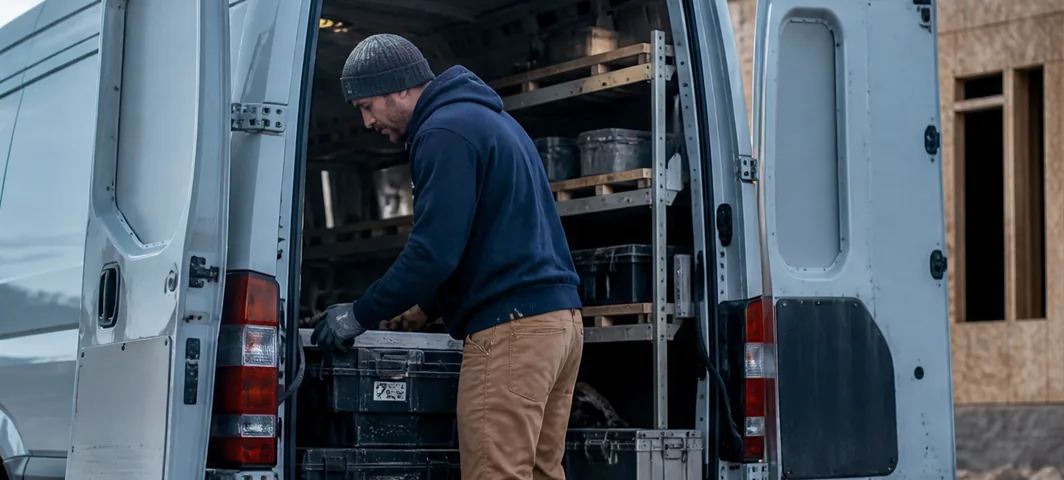
This hub covers all commercial cargo vans—including high-roof Sprinter-class vans (Mercedes Sprinter, Ford Transit, RAM ProMaster). Typical new tickets run $35,000-$75,000 before upfit. Spread the cost with equipment financing; decisions in 24-48 hours for many files. New or used. Delivery, service, and contractor fleets nationwide.
Yes. Cargo vans — Ford Transit, Mercedes Sprinter, RAM ProMaster and full-size models — finance over 24–72 months at 600+ credit with 0–20% down, new or used, typically $35K–$75K. A $70,000 van at 8% over 60 months runs about $1,420/month. Shelving, racking and other upfits are financeable with the vehicle when they appear on the same invoice.
High-roof cargo vans are the workhorse for last-mile delivery, trades, and mobile service. They fit dense routes, curb-side stops, and tight job sites better than larger straight trucks. But new vans commonly land in the $35,000-$75,000 range (before racking, wrap, or upfit), so paying cash can pinch operating budgets.
Route-based businesses run on tight margins. Revenue depends on stops, contracts, and utilization. You pay for fuel, insurance, and maintenance before you always collect. That timing gap makes large cash purchases risky when payroll and emergencies still need reserves.
Equipment financing spreads the cost over the van's useful life. Lenders like cargo vans because they hold resale value and support clear commercial use (routes, contracts, invoicing). Couriers, contractors, and field-service operators use loans and leases to add units, replace high-mileage vans, and preserve working capital. Tax benefits-Section 179 and bonus depreciation on purchases, lease payments as operating expenses on many leases-can reduce true cost. Apply now to get matched with lenders who specialize in commercial vehicles. See trucking business financing and logistics and warehousing business financing for industry context.

In commercial lending, "cargo van" usually means a Class 2-3 van with an enclosed cargo area behind the cab-Ford Transit, Mercedes-Benz Sprinter, RAM ProMaster, Chevrolet Express, Nissan NV, and similar. Sizes vary from standard roof to extended high-roof; payload stays below what a Class 4+ straight truck would carry.
They are used for parcel and supply runs, trades (HVAC, electrical, plumbing), mobile repair, and local freight. Lenders care how the van earns: route density, contracts, or invoiced jobs that line up with the payment.
Many operators search specifically for Sprinter van financing. Mercedes Sprinter, tall Ford Transit, and RAM ProMaster configurations share similar ticket sizes ($45K-$75K new is common), upfit costs (racks, refrigeration, graphics), and route economics. Underwriting is still cargo-van equipment financing—the same loan and lease structures as on this page.
For a dedicated walkthrough with Sprinter-specific FAQs and examples, read the Sprinter van financing guide. For last-mile and courier use cases, see Sprinter van financing for delivery businesses.
Cargo vans finance well because collateral is liquid and use cases are easy to document: delivery density, trade routes, or contract revenue. Tickets are smaller than Class 8 tractors, so decisions can move quickly with bank statements and a solid equipment quote.
Lenders who specialize in trucking equipment financing and logistics equipment financing understand route economics and seasonal swings. Used vans with reasonable miles often qualify; age and condition set term length. Equipment financing approval timelines are often 1-5 business days.

Typically 0-20% down, terms 24-72 months. Interest rates 6-15% depending on credit. See typical rates.

At lease end, return the van, purchase at fair market value, or upgrade. Loan vs lease.

SBA 7(a) and 504 loans offer longer terms (7-10+ years) and lower down payments. Approval typically 30-60+ days. Best for established businesses planning fleet expansion or combining equipment with real estate. View SBA loans.

Working capital loans are flexible but generally carry higher rates and shorter terms. They're better suited for fuel, payroll, and operating expenses than equipment purchases. Use working capital for operations; use equipment financing for the cargo van itself to secure better rates tied to the asset. Working capital for trucking · Compare loan vs lease.
New cargo vans (Transit, Sprinter, ProMaster, etc.) often land between roughly $35,000 and $75,000 before racks, refrigeration, or branding. High roof, AWD, and long wheelbase push the top of the range; basic low-roof units anchor the bottom.
Used cargo vans commonly trade 25-45% below comparable new pricing depending on age, miles, and upfit wear. Many lenders finance used units up to 5-7 model years; older vans may need larger down payments or shorter terms. Inspect body structure, doors, and service records-racking adds value but also wear. A dealer quote with VIN helps lenders lock structure quickly. Financing used equipment guide.

Rates for cargo van financing typically run 6–15% and terms 24-72 months, depending on credit, down payment and lender; SBA loans extend further. Typical equipment financing rates.
Monthly payments depend on loan amount, rate, and term. A $70,000 cargo van financed at 8% over 60 months would result in roughly $1,420/month. A $50,000 unit at 9% over 48 months would run approximately $1,245/month. Strong credit, larger down payment, and shorter terms typically lower your rate. Use our financing calculator to model different scenarios before you apply. Down payment requirements vary by lender and credit profile.
Credit: most lenders look for 600+, and because cargo van financing is asset-backed some programs go lower when revenue and down payment are strong. Down payment: 0–20%, depending on credit. Time in business: 1–2+ years for standard programs. See credit score requirements and what lenders look at.
Cargo vans are the most accessible commercial vehicle to finance, and files here are correspondingly light. What matters is the entity, the use and the van itself.
Newer businesses finance vans routinely — it is one of the most common first commercial assets — but expect personal credit to carry more of the decision in the first year or two.
Apply once you know the configuration, because configuration drives availability. High-roof extended vans with specific upfits are frequently ordered rather than stocked, and lead times on new units have been long enough in recent years that the financing is rarely the constraint.
For trades and service businesses adding a van against new work, apply as soon as the work is confirmed. For delivery contractors, apply before the contract start date with enough margin to have the van upfitted, lettered and inspected — that work takes longer than most operators plan for.
Van purchases are low-drama until they are not:
Compare at least two offers and read the early payoff terms — vans are frequently replaced on a three- or four-year cycle.
Cash spent on equipment is cash not available for payroll, materials or the next opportunity. Financing spreads the cost over the working life of the cargo van and keeps reserves intact, and Section 179 and bonus depreciation reduce the after-tax cost further. Carriers feel it most sharply: fuel, insurance and maintenance are due weekly while freight bills settle in thirty to forty-five days.
Standard equipment financing approval takes 1-5 business days from application to funding. Day 1: submit application and documents. Days 2-3: lender review, possible follow-up questions. Day 4-5: approval, documentation, and funding. Funds typically go directly to the seller; you take possession once the deal closes. SBA loans add 30-60+ days. Having everything ready upfront can compress the timeline.
Obtain a written quote from your dealer. Complete one application-we submit to multiple equipment lenders. Share business financials, equipment details, and your goals.
Our team identifies lenders whose programs fit your cargo van purchase. Equipment-only, new or used, with or without liftgate. We connect you with the right programs.
Equipment financing often requires minimal docs-application, bank statements, equipment quote. Decisions in 24-48 hours for many applications. SBA adds 30-60+ days.
Once approved, sign documents. Funds typically go directly to the seller. You take possession of the cargo van. Ready to deliver.
Browse financing for similar commercial vehicles. One application, we match you with lenders for your equipment type.
Sprinter Van Financing Guide (high-roof & Sprinter-class subset)
Is cargo van financing available in every state? Axiant Partners matches U.S.-based businesses with equipment lenders that typically fund titled commercial vehicles nationwide, including all 50 states. Your state is rarely the deciding factor; credit, bank deposits, time in business, and the van you are buying matter more.
Who should use commercial van financing? Businesses with a U.S. entity (LLC, corporation, etc.) buying vans for commercial use—delivery, trades, field service—not personal-only transportation. Consumer auto loans follow different rules.
Related guides: Sprinter van financing guide, box truck financing guide (straight trucks), small fleet financing, and working capital for trucking if you are also bridging fuel and payroll timing.
Yes. Many lenders finance used cargo vans, typically those 5-7 years old or newer. Used equipment may require a larger down payment and shorter terms. Mileage, condition, and cargo box integrity affect approval.
Most lenders look for 600 or higher. Scores of 680+ qualify for the best rates. Asset-backed financing sometimes works with 580+ when revenue and down payment are strong.
1-5 business days for equipment loans and leases. SBA loans add 30-60+ days. Having documents ready-financials, equipment quote, business info-speeds the process.
It depends. Leasing offers lower monthly payments, potential tax benefits, and easier upgrades when the lease ends. Buying builds equity and works if you plan to use the truck long-term. Compare both based on your cash flow, tax situation, and ownership goals. Equipment loan vs lease comparison.
Startups face tighter requirements. Most equipment lenders prefer 1-2+ years in business. New businesses may need larger down payments, shorter terms, or a co-signer with strong credit. SBA loans and some specialized programs can help newer businesses. Apply and we'll match you with lenders that fit your profile.
Typical requirements: 3-6 months of business bank statements, tax returns (business and personal if required), a recent profit and loss statement, equipment quote from your dealer, and business formation documents. Having these ready speeds approval. What lenders look at.
Use our financing calculator to model different scenarios. A $70,000 cargo van at 8% over 60 months is roughly $1,420/month. A $50,000 unit at 9% over 48 months is about $1,245/month. Rates typically range 6-15% depending on credit and lender.
No separate product line—Sprinter-style vans are cargo vans. You use the same equipment loans and leases; ticket size and upfits may run higher on high-roof vans. Start on this hub for the full picture, then use the Sprinter van financing guide if you want a focused walkthrough.
Explore our articles on equipment financing requirements, approval timelines, and best practices.
Applications are reviewed the same day. We match delivery and logistics businesses with lenders who specialize in cargo van and commercial vehicle financing.
Get Matched for Cargo Van Financing