Equipment Loans
Typically 0–20% down, terms 24–84 months. Interest rates 6–15% depending on credit. See typical rates.

Financing program
Trailers range from $3,000–$25,000 for utility units to $25,000–$80,000+ for semi-trailers. Spread the cost with equipment financing. Decisions in 24–48 hours for qualified applications. Trucking, construction, and landscaping nationwide.
Yes. Trailers finance over 24–84 months at 600+ credit with 0–20% down. Utility and landscape trailers run $3,000–$25,000, semi-trailers $25,000–$80,000+. A $50,000 dry van at 8% over 60 months is about $1,015/month; a $15,000 utility trailer at 9% over 36 months about $480/month. With no engine, value sits in the frame, floor and running gear.
Trailers are essential for hauling freight, equipment, and materials. Dry van trailers move general freight. Flatbed trailers haul steel, machinery, and oversized loads. Reefer trailers transport refrigerated cargo. Utility and landscape trailers carry tools and equipment. Prices range from $3,000–$25,000 for utility trailers to $25,000–$80,000+ for semi-trailers—paying cash ties up capital you need for fuel, payroll, and growth.
Trucking, construction, and landscaping businesses operate on tight margins. Revenue depends on loads, projects, and routes. You incur costs for equipment, fuel, and labor before getting paid. Seasonal demand and the lag between delivery or project completion and payment create cash flow gaps. Paying $50,000 or more in cash for a semi-trailer can strain reserves and limit your ability to add capacity or take on new work.
Equipment financing spreads the cost over the trailer's useful life. Lenders view trailers favorably because they hold value and serve multiple industries. Dry vans and flatbeds have strong resale markets. Tax benefits—Section 179 and bonus depreciation for purchases, lease payments as operating expenses—further reduce the true cost. Apply now to get matched with lenders. See trucking business financing and construction business financing for industry context.
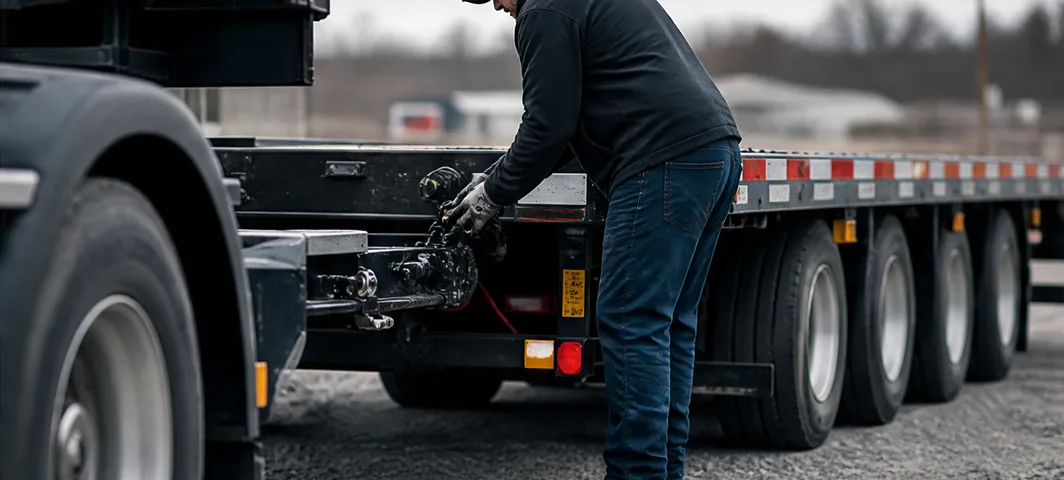
Commercial trailers are wheeled cargo containers or platforms designed to be towed by a truck or tractor. Types include dry van trailers (enclosed, general freight), flatbed trailers (open deck, oversized loads), reefer trailers (refrigerated), utility trailers (smaller, equipment and materials), dump trailers, and specialty configurations. Semi-trailers connect to tractors via a fifth wheel; bumper-pull trailers attach to pickup hitches.
Trailers are used in trucking (freight hauling), construction (equipment and materials transport), landscaping (tools, mowers, materials), and logistics. Understanding trailer types and how they're used helps lenders assess your application—they want to see that the equipment supports revenue-generating operations. Length, GVWR, and configuration affect suitability and cost.
Lenders view trailer financing favorably because trailers hold value and have strong secondary markets. Dry van and flatbed semi-trailers are standard trucking equipment—lenders understand resale value and industry demand. Utility and landscape trailers serve contractors with recurring needs. Equipment financing is asset-backed; the trailer secures the loan.
Trucking carriers, owner-operators, construction companies, and landscapers are primary trailer buyers. Lenders who specialize in trucking equipment understand freight revenue and trailer depreciation. Used trailers 5–10 years old are commonly financed. Equipment financing approval timelines are typically 1–5 days for qualified applications. Smaller utility trailers may have minimum loan amounts—bundling multiple units can help.
Working capital loans are better suited for fuel, payroll, and operating expenses. Use working capital for day-to-day needs; use equipment financing for the trailer itself to secure better rates and terms tied to the asset. Compare equipment loan vs lease in detail.
Typically 0–20% down, terms 24–84 months. Interest rates 6–15% depending on credit. See typical rates.

At lease end, return the trailer, purchase at fair market value, or upgrade. Loan vs lease.

SBA 7(a) and 504 loans offer longer terms (7–10+ years) and lower down payments. Approval typically 30–60+ days. Best for established businesses planning fleet expansion or combining trailers with other equipment. View SBA loans.
Trailer prices vary widely by type, size, and whether you buy new or used. Utility trailers range from roughly $3,000–$25,000 depending on size, axles, and payload. Semi-trailers (dry van, flatbed, reefer) typically cost $25,000–$80,000+ new. Dry van 53' trailers run $35,000–$55,000; flatbeds $30,000–$60,000; reefer trailers $50,000–$80,000+. Top brands (Great Dane, Wabash, Utility, Fontaine) command premium prices.
Used trailers typically cost 30–50% less. A 5-year-old dry van might run $15,000–$35,000. Inspect frame, axles, flooring, and (for reefers) refrigeration units before purchasing. Many lenders finance used trailers up to 5–10 years old. Obtain a written quote from your dealer—lenders use it to structure financing. Financing used equipment guide.

Rates for trailer financing typically run 6–15% and terms 24–84 months, depending on credit, down payment and lender; SBA loans extend further. Typical equipment financing rates.
Monthly payments depend on loan amount, rate, and term. A $50,000 dry van financed at 8% over 60 months would result in roughly $1,015/month. A $15,000 utility trailer at 9% over 36 months would run approximately $480/month. Strong credit, larger down payment, and shorter terms typically lower your rate. Use our financing calculator to model scenarios. Down payment requirements vary by lender and credit profile. Note: Some lenders have minimum loan amounts ($10K–$15K)—smaller utility trailers may need to be bundled or financed with other equipment.
| Requirement | Typical Range |
|---|---|
| Credit score | 600+ (680+ for best rates) |
| Down payment | 0–20% |
| Time in business | 1–2+ years |
| Revenue | Proof of business income |
| Equipment quote | Written quote from dealer/seller |
Credit: most lenders look for 600+, and because trailer financing is asset-backed some programs go lower when revenue and down payment are strong. Down payment: 0–20%, depending on credit. Time in business: 1–2+ years for standard programs. See credit score requirements and what lenders look at.
A trailer has no engine and no odometer, so a lender is appraising structure and running gear. The documentation reflects that.
· Trailers are titled in most states and the lien is recorded against the VIN in the same way as a truck.
· Dry van, reefer, flatbed, step deck, lowboy, tanker and dump trailers are entirely different assets. Spread axle or standard, and air ride or spring, both matter to value.
· A trailer without a current inspection cannot lawfully be put into service, and that is a cost you should be negotiating before purchase.
· Floor rot in a van trailer and deck damage on a flatbed are the two findings that most often change the price.
· Eight tires and the associated brakes represent a substantial cost, and lenders' inspectors check them.
· Trailers are usually a smaller ticket than the tractor, so documentation requirements are correspondingly lighter.
If you are buying several trailers at once, say so at application. Fleet purchases are frequently documented under a single facility rather than as separate transactions, which is both cheaper and faster.
Apply when you know what the freight requires, because trailer specification is entirely freight-driven. A carrier moving palletized goods, one hauling steel and one hauling machinery need three different trailers, and none of them is a compromise the others can use.
Trailers are also the one place where drop-and-hook economics justify buying more than you have tractors for. If you are pursuing shipper relationships that expect trailers left on site, apply for the number the relationship needs rather than the number your fleet can pull at once.
The cheapest trailer available is cheap because fewer carriers want it, which is exactly as true when you come to sell it.
On a van trailer the floor is the expensive structural repair. On a flatbed it is the deck and the crossmembers.
It is the single document that determines whether the trailer can work the day you take delivery.
Air ride costs more, protects freight better and is expected by some shippers. Spring is cheaper to buy and to maintain.
Trailers earn while they sit loaded. It is one of the few assets in trucking where a ratio above one to one is straightforwardly profitable.
Trailers are the least glamorous purchase in trucking and the easiest to get wrong:
Length, height, door type, suspension and deck rating all decide which freight you can take.
The absence of an engine is exactly why the frame, floor and running gear carry all the value.
Replacing a full set at once is a cost that arrives without warning if you did not check.
Trailers carry their own registration obligations, which vary by state and by how far you run.
Trailers last a long time, but the contract they were bought for may not.
Compare offers on total cost and confirm the early payoff position, particularly if the trailers are being bought for a specific contract.
Cash spent on equipment is cash not available for payroll, materials or the next opportunity. Financing spreads the cost over the working life of the trailer and keeps reserves intact, and Section 179 and bonus depreciation reduce the after-tax cost further. Carriers feel it most sharply: fuel, insurance and maintenance are due weekly while freight bills settle in thirty to forty-five days.
Standard equipment financing approval takes 1–5 business days from application to funding. Day 1: submit application and documents. Days 2–3: lender review, possible follow-up questions. Day 4–5: approval, documentation, and funding. Funds typically go directly to the seller; you take possession once the deal closes. SBA loans add 30–60+ days.
01
Obtain a written quote from your dealer. Complete one application—we submit to multiple equipment lenders. Share business financials and equipment details.
02
Our team identifies lenders whose programs fit your trailer purchase. Utility, flatbed, dry van, reefer. New or used. We connect you with the right programs.
03
Equipment financing often requires minimal docs. Decisions in 24–48 hours for many applications.
04
Once approved, sign documents. Funds typically go directly to the seller. You take possession of the trailer. Ready to haul.
Browse financing for similar equipment. One application, we match you with lenders for your equipment type.

Freight tractors. Semi truck financing.
Open-deck hauling. Flatbed financing.
Construction haulers. Dump truck financing.

Enclosed delivery trucks. Box truck financing.
Yes. Many lenders finance used trailers—dry van, flatbed, utility—typically those 5–10 years old or newer. Condition, specs, and brand affect approval. Used equipment may require a larger down payment and shorter terms. Inspect frame, axles, and flooring before purchasing.
Most lenders look for 600 or higher. Scores of 680+ qualify for the best rates. Asset-backed financing sometimes works with 580+ when revenue and down payment are strong. Credit score requirements.
1–5 business days for equipment loans and leases. SBA loans add 30–60+ days. Having documents ready speeds the process. How fast can equipment financing be approved.
Lenders finance both. Dry vans and flatbeds typically cost $25,000–$80,000+ and are common trucking equipment. Price and condition matter more than trailer type. Both have strong resale markets.
It depends. Leasing offers lower monthly payments and easier upgrades. Buying builds equity and works if you plan to use the trailer long-term. Equipment loan vs lease comparison.
Yes. Utility trailers ($3K–$25K) are commonly financed. Some lenders have minimum loan amounts ($10K–$15K)—smaller trailers may need to be bundled with other equipment or financed with a co-signer. Check with your lender or broker.
Typical requirements: 3–6 months of business bank statements, tax returns, equipment quote from your dealer, profit and loss statement, and business formation documents. Having these ready speeds approval. What lenders look at.
Use our financing calculator to model different scenarios. A $50,000 dry van at 8% over 60 months is roughly $1,015/month. A $15,000 utility trailer at 9% over 36 months is about $480/month. Rates typically range 6–15%.
Explore our articles on equipment financing requirements, approval timelines, and best practices.
Applications are reviewed the same day. We match trucking, construction, and landscaping businesses with lenders who specialize in trailer and commercial vehicle financing.