

Equipment Loans
Typically 0–20% down, terms 24–72 months. Interest rates 6–15% depending on credit. See typical rates.

Financing program
Dump trucks cost $70,000–$280,000. Spread the cost with equipment financing. Decisions in 24–48 hours for qualified applications. New or used. Construction, trucking, and mining businesses nationwide.
Yes. Dump trucks are financed against the truck itself on 24–72 month terms, generally from 600 credit with 0–20% down. Single-axle units run $70,000–$120,000, tandems $120,000–$180,000, and tri-axles $180,000–$280,000+. A $150,000 truck at 8% over 60 months is about $3,040/month. Because these trucks idle heavily on site, engine hours often tell a truer story than the odometer.
Dump trucks are essential for construction, mining, and aggregates. They haul sand, gravel, dirt, and demolition debris. If a dump truck in your fleet is already paid off, its equity can fund the next job: see borrowing against a dump truck you own. With a hydraulically liftable bed that tilts to dump loads, they're the workhorses of site development and road building. But with prices from $70,000 for light-duty single-axle models to $280,000+ for heavy-duty tri-axle trucks, paying cash ties up capital you need for payroll, materials, and growth.
Construction and trucking businesses operate differently from other industries. Revenue is project-based—you incur costs upfront for labor, materials, and equipment, then get paid on draw schedules or after milestones. Seasonal demand, weather delays, and the lag between bid and first progress payment create cash flow gaps. Paying $150,000 or more in cash for a dump truck can strain reserves and limit your ability to bid on new work or cover payroll during slow periods.
Equipment financing spreads the cost over the dump truck's useful life. Lenders like dump trucks because Peterbilt, Kenworth, Mack, and Freightliner vocational chassis hold value well—50–70% after 5 years. That means competitive rates and terms. Construction and hauling contractors use equipment loans and leases to expand fleets, replace aging trucks, and take on larger projects without draining reserves. Tax benefits—Section 179 and bonus depreciation for purchases, lease payments as operating expenses—further reduce the true cost. Apply now to get matched with lenders who specialize in construction equipment. See construction business financing and trucking business financing for industry context.
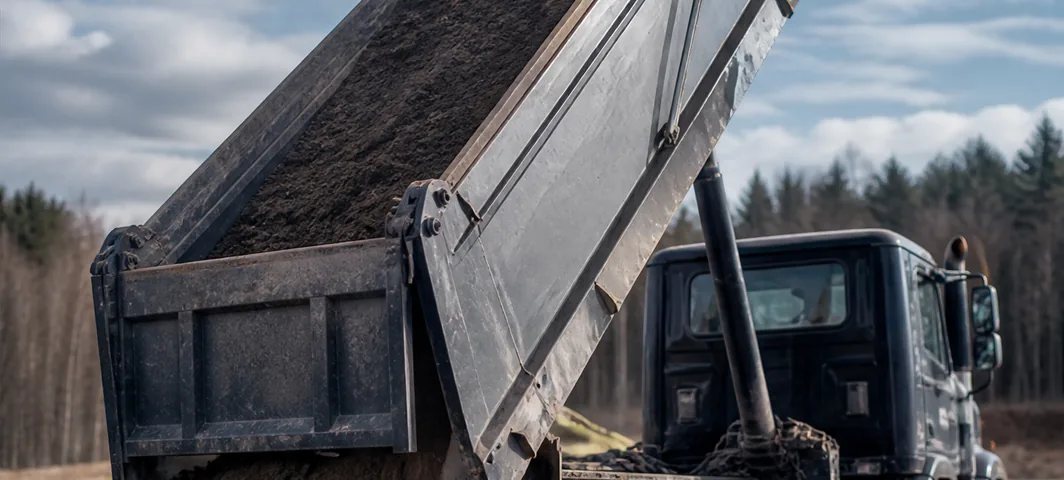
A dump truck is a truck with a hydraulically liftable bed that tilts to dump its load. The bed is hinged at the rear and raised by hydraulic cylinders to unload materials like sand, gravel, dirt, and demolition debris. Dump trucks come in various sizes—from light-duty single-axle trucks to heavy-duty tandem-axle and tri-axle models.
Dump trucks are commonly used in construction, mining, landscaping, and road building for hauling and dumping bulk materials. They can be standard dump trucks or articulated dump trucks (ADTs) for off-road use. General contractors, aggregates haulers, site development companies, and mining operations rely on dump trucks as core equipment. Understanding what dump trucks are and how they're used helps lenders assess your financing application—they want to see that the equipment supports revenue-generating hauling work.
Lenders view dump truck financing favorably because vocational chassis and dump bodies hold value well and have strong demand. Peterbilt, Kenworth, Mack, and Freightliner models retain 50–70% of value after 5 years. If a borrower defaults, the lender can recover a significant portion through resale. Construction and trucking lenders often evaluate hauling contracts, route stability, and maintenance history—not just static financials.
Owner-operators and small fleets are primary dump truck buyers. Lenders who specialize in construction equipment financing and trucking equipment financing understand project-based revenue and hauling cycles. Used dump trucks 5–7 years old are widely financed; lenders prefer trucks under 7 years with documented maintenance. Equipment financing approval timelines are typically 1–5 days. TRAC leases are common for dump trucks—they use a residual value to lower monthly payments.
Working capital loans are flexible but generally carry higher rates and shorter terms. They're better suited for fuel, repairs, and payroll than large equipment purchases. Use working capital for operating expenses; use equipment financing for the dump truck itself to secure better rates and terms tied to the asset. Compare equipment loan vs lease in detail.
Typically 0–20% down, terms 24–72 months. Interest rates 6–15% depending on credit. See typical rates.

TRAC leases are common for dump trucks—they use a residual to reduce the financed amount. At lease end, return the truck, purchase at fair market value, or upgrade. Loan vs lease.

SBA 7(a) and 504 loans offer longer terms (7–10+ years) and lower down payments. Approval typically 30–60+ days. Best for established businesses planning fleet expansion or combining equipment with real estate. View SBA loans.
Dump truck prices vary by size, configuration, brand, and whether you buy new or used. New dump trucks range from roughly $70,000–$120,000 for light-duty single-axle models to $120,000–$180,000 for mid-size tandem-axle trucks, and $180,000–$280,000+ for heavy-duty tri-axle or vocational dump trucks. Articulated dump trucks (ADTs) for off-road use can exceed $300,000. Top brands like Peterbilt, Kenworth, Mack, Freightliner, and International command premium prices.
Used dump trucks typically range from $30,000–$230,000 depending on age, mileage, and condition. A 5-year-old tandem-axle dump truck might run $80,000–$150,000. Older or smaller used trucks can start around $30,000–$60,000. Many lenders finance used dump trucks up to 5–7 years old; older trucks may face shorter terms or require larger down payments. Always inspect the hydraulic system, bed, and chassis before purchasing used. Obtain a written quote from your dealer or seller—lenders use this to structure your financing. Financing used equipment guide.

Rates for dump truck financing typically run 6–15% and terms 24–72 months, depending on credit, down payment and lender; SBA loans extend further. Typical equipment financing rates.
Monthly payments depend on loan amount, rate, and term. A $150,000 dump truck financed at 8% over 60 months would result in roughly $3,040/month. A $100,000 tandem at 9% over 48 months would run approximately $2,490/month. Strong credit, larger down payment, and shorter terms typically lower your rate. Use our financing calculator to model different scenarios before you apply. Down payment requirements vary by lender and credit profile.
| Requirement | Typical Range |
|---|---|
| Credit score | 600+ (680+ for best rates) |
| Down payment | 0–20% |
| Time in business | 1–2+ years |
| Revenue | Proof of business income |
| Equipment quote | Written quote from dealer/seller |
Credit: most lenders look for 600+, and because dump truck financing is asset-backed some programs go lower when revenue and down payment are strong. Down payment: 0–20%, depending on credit. Time in business: 1–2+ years for standard programs. See credit score requirements and what lenders look at.
Dump trucks are bought for hauling that is either contracted or seasonal, and the file benefits from showing which of the two it is.
· Chassis and body are frequently from different manufacturers. Describe both.
· Steel or aluminum, capacity in yards, and whether the hoist and PTO are included. Aluminum bodies carry more payload and cost more; the distinction is material to value.
· Dump trucks idle heavily on site, so engine hours can tell a very different story from mileage.
· Most tandem and tri-axle dump trucks require a Class B license at minimum; combinations require Class A.
· Six is better where the work is seasonal, which for most dump operations it is.
· Contracted hauling is among the most creditworthy revenue in the trucking category.
If you run under someone else's authority as a leased operator, bring the lease agreement and your settlement history rather than a rate sheet.
Apply in the off-season if you can. Dump truck demand tracks construction, so both the trucks and the financing are easiest to arrange in the months when nobody is hauling. Buying in March for a season that starts in April means competing with everyone else who left it late.
Where the purchase is tied to an awarded contract — a municipal snow or hauling agreement, a site development job with a known duration — apply as soon as the award is confirmed. The award is the strongest document in the file and it also sets the term the financing should match.
Tandem, tri-axle and quad configurations carry different legal payloads in different jurisdictions. The one that is legal where you haul is the one that earns.
These take the load and the abuse. Frame cracks and hoist wear are the two findings that most often change a used dump truck's value.
The body costs more and carries more. On weight-limited hauls that difference is revenue on every load.
Lenders finance seasonal businesses routinely. What they cannot work with is a seasonal business presented as an even one.
Where the work genuinely stops for months, structures exist. They have to be arranged at documentation, not afterwards.
Dump operators lose money in predictable places:
Weight law varies by state and by bridge formula. Confirm the configuration before you buy it, not at the first weigh station.
Both are heavy consumables on a loaded truck and both are expensive to renew on all axles at once.
A five-year payment against an eighteen-month hauling agreement leaves a long tail with no committed revenue.
Dump trucks work in mud, salt and rock. Corrosion and frame damage are common and not always obvious.
Dump work carries a higher premium than general freight. Quote it before committing to the payment.
Compare offers on total cost and confirm the prepayment position before signing.
Cash spent on equipment is cash not available for payroll, materials or the next opportunity. Financing spreads the cost over the working life of the dump truck and keeps reserves intact, and Section 179 and bonus depreciation reduce the after-tax cost further. Carriers feel it most sharply: fuel, insurance and maintenance are due weekly while freight bills settle in thirty to forty-five days.
Standard equipment financing approval takes 1–5 business days from application to funding. Day 1: submit application and documents. Days 2–3: lender review, possible follow-up questions. Day 4–5: approval, documentation, and funding. Funds typically go directly to the seller; you take possession once the deal closes. SBA loans add 30–60+ days. Having everything ready upfront can compress the timeline.
01
Obtain a written quote from your dealer. Complete one application—we submit to multiple equipment lenders. Share business financials, equipment details, and your goals.
02
Our team identifies lenders whose programs fit your dump truck purchase. Equipment-only, new or used, single or tandem axle. We connect you with the right programs.
03
Equipment financing often requires minimal docs—application, bank statements, equipment quote. Decisions in 24–48 hours for many applications. SBA adds 30–60+ days.
04
Once approved, sign documents. Funds typically go directly to the seller. You take possession of the dump truck. Ready to haul.
Browse financing for similar equipment. One application, we match you with lenders for your equipment type.
Tractors for freight. Semi truck financing.

Straight trucks for delivery. Box truck financing.

Flatbed, dump, lowboy. Trailer financing.
Heavy diggers for construction. Excavator financing.
Yes. Many lenders finance used dump trucks, typically those 5–7 years old or newer. Used equipment may require a larger down payment and shorter terms. Mileage, condition, and hydraulic system integrity affect approval.
Most lenders look for 600 or higher. Scores of 680+ qualify for the best rates. Asset-backed financing sometimes works with 580+ when revenue and down payment are strong.
1–5 business days for equipment loans and leases. SBA loans add 30–60+ days. Having documents ready—financials, equipment quote, business info—speeds the process.
It depends. Leasing offers lower monthly payments, potential tax benefits, and easier upgrades when the lease ends. TRAC leases are common for dump trucks. Buying builds equity and works if you plan to use the truck long-term. Compare both based on your cash flow, tax situation, and ownership goals. Equipment loan vs lease comparison.
Startups face tighter requirements. Most equipment lenders prefer 1–2+ years in business. New businesses may need larger down payments, shorter terms, or a co-signer with strong credit. SBA loans and some specialized programs can help newer businesses. Apply and we'll match you with lenders that fit your profile.
Typical requirements: 3–6 months of business bank statements, tax returns (business and personal if required), a recent profit and loss statement, equipment quote from your dealer, and business formation documents. Having these ready speeds approval. What lenders look at.
Use our financing calculator to model different scenarios. A $150,000 dump truck at 8% over 60 months is roughly $3,040/month. A $100,000 tandem at 9% over 48 months is about $2,490/month. Rates typically range 6–15% depending on credit and lender.
Explore our articles on equipment financing requirements, approval timelines, and best practices.
Applications are reviewed the same day. We match construction and trucking businesses with lenders who specialize in dump truck and vocational equipment financing.