
Equipment Loans
Typically 0-20% down, terms 24-84 months. Interest rates 6-15% depending on credit. See typical rates.

Financing program
Flatbed trucks cost $80,000-$200,000+ new for construction, manufacturing, and logistics. Spread the cost with equipment financing. Decisions in 24-48 hours for qualified applications. New or used.
Yes. Flatbeds and step-decks finance over 24–84 months at 600+ credit with 0–20% down. Tractor-trailer combinations run $80,000–$120,000 up to $120,000–$200,000+, with straight trucks from $60,000. A $120,000 flatbed at 8% over 60 months is roughly $2,430/month. Securement gear — straps, chains, tarps — is financeable when it is quoted with the truck.
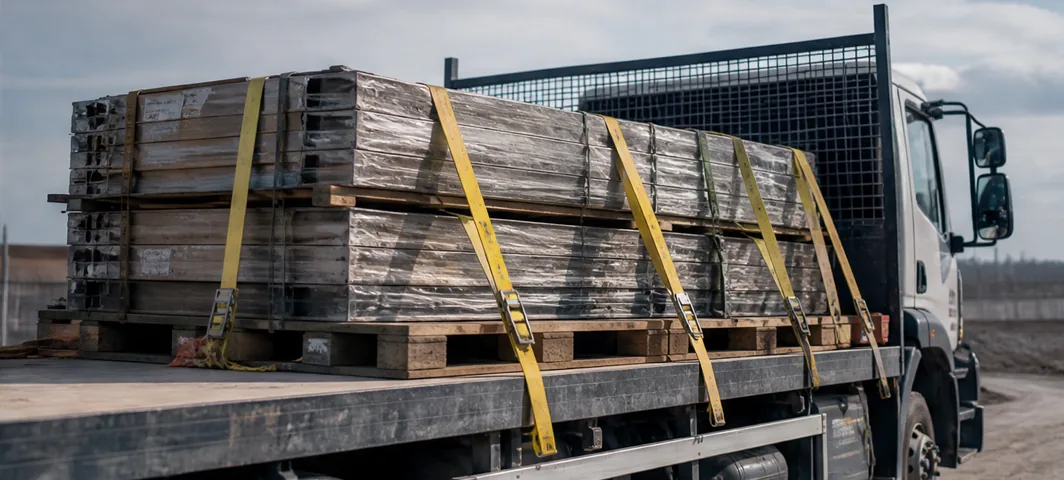
Flatbed trucks haul steel, lumber, machinery, and oversized loads that don't fit in enclosed trailers. Rollback carriers run by towing companies are covered under towing business financing. The open deck allows crane and forklift loading from any side. Construction companies, manufacturers, and logistics firms rely on flatbeds for materials transport. But with new trucks costing $80,000-$200,000+ and used units $40,000-$120,000, paying cash ties up capital you need for fuel, payroll, and growth.
Construction and manufacturing businesses operate on project-based revenue. You incur costs for materials, labor, and equipment before getting paid on draw schedules or milestones. Logistics carriers face tight margins and irregular cash flow. Paying $150,000 or more in cash for a flatbed can strain reserves and limit your ability to bid on new work or take on contracts. Seasonal demand and the lag between haul and payment create cash flow gaps. Equipment financing spreads the cost over the truck's useful life.
Lenders like flatbed trucks because major brands (Peterbilt, Kenworth, Freightliner, Mack) hold value-50-70% after 5 years. That means competitive rates and terms. Businesses use equipment loans and leases to add capacity, replace aging trucks, and fulfill new contracts without draining reserves. Tax benefits-Section 179 and bonus depreciation for purchases, lease payments as operating expenses-further reduce the true cost. Apply now to get matched with lenders. See trucking business financing, construction business financing, and logistics-warehousing business financing for industry context.
A flatbed truck is a truck with an open flat deck (no sides or roof) for hauling oversized or uncontained cargo. The deck allows loading and unloading from the sides and top, ideal for construction materials, steel, machinery, lumber, and goods that need forklift or crane access. Flatbed trucks come in straight truck configurations (single unit with integrated deck) or as tractor-trailer combinations pulling flatbed trailers.
Industries using flatbeds include construction (rebar, steel beams, lumber), manufacturing (machinery, manufactured components), and logistics (specialty hauling, oversized freight). Understanding what flatbed trucks are and how they're used helps lenders assess your application-they want to see that the equipment supports revenue-generating operations. Deck length, GVWR, and payload capacity affect suitability for different loads.

Lenders view flatbed financing favorably because flatbeds hold value well and serve multiple industries. Peterbilt, Kenworth, Freightliner, and Mack vocational models retain 50-70% of value after 5 years. If a borrower defaults, the lender can recover a significant portion through resale. Trucking-specific lenders assess freight revenue, route stability, and industry underwriting-not just static financials.
Owner-operators and small carriers are primary flatbed buyers. Lenders who specialize in trucking equipment financing understand construction cycles, manufacturing demand, and logistics rates. Used flatbeds 5-7 years old are commonly financed. Equipment financing approval timelines are typically 1-5 days for qualified applications. TRAC leases are popular for flatbed trucks-they use a residual value to lower monthly payments.
Working capital loans are flexible but generally carry higher rates and shorter terms. They're better suited for fuel, repairs, and payroll than large equipment purchases. Use working capital for operating expenses; use equipment financing for the flatbed itself to secure better rates and terms tied to the asset. Compare equipment loan vs lease in detail.
Typically 0-20% down, terms 24-84 months. Interest rates 6-15% depending on credit. See typical rates.

TRAC leases are common for flatbed trucks-they use a residual to reduce the financed amount. At lease end, return the truck, purchase at fair market value, or upgrade. Loan vs lease.

SBA 7(a) and 504 loans offer longer terms (7-10+ years) and lower down payments. Approval typically 30-60+ days. Best for established businesses planning fleet expansion or combining equipment with real estate. View SBA loans.
Flatbed prices vary by configuration (straight truck vs tractor-trailer), deck length, brand, and whether you buy new or used. New flatbed trucks range from roughly $80,000-$120,000 for straight trucks with shorter decks to $120,000-$200,000+ for tractor-trailer combinations. Top brands like Peterbilt, Kenworth, Freightliner, Mack, and International command premium prices. Deck length, GVWR, and trailer specifications add cost.
Used flatbed trucks typically cost 30-50% less. A 5-year-old flatbed tractor-trailer might run $60,000-$120,000. Older or smaller used trucks can start around $40,000-$70,000. Many lenders finance used flatbeds up to 5-7 years old; older trucks may face shorter terms or require larger down payments. Inspect deck, chassis, and mechanical condition before purchasing. Obtain a written quote from your dealer or seller-lenders use this to structure financing. Financing used equipment guide.

Rates for flatbed truck financing typically run 6–15% and terms 24-84 months, depending on credit, down payment and lender; SBA loans extend further. Typical equipment financing rates.
Monthly payments depend on loan amount, rate, and term. A $120,000 flatbed financed at 8% over 60 months would result in roughly $2,430/month. A $80,000 straight truck at 9% over 48 months would run approximately $2,000/month. Strong credit, larger down payment, and shorter terms typically lower your rate. Use our financing calculator to model scenarios. Down payment requirements vary by lender and credit profile.
| Requirement | Typical Range |
|---|---|
| Credit score | 600+ (680+ for best rates) |
| Down payment | 0-20% |
| Time in business | 1-2+ years |
| Revenue | Proof of business income |
| Equipment quote | Written quote from dealer/seller |
Credit: most lenders look for 600+, and because flatbed truck financing is asset-backed some programs go lower when revenue and down payment are strong. Down payment: 0–20%, depending on credit. Time in business: 1–2+ years for standard programs. See credit score requirements and what lenders look at.
Flatbed work is specialized freight, and the file is strongest when it shows both the equipment and the experience to haul on an open deck.
· Include the deck length, width and material, and the deck rating.
· Straps, chains, binders, tarps and coil racks are working equipment. Where they are on the invoice they can be financed with the truck.
· Class A for tractor-trailer combinations. Some flatbed freight also calls for specific certifications.
· Active authority for for-hire interstate work, or the lease agreement if you run under a carrier.
· Flatbed work is heavy and often mountainous. Drivetrain matters to both operation and resale.
· Whichever reflects how you are actually paid.
If you haul oversize or specialized loads, mention it. Permitted freight pays better and the experience to run it is a genuine credit strength.
Apply when you know the freight you intend to haul, because flatbed specification follows the freight more closely than in any other segment. Steel, lumber, machinery and building materials all favor different deck lengths, ratings and securement setups, and a truck specified for the wrong one is harder to keep loaded.
For established carriers the practical trigger is a lane or a shipper commitment. Apply once it is in place; the agreement does more for the file than any amount of projection, and it also tells you the term the financing should be matched to.
A deck that suits everything usually suits nothing especially well, and flatbed shippers pay for the right equipment.
A full complement of straps, chains and tarps is a substantial cost. Financed with the truck it is spread; bought afterwards it comes straight out of cash.
Deck damage is the flatbed equivalent of frame damage. It is visible if you look underneath.
Flatbed freight has a higher barrier than dry van, and demonstrated experience is credit-relevant in a way it is not in other segments.
Securement violations are recorded and visible. They affect both freight access and financing.
Flatbed operations fail on preparation more than on price:
Open-deck freight is relationship-driven. Secure the lane first.
It is a safety issue, a compliance issue and a load-access issue, in that order.
Tarping adds time to every load and it is physically demanding. Price it into your rate.
Concentrated loads such as coil and machinery require the right deck. Assuming otherwise is expensive.
Term, fees and prepayment terms decide the total. Read the whole agreement.
Confirm the insurance requirement, including cargo coverage appropriate to open-deck freight, before funding.
Cash spent on equipment is cash not available for payroll, materials or the next opportunity. Financing spreads the cost over the working life of the flatbed truck and keeps reserves intact, and Section 179 and bonus depreciation reduce the after-tax cost further. Carriers feel it most sharply: fuel, insurance and maintenance are due weekly while freight bills settle in thirty to forty-five days.
Standard equipment financing approval takes 1-5 business days from application to funding. Day 1: submit application and documents. Days 2-3: lender review, possible follow-up questions. Day 4-5: approval, documentation, and funding. Funds typically go directly to the seller; you take possession once the deal closes. SBA loans add 30-60+ days. Having everything ready upfront can compress the timeline.
01
Obtain a written quote from your dealer. Complete one application-we submit to multiple equipment lenders. Share business financials, equipment details, and your goals.
02
Our team identifies lenders whose programs fit your flatbed truck purchase. Equipment-only, new or used, straight truck or tractor-trailer. We connect you with the right programs.
03
Equipment financing often requires minimal docs-application, bank statements, equipment quote. Decisions in 24-48 hours for many applications. SBA adds 30-60+ days.
04
Once approved, sign documents. Funds typically go directly to the seller. You take possession of the flatbed truck. Ready to haul.
Browse financing for similar commercial vehicles. One application, we match you with lenders for your equipment type.

Freight tractors for long-haul. Semi truck financing.
Construction haulers. Dump truck financing.
Flatbed, dry van, reefer. Trailer financing.

Enclosed delivery trucks. Box truck financing.
Yes. Many lenders finance used flatbed trucks, typically those 5-7 years old or newer. Used equipment may require a larger down payment and shorter terms. Mileage, condition, and deck integrity affect approval.
Most lenders look for 600 or higher. Scores of 680+ qualify for the best rates. Asset-backed financing sometimes works with 580+ when revenue and down payment are strong.
1-5 business days for equipment loans and leases. SBA loans add 30-60+ days. Having documents ready-financials, equipment quote, business info-speeds the process. How fast can equipment financing be approved.
It depends. Leasing offers lower monthly payments, potential tax benefits, and easier upgrades when the lease ends. TRAC leases are common for flatbed trucks. Buying builds equity and works if you plan to use the truck long-term. Compare both based on your cash flow and plans. Equipment loan vs lease comparison.
Startups face tighter requirements. Most equipment lenders prefer 1-2+ years in business. New businesses may need larger down payments, shorter terms, or a co-signer with strong credit. SBA loans and some specialized programs can help newer businesses. Apply and we'll match you with lenders that fit your profile.
Typical requirements: 3-6 months of business bank statements, tax returns (business and personal if required), a recent profit and loss statement, equipment quote from your dealer, and business formation documents. Having these ready speeds approval. What lenders look at.
Use our financing calculator to model different scenarios. A $120,000 flatbed at 8% over 60 months is roughly $2,430/month. A $80,000 straight truck at 9% over 48 months is about $2,000/month. Rates typically range 6-15% depending on credit and lender.
Explore our articles on equipment financing requirements, approval timelines, and best practices.
Applications are reviewed the same day. We match construction, manufacturing, and logistics businesses with lenders who specialize in flatbed and commercial vehicle financing.