
Equipment Loans
Typically 0–20% down, terms 24–84 months. Interest rates 6–15% depending on credit. See typical rates.

Financing program
Tanker trucks cost $150,000–$250,000+ new for fuel delivery and chemical hauling. Spread the cost with equipment financing. Decisions in 24–48 hours for qualified applications. New or used.
Yes. Tankers finance over 24–84 months at 600+ credit with 0–20% down. New units run $150,000–$200,000 up to $200,000–$250,000+, with used tractors and tanks from $90,000. A $200,000 tanker at 8% over 60 months is roughly $4,050/month. The tank is a certified vessel, so current DOT test and inspection records are part of the file.
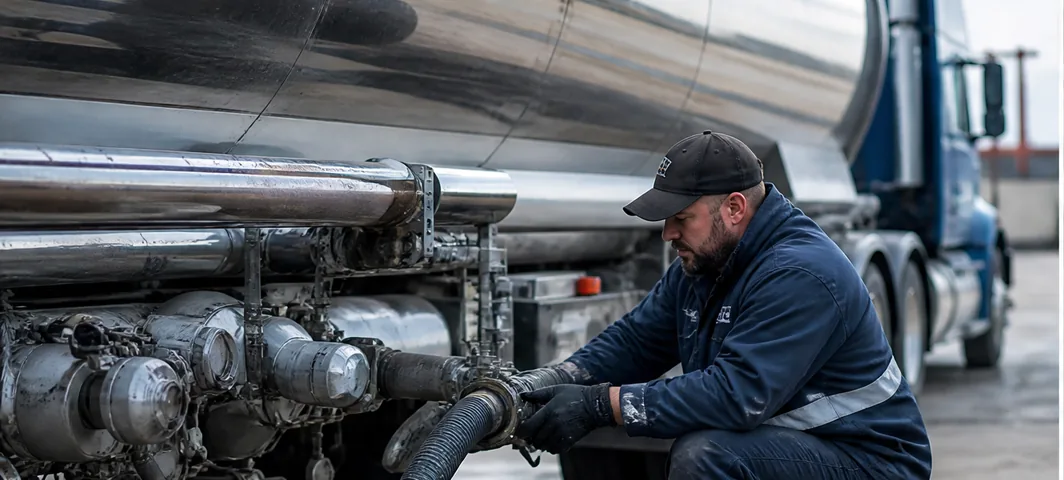
Tanker trucks transport fuel, chemicals, and liquid bulk materials. Fuel tankers deliver gasoline and diesel to gas stations, farms, and fleets. Chemical tankers haul hazardous and non-hazardous liquids for industrial, agricultural, and manufacturing clients. These specialized trucks cost $150,000–$250,000+ new—paying cash ties up capital you need for fuel, hazmat compliance, and payroll.
Fuel delivery and chemical hauling businesses operate on contract-based revenue. You incur costs for equipment, insurance, and compliance before getting paid on delivery or invoice terms. Seasonal demand, route density, and regulatory requirements affect cash flow. Paying $200,000 or more in cash for a tanker can strain reserves and limit your ability to expand routes or add capacity.
Equipment financing spreads the cost over the truck's useful life. Lenders view tanker trucks favorably because well-maintained units with proper certifications hold value. Tanker-specific lenders understand hazmat requirements and industry underwriting. Tax benefits—Section 179 and bonus depreciation for purchases, lease payments as operating expenses—further reduce the true cost. Apply now to get matched with lenders. See trucking business financing for industry context.
A tanker truck is a commercial vehicle designed to transport liquid cargo in a large cylindrical or elliptical tank mounted on a chassis. Tanker types include fuel tankers (gasoline, diesel, propane), chemical tankers (hazardous and non-hazardous liquids), milk tankers, and water haulers. Tanks may be single- or multi-compartment, insulated or non-insulated, and require hazmat certifications for certain materials.
Tanker trucks are used by fuel distributors, chemical haulers, propane suppliers, and bulk liquid transporters. Industries served include oil and gas, agriculture, manufacturing, and logistics. Understanding what tanker trucks are and their certification requirements helps lenders assess your application—they want to see that the equipment supports compliant, revenue-generating operations.
Lenders view tanker financing favorably because specialized tanker trucks hold value when properly maintained and certified. Fuel and chemical tankers serve essential industries with recurring demand. Tank integrity, hazmat certifications, and compliance documentation affect resale value. Lenders who specialize in trucking equipment understand tank specs, DOT requirements, and industry underwriting.
Fuel distributors and chemical haulers are primary tanker buyers. Lenders may assess contract revenue, route stability, and regulatory compliance—not just static financials. Used tankers 5–7 years old are commonly financed when tank condition and certifications are documented. Equipment financing approval timelines are typically 1–5 days for qualified applications. TRAC leases are used for tanker trucks to lower monthly payments with residuals.
Working capital loans are flexible but generally carry higher rates and shorter terms. Use working capital for fuel, payroll, and operating expenses; use equipment financing for the tanker itself to secure better rates and terms tied to the asset. Compare equipment loan vs lease in detail.
Typically 0–20% down, terms 24–84 months. Interest rates 6–15% depending on credit. See typical rates.

TRAC leases use a residual to reduce the financed amount. At lease end, return the truck, purchase at fair market value, or upgrade. Loan vs lease.

SBA 7(a) and 504 loans offer longer terms (7–10+ years) and lower down payments. Approval typically 30–60+ days. Best for established fuel or chemical haulers planning fleet expansion. View SBA loans.
Tanker prices vary by tank type (fuel, chemical, single vs multi-compartment), capacity, chassis, and whether you buy new or used. New tanker trucks range from roughly $150,000–$200,000 for standard fuel tankers to $200,000–$250,000+ for chemical tankers with hazmat specs, multiple compartments, or stainless steel construction. Top chassis brands (Peterbilt, Kenworth, Freightliner) and tank manufacturers add cost.
Used tanker trucks typically cost 30–50% less. A 5-year-old fuel tanker might run $90,000–$150,000. Tank condition, certification status, and inspection history are critical—lenders and buyers require proof of compliance. Many lenders finance used tankers up to 5–7 years old. Obtain a written quote from your dealer; lenders use it to structure financing. Financing used equipment guide.

Rates for tanker truck financing typically run 6–15% and terms 24–84 months, depending on credit, down payment and lender; SBA loans extend further. Typical equipment financing rates.
Monthly payments depend on loan amount, rate, and term. A $200,000 tanker financed at 8% over 60 months would result in roughly $4,050/month. A $150,000 unit at 9% over 48 months would run approximately $3,740/month. Strong credit, larger down payment, and shorter terms typically lower your rate. Use our financing calculator to model scenarios. Down payment requirements vary by lender and credit profile.
| Requirement | Typical Range |
|---|---|
| Credit score | 600+ (680+ for best rates) |
| Down payment | 0–20% |
| Time in business | 1–2+ years |
| Revenue | Proof of business income |
| Equipment quote | Written quote from dealer/seller |
Credit: most lenders look for 600+, and because tanker truck financing is asset-backed some programs go lower when revenue and down payment are strong. Down payment: 0–20%, depending on credit. Time in business: 1–2+ years for standard programs. See credit score requirements and what lenders look at.
Tanker financing carries a regulatory layer that no other truck category does, because the tank itself is a certified pressure vessel with its own inspection history.
· The DOT specification — 406, 407, 412 and the rest — determines what the tank may lawfully carry.
· Cargo tanks are subject to periodic external, internal, pressure and leakage testing on defined intervals. Current records are not optional and they affect value directly.
· Aluminum, stainless and lined steel tanks serve different products and appraise very differently.
· The endorsements determine what the driver may haul, which determines what the truck can earn.
· Hazardous materials carriers carry additional registration and security plan obligations.
· Alongside any product hauling agreements you hold.
Insurance deserves early attention on tanker deals. Coverage for hazardous product hauling is a specialist market and the premium is a large fixed cost. Get the quote before you commit to the payment.
Apply well ahead of when you need the truck. Tanker deals take longer than other trucking finance for a straightforward reason: the lender is underwriting a certified vessel with a test schedule, and verifying that documentation is a step that does not exist in a dry van transaction.
If the purchase is against a product hauling agreement, apply as soon as it is signed. Fuel, chemical and food-grade liquid hauling contracts are specific, term-based and relatively stable, and they are read favorably. They also tell you what specification of tank the work actually requires.
A tank cannot be repurposed across incompatible products. Buying the wrong specification cheaply is buying an asset you cannot load.
A tank due for internal inspection shortly after purchase carries a cost you should be negotiating now.
Test records, registrations and endorsements are checked by shippers as well as regulators. A complete file wins work.
Food-grade liquid hauling avoids hazmat requirements while retaining tanker rates, and the tanks are correspondingly different.
Product changes require tank cleaning, and it is a recurring operating cost that dry freight operators never encounter.
Tanker operations punish shortcuts more than any other segment:
You are buying a vessel you may not be able to load until it is tested, at your cost.
They are separate endorsements with separate requirements. Confirm what the work needs.
Unbaffled tanks handle very differently under braking. It is a driver safety issue and an insurance one.
It is frequently the largest fixed cost after the payment, and it varies enormously by product.
Product hauling agreements have terms. Match the financing to them rather than to the truck's theoretical life.
Confirm the lender's insurance and inspection requirements in writing before funding, and keep the test schedule diarized from day one.
Cash spent on equipment is cash not available for payroll, materials or the next opportunity. Financing spreads the cost over the working life of the tanker truck and keeps reserves intact, and Section 179 and bonus depreciation reduce the after-tax cost further. Carriers feel it most sharply: fuel, insurance and maintenance are due weekly while freight bills settle in thirty to forty-five days.
Standard equipment financing approval takes 1–5 business days from application to funding. Day 1: submit application and documents. Days 2–3: lender review, possible follow-up questions. Day 4–5: approval, documentation, and funding. Funds typically go directly to the seller; you take possession once the deal closes. SBA loans add 30–60+ days.
01
Obtain a written quote from your dealer. Complete one application—we submit to multiple equipment lenders. Share business financials and equipment details.
02
Our team identifies lenders whose programs fit your tanker truck purchase. Fuel, chemical, new or used. We connect you with the right programs.
03
Equipment financing often requires minimal docs—application, bank statements, equipment quote. Decisions in 24–48 hours for many applications.
04
Once approved, sign documents. Funds typically go directly to the seller. You take possession of the tanker truck. Ready to haul.
Browse financing for similar commercial vehicles. One application, we match you with lenders for your equipment type.

Freight tractors. Semi truck financing.
Construction haulers. Dump truck financing.
Reefer for cold chain. Refrigerated truck financing.

Open-deck hauling. Flatbed financing.
Yes. Many lenders finance used tanker trucks, typically those 5–7 years old or newer. Tank condition, certification status, and inspection history affect approval. Used equipment may require a larger down payment and shorter terms.
Most lenders look for 600 or higher. Scores of 680+ qualify for the best rates. Asset-backed financing sometimes works with 580+ when revenue and down payment are strong. Credit score requirements.
1–5 business days for equipment loans and leases. SBA loans add 30–60+ days. Having documents ready—financials, equipment quote, business info—speeds the process. How fast can equipment financing be approved.
It depends. Leasing offers lower monthly payments, potential tax benefits, and easier upgrades. Buying builds equity and works if you plan to use the tanker long-term. Equipment loan vs lease comparison.
Startups face tighter requirements. Most equipment lenders prefer 1–2+ years in business. New businesses may need larger down payments, shorter terms, or a co-signer. SBA loans can help. Apply and we'll match you with lenders that fit your profile.
Typical requirements: 3–6 months of business bank statements, tax returns, equipment quote from your dealer, profit and loss statement, and business formation documents. For chemical tankers, hazmat and tank certifications may be requested. What lenders look at.
Lenders finance both. Chemical tankers may require additional documentation (hazmat, tank specs). Fuel tankers serving gas stations and distributors are commonly financed. Condition and certification matter for both.
Explore our articles on equipment financing requirements, approval timelines, and best practices.
Applications are reviewed the same day. We match fuel delivery and chemical hauling businesses with lenders who specialize in tanker and commercial vehicle financing.