
Updated June 16, 2026
Why Molders Finance Injection Molding Machines
Injection molding machines are high-capital assets. Financing spreads the cost over 60-84 months. Leasing is common for equipment refresh. See equipment financing by type.
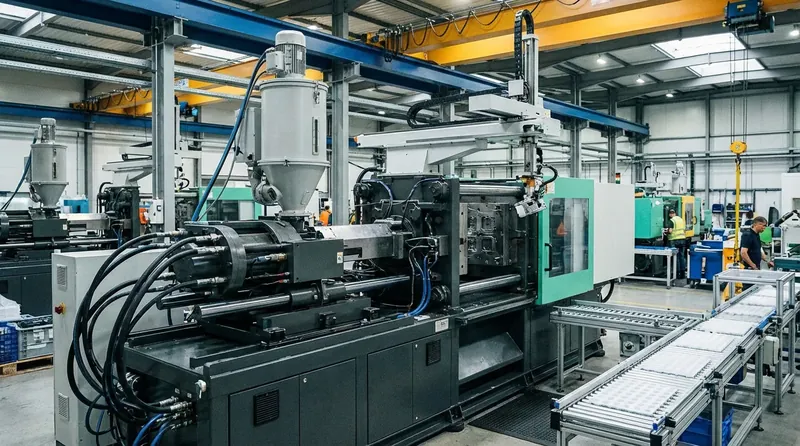
Injection Molding Machine Costs
Machines run roughly $50,000-$1,000,000+ depending on clamp tonnage. Small (50-100 ton) $50K-$150K; mid-size (200-500 ton) $150K-$400K; large (500+ ton) $400K-$1M+. Get a written quote. See equipment financing requirements.
Financing Options: Loans vs Leases
Equipment loans spread the cost; you own at payoff. Leases often have lower payments. Molders often lease. See equipment loan vs lease. Use our calculator.
Including Molds in Financing
Some lenders allow molds to be bundled with the machine; others finance the press only. Molds can add $10,000-$100,000+ per tool. Discuss with your lender and supplier. Molds with clear specifications and resale value may be easier to finance. Document what's included in your quote. See what lenders look at.
Credit and Down Payment Requirements
Most lenders look for 600+ FICO; 680+ qualifies for the best rates. Injection molding machines are substantial collateral; molder revenue and contracts improve approval. Down payments: 0-20% depending on credit and ticket size. See credit score for equipment financing and down payment requirements.
Documentation and Approval Timeline
Gather: equipment quote (make, model, tonnage), 3-6 months bank statements, tax returns, P&L, formation documents. Many lenders approve within 24-48 hours for standard transactions. Larger tickets ($500K+) may require additional underwriting. See approval timeline. Get matched with lenders who finance injection molding equipment.
What Injection Molders Finance
An injection molding operation is more than the press. Shops finance the molding machine itself — priced largely by clamp tonnage, from compact all-electric machines for small precision parts up to large hydraulic and two-platen presses for big shots — plus the auxiliary equipment that keeps it running: material dryers and hopper loaders, chillers and mold-temperature controllers, granulators for regrind, conveyors, and the robots and end-of-arm tooling that automate part removal and packing. Tooling and molds are a major cost too; they are sometimes customer-owned, but when the shop carries them they can often be financed alongside the cell. Because each of these is durable, remarketable equipment, lenders are comfortable underwriting the whole package on one facility, letting a molder stand up a complete production cell without paying cash for any single piece.
A Worked Example
Say you finance a $180,000 all-electric press with a part-removal robot and auxiliaries to win a new program. On a 72-month equipment loan at an illustrative ~9.5% rate, the payment runs roughly $3,300–$3,500 a month (model your own at the payment calculator — example figures, not a quote). The number that matters is whether the program's part volume and margin keep the press busy enough to cover that payment with room to spare. All-electric machines also cut energy cost versus older hydraulics, which improves the math on a long-running job. A lease can lower the monthly figure and build in an upgrade at term-end — attractive if you expect the technology or the program to change inside five years; a loan builds ownership of a machine that, maintained, runs and resells for many years.
Structuring the Financing & What It Costs
Terms typically run 36–84 months, with the rate set by your credit, time in business, the equipment's resale value, and ticket size; 680+ credit and a verifiable program backlog earn the best pricing, while newer shops can still qualify with a 10–20% down payment or a shorter term. A few principles help. Match the term to the machine's working life — presses run for many years, so a longer term keeps the payment proportional to output. Bundle the cell — press, robot, dryer, and chiller in one package simplify approval and arrive ready to produce together. Preserve cash for tooling and material — finance the iron and keep working capital for molds, resin, and the labor that fills orders. And mind the tax side: Section 179 and bonus depreciation can let a profitable molder expense much of the equipment cost in year one, which changes the after-tax cost of buying versus leasing — worth a quick check with your accountant. Approvals on standard tickets often come back in 24–48 hours. For where your profile lands, see credit score for equipment financing.
Lease vs Loan for a Molding Shop
Both are common; the right pick follows your program horizon and tax picture. A loan builds ownership and suits shops running a press for the long haul on stable, repeat programs — at payoff the machine is a free-and-clear asset you can keep running or sell. A lease keeps the monthly payment lower and bakes in flexibility at term-end (buy, upgrade, or return), which fits shops chasing programs that turn over or technology that keeps advancing. Many molders run a blend — owning the core presses they will keep for a decade and leasing the machines tied to a specific customer program. Whichever you choose, finance the equipment and protect the cash that buys resin and pays the operators, because an idle press waiting on material does not cover its own payment.
Frequently Asked Questions
How much does an injection molding machine cost?
Machines run $50,000-$1,000,000+ depending on clamp tonnage. Small $50K-$150K; large $400K-$1M+.
Can I finance injection molding equipment?
Yes. Equipment lenders routinely finance injection molding machines. Credit 600+, typical approval in 24-48 hours.
Lease or buy injection molding equipment?
Leasing is popular—lower payments, preserve capital. Molders often lease.
What credit score do I need for injection molding financing?
Most lenders look for 600+ FICO. Manufacturing revenue improves approval.
Does injection molding financing include molds?
Some lenders allow molds to be bundled; others finance the press only. Discuss with your lender.