
Updated June 11, 2026
Quick answer
Equipment financing typically requires a 600+ FICO, 6+ months in business, $10k+ monthly revenue, 3 months of bank statements, an equipment invoice or quote, and a credit application. Down payment is 0-20% depending on credit profile and equipment age. Most pre-approvals decision in 24-48 hours of a complete package.
Model your payment with the equipment financing calculator →
Quick Answer: To qualify for equipment financing, lenders usually look for 550+ credit (best terms at 700+), 6+ months in business, stable revenue, and complete documentation (equipment quote plus recent bank statements). Down payments often range 0-20% based on risk and equipment type. If approval is tight, review equipment financing with bad credit and what lenders look at for approval. When you are ready to compare offers, start with one application.
FAQ Quick Hits
Can new businesses qualify for equipment financing?
Yes, but startups often need stronger owner credit, higher down payment, or lower initial loan amounts than established companies.
Do lenders verify the equipment vendor before approval?
Usually yes. Most lenders validate vendor details, invoice quality, and equipment value before final funding.
Documentation and Approval Paths by Borrower Profile
Most borrowers treat requirements like a static checklist, but approval speed and pricing are usually driven by how well your file matches your risk tier. Established businesses with stable deposits can often move through streamlined paths, while newer or recovering-credit borrowers benefit from full-context packages that explain revenue quality and use of equipment.
To reduce denials, align your documentation with lender decision points: show payment capacity, business continuity, and collateral clarity. If your numbers are volatile, add short explanatory notes (seasonality, one-time expenses, or growth investment). Underwriters reward coherent files.
- Streamlined path: clean credit, stable deposits, strong vendor invoice
- Bridge path: moderate credit with higher down payment and stronger docs
- Recovery path: specialty lender, tighter terms, clear refinance plan later
- Scaling path: higher limits tied to demonstrated utilization and ROI
This article remains requirements-first; use page-specific vertical guides for industry use cases to avoid keyword overlap and cannibalization.
How Underwriters Rank Risk in Equipment Financing Files
To improve approval odds, it helps to think like an underwriter. Most equipment files are assessed across three layers: borrower strength, collateral quality, and transaction clarity. Borrower strength covers credit behavior and operating cash consistency. Collateral quality covers resale profile, useful life, and market demand for the equipment category. Transaction clarity covers whether invoices, vendor details, and ownership docs make sense without unresolved gaps.
Many applicants focus almost exclusively on borrower score, but underwriters often approve moderate-credit borrowers when collateral and transaction quality are strong. The reverse is also true: high-credit borrowers can face friction when the asset has weak resale confidence or documentation is inconsistent. The practical lesson is to optimize the complete file, not a single metric.
Risk ranking also changes by ticket size. Smaller transactions may pass with lighter verification if data is clean. As amount grows, lenders usually require deeper financial evidence and stricter policy checks. If you are near a threshold where requirements increase, it can be smarter to stage purchases than force one oversized request with weaker terms.
- Borrower layer: score, payment history, deposit stability, debt load
- Collateral layer: brand liquidity, age, condition, secondary market demand
- Transaction layer: vendor legitimacy, invoice clarity, use-of-funds logic
- Structure layer: term/down payment alignment to asset life and risk tier
If you have mixed signals in your file, compensate intentionally. For example, thinner time in business can be offset by stronger down payment and cleaner financial reporting. Weaker credit can be offset by higher-quality collateral and stronger bank behavior. The key is to present compensating factors clearly so the decision path is obvious.
Another effective tactic is to pre-package optional documents rather than waiting for follow-up requests. Including P&L context, brief ownership narrative, and confirmation of insurance readiness can shorten back-and-forth and reduce the chance your file stalls in conditional approval. Approval speed is often a function of how many decision points the underwriter has to pause for.
Use this framework to diagnose file readiness before applying broadly. When each risk layer is addressed, you move from “hope for approval” to “engineered approval.”
Pre-Submission Quality Control
Run a final quality control check before submission: verify all dates align across statements, ownership names match formation documents, and invoice totals reconcile with requested amount. Small inconsistencies can trigger fraud reviews or additional conditions that materially slow funding.
When possible, include one-page summaries for revenue trend and intended equipment use. This helps underwriters connect the request to business performance quickly, improving both speed and confidence.
Requirement Prioritization by Funding Urgency
If funding is time-sensitive, prioritize tasks that remove hard stops first: complete vendor invoice package, core financial statements, and ownership documentation. Secondary optimization items (extended narratives, optional schedules) should still be prepared but can follow once hard-stop requirements are fully satisfied.
This sequencing avoids the common trap of spending time polishing non-critical details while core decision items are still incomplete. In practical terms, lenders cannot move forward without proof of collateral and repayment capacity. Once those are verified, additional context can improve pricing and speed.
A disciplined requirement sequence improves close probability and shortens approval cycles, especially when multiple lenders are reviewing the same file.
Keep a reusable internal checklist so future equipment requests can be submitted faster with fewer errors and stronger consistency.
As your business scales, this repeatable process becomes a strategic advantage because each new financing request starts with higher data quality and lower execution risk.
Teams that institutionalize this approach typically experience fewer conditional surprises and more predictable funding windows. That consistency can support better purchasing decisions because operations can plan around realistic capital timelines instead of uncertain approval outcomes.
Equipment Financing Requirements at a Glance
| Requirement | Typical Minimum | Notes |
|---|---|---|
| Time in business | 6+ months | Some programs accept newer; 2+ years preferred for best terms |
| Monthly revenue | $10,000+ | Higher revenue unlocks larger amounts and better rates |
| Credit score | 550+ FICO | 700+ gets best terms; see bad credit options |
| Down payment | 0–20% | Depends on credit and equipment; see down payment guide |
| Equipment | Identifiable value | Strong resale markets (construction, trucks, medical) approve more easily |
Credit Score Requirements
Lenders typically evaluate personal FICO scores. Equipment financing is asset-backed, so many programs accept 550–600+ when other factors are strong. A 720+ borrower typically gets the best rates, longest terms, and minimal or no down payment. Scores in the 600–650 range often qualify with slightly higher rates or moderate down payments. Below 600, expect specialty lenders, larger down payments, and shorter terms. See credit score requirements for equipment financing for tiers by program. If your credit is challenged, equipment financing with bad credit covers strategies and lender options.
Revenue and Cash Flow Requirements
Lenders look for consistent revenue that supports the new equipment payment. Many programs require at least $10,000 in monthly revenue; higher amounts unlock larger financing and better terms. Bank statements (3–6 months) are the primary verification. Lenders assess deposit patterns, average daily balance, and whether cash flow can cover the new payment plus existing obligations. Seasonal businesses may need to show that slower months still support repayment. Declining revenue or frequent overdrafts can hurt approval. Strong, steady deposits improve your file.
Time in Business
Most equipment lenders prefer 1–2+ years in operation. Some programs accept 6 months or newer businesses when credit and revenue are strong. Startups face tighter requirements: stronger personal credit (often 680+), clear business plan, and sometimes a larger down payment. The equipment itself reduces risk, so time-in-business thresholds are often lower than for unsecured loans. If you are under 2 years, emphasize credit strength, equipment value, and revenue trajectory.
Equipment Type and Resale Value
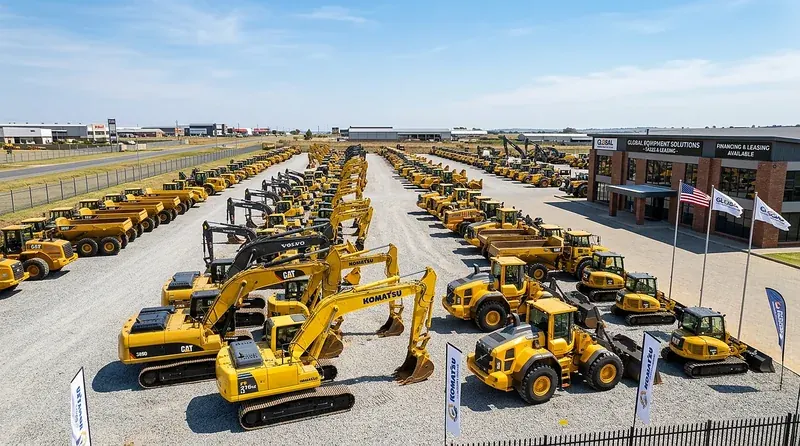
The equipment being financed matters. Lenders prefer assets with established secondary markets: construction machinery (excavators, loaders, skid steers), commercial vehicles (semi-trucks, box trucks), manufacturing equipment, medical devices, and restaurant equipment. These can be valued and resold if you default. Highly customized or niche equipment is harder to finance. Used equipment may qualify with shorter terms; see can you finance used equipment. Browse equipment financing by type for industry-specific options.
Down Payment Expectations
Down payment requirements depend on credit, equipment, and lender. Strong credit (700+) may qualify for 0–10% down or 100% financing. Moderate credit (600–650) often requires 5–15%. Lower credit may need 15–25% or more. A larger down payment reduces lender exposure and can offset weaker credit. See down payment requirements for equipment financing for detailed tiers. For zero-down strategies, see equipment financing no money down.
Documentation Checklist
Having documents ready speeds approval. Typical items:
- Bank statements: 3–6 months, business account(s)
- Equipment quote or invoice: From vendor or dealer
- Business formation documents: Articles of incorporation, operating agreement, or similar
- Tax returns: Business and sometimes personal (1–2 years) for larger deals
- Profit & loss / financial statements: For larger amounts or more involved underwriting
Incomplete applications delay the process. Submitting everything upfront signals preparedness. See what lenders look at for equipment financing for the full underwriting picture.
How to Improve Your Approval Odds
- Check your credit report: Dispute errors; corrections can improve your score.
- Reduce revolving utilization: Pay down credit card balances below 30% of limits.
- Increase down payment: Even 5–10% more can improve approval and terms.
- Choose equipment with strong resale value: Construction, trucks, and manufacturing equipment approve more easily.
- Provide complete documentation: Avoid back-and-forth delays.
- Apply through a single channel: A marketplace or broker can submit to multiple lenders with one application, limiting credit inquiries.
Equipment Loan vs Lease: Do Requirements Differ?
Both loans and leases evaluate similar factors. Leases may offer slightly more flexibility for moderate credit when the equipment has strong residual value, since the lessor retains ownership. Compare structures in equipment loan vs lease. Some lenders specialize in one or the other; applying through a partner who has access to both can surface the best fit.
Equipment Financing vs SBA: Different Requirements
SBA loans typically require 660–680+ FICO, 2+ years in business, and heavier documentation. Equipment financing is often more flexible on credit and time in business and has lighter paperwork. If you do not meet SBA requirements, equipment financing may still be an option. See equipment financing vs SBA loan for the full comparison.
Pre-Application Checklist
- Know your credit score (check AnnualCreditReport.com)
- Gather 3–6 months of bank statements
- Obtain an equipment quote or invoice
- Have business formation documents ready
- Estimate your down payment (0–20% depending on profile)
- Apply through a single channel to avoid multiple credit pulls
Summary
Equipment financing requirements center on credit, revenue, time in business, and equipment value. Many programs accept 550+ FICO and 6+ months in business when revenue and equipment are strong. Prepare documentation, consider your down payment, and apply through a partner who can match you with multiple lenders. Get matched with equipment financing options that fit your profile.
Requirements in Practice: Governance That Improves Approval Quality
Beyond minimum thresholds, lenders reward borrowers who show operational control. That means bank accounts that reflect real operating activity, financial statements that reconcile to deposits, and equipment quotes that match the legal borrower entity. When those elements align, underwriting moves faster because analysts spend less time resolving contradictions.
If you are close to a program minimum, strengthen the file with context: short memo on revenue quality, seasonality, or one-time expenses; debt schedule with monthly payments; and a realistic utilization plan for the equipment. These additions often matter more than a marginal credit score difference.
Equipment Collateral: Specs, Serials, and Advance Rates
Titling, UCC, and Lien Priority for Equipment
Sources & Further Reading
- Federal Reserve Small Business Credit Survey — Survey data on how small firms actually apply for and receive credit -- approval rates, funding speed and reasons for denial.
- IRS Publication 946: How To Depreciate Property — The authority on Section 179 expensing and bonus depreciation for financed equipment -- what actually determines the after-tax cost.
Rate, fee, and policy figures cited above reflect current published guidance as of the article publication date. Always confirm current figures with the cited source or your lender before acting on financing decisions.
Frequently Asked Questions
What are the minimum requirements for equipment financing?
Typical minimums: 6+ months in business, $10,000+ monthly revenue, 550+ FICO for many programs. Requirements vary by lender; some accept newer businesses or lower credit when equipment value and revenue are strong.
What credit score do I need for equipment financing?
Many programs accept 550-600+ FICO. Strong credit (700+) gets best rates and terms. Equipment financing is asset-backed, so credit requirements are often more flexible than unsecured loans.
What documentation do I need for equipment financing?
Typical docs: 3-6 months bank statements, equipment quote or invoice, business formation documents, and sometimes tax returns. Larger deals may require P&L and balance sheet.
Can I get equipment financing with bad credit?
Yes. Many lenders accept 550-600+ when the equipment has strong resale value, you have steady revenue, and can provide a down payment. See equipment financing with bad credit for a full guide.
Do I need a down payment for equipment financing?
It depends. Strong credit (700+) may qualify for 0-10% down. Lower credit often requires 10-20% or more. See down payment requirements for equipment financing for details.
Can new businesses qualify for equipment financing?
Yes. Many lenders finance newer businesses, but they may require stronger owner credit, additional documentation, or higher down payments than established companies.
Do lenders verify the equipment vendor before approval?
Yes. Lenders typically verify the vendor, invoice details, and equipment value before funding to reduce fraud and collateral risk.