
Updated June 16, 2026
Why Manufacturers Finance Robotics
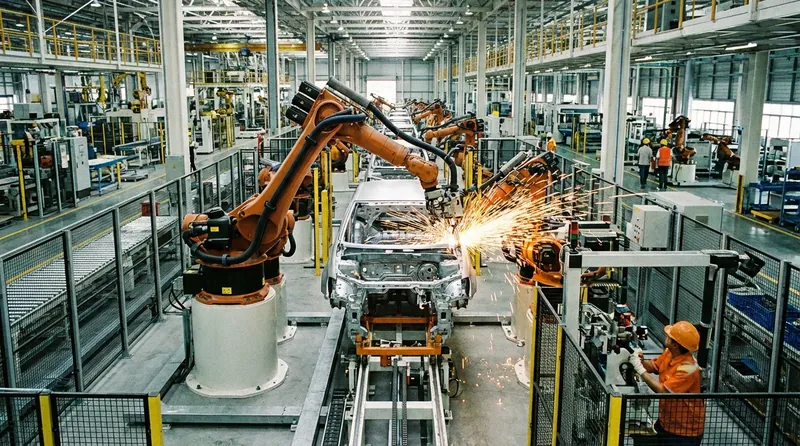
Robotics automate welding, picking, packing, assembly, and more. Financing spreads the cost over 60-84 months. Leasing is common—technology evolves. See equipment financing by type.
Robotics and Automation Costs
Industrial robots run roughly $25,000-$500,000+. Articulated arms $25K-$150K; cobots $25K-$50K; complex systems $150K-$500K+. Get a written quote from your integrator. See equipment financing requirements.
Financing Options: Loans vs Leases
Equipment loans spread the cost over 60-84 months; you own at payoff and can depreciate. Leases often have lower monthly payments and full payment deductibility; at term end you can purchase or upgrade. Many manufacturers lease for cash flow and upgrade flexibility—robotics technology evolves. See equipment loan vs lease. Use our calculator to model payments.
Including Integration and Installation
Some lenders allow integration (end-of-arm tooling, conveyors, safety) and installation to be bundled with the robot; others finance equipment only. Discuss with your integrator and lender. Modular systems with clear equipment identification may be easier to finance. Document what's included in your quote. See equipment financing requirements.
Credit and Down Payment Requirements
Most lenders look for 600+ FICO; 680+ qualifies for the best rates. Robotics are substantial collateral; manufacturing revenue and backlog improve approval. Down payments: 0-20% depending on credit and ticket size. See credit score for equipment financing.
Documentation and Approval Timeline
Gather: equipment quote (make, model, application), 3-6 months bank statements, tax returns, P&L, formation documents. Many lenders approve within 24-48 hours for standard transactions. Larger systems may require additional underwriting. See approval timeline. Get matched with lenders who finance industrial robots.
What Automation Buyers Finance
A robotics project is rarely just an arm. Shops finance the robot or cobot itself (priced by payload, reach, and speed), plus everything that turns it into a working cell: end-of-arm tooling and grippers, vision and sensors, safety fencing and scanners, controllers and conveyors, and the integration and programming labor that makes it production-ready. Common applications — machine tending, welding, palletizing, pick-and-place, and assembly — each carry their own tooling. Many lenders will bundle the integration and install with the hardware when the quote identifies the equipment clearly; others finance the hardware and ask you to carry soft costs separately. Because robots hold value and have long service lives, the cell is straightforward collateral, which is why automation is one of the more financeable manufacturing investments.
A Worked Example
Say you finance a $120,000 collaborative robot cell — cobot, gripper, vision, and integration — to automate machine tending on a night shift. On a 60-month equipment loan at an illustrative ~9.5% rate, the payment runs roughly $2,500–$2,650 a month (model your own at the payment calculator — example figures, not a quote). The decisive math here is labor: if the cell reliably replaces or redeploys even a fraction of a shift's labor and lifts throughput, the monthly payment is usually well below the cost it offsets — which is exactly the case automation financing is built to make. That payback framing also strengthens your loan file: lenders fund automation more readily when you can show the revenue or labor it unlocks.
Structuring the Financing & What It Costs
Terms typically run 36–72 months for automation, with the rate driven by credit, time in business, ticket size, and how clearly the equipment is identified on the quote. Strong files (680+ FICO, established revenue, a backlog the cell will serve) earn the best pricing; newer operations can still qualify with a down payment of 10–20% or a shorter term. Keep a few things in mind. Get the integrator's quote itemized so the lender can separate financeable hardware from soft costs — modular, clearly-identified systems finance most easily. Bundle where you can so the cell arrives and commissions together. Preserve cash for programming changes and spare tooling. And weigh the tax side: Section 179 and bonus depreciation can let a profitable shop expense much of an automation purchase in year one, improving the after-tax payback — check with your accountant. Standard approvals often come back in 24–48 hours. See credit score for equipment financing.
Lease vs Loan for Automation
Automation is a frequent lease candidate because the technology moves quickly. A lease keeps payments lower and lets you upgrade or return at term-end — useful when vision, controls, and cobot capability are advancing and you don't want to be stuck on an old platform. A loan builds ownership and fits a proven, stable application you'll run for years. Many manufacturers own the robots tied to long-running core processes and lease the cells attached to a specific, evolving program or customer. Either way, financing the cell rather than paying cash keeps capital free for the people and tooling that keep it producing — an automated cell still needs programming, maintenance, and someone to feed it.
Frequently Asked Questions
How much do industrial robots cost?
Industrial robots run $25,000-$500,000+ depending on payload, reach, and application. Cobots $25K-$50K; complex systems $150K-$500K+.
Can I finance industrial robots and automation?
Yes. Equipment lenders routinely finance robotics. Credit 600+, typical approval in 24-48 hours. Leasing is common.
Lease or buy robotics equipment?
Leasing is popular—technology evolves, upgrade flexibility. Manufacturers often lease robotics.
What credit score do I need for robotics financing?
Most lenders look for 600+ FICO. Manufacturing revenue improves approval.
Does robotics financing include integration and installation?
Some lenders allow integration to be bundled; others finance equipment only. Discuss with your supplier.