
Updated April 10, 2026
Why Utility Contractors Use Bucket Trucks
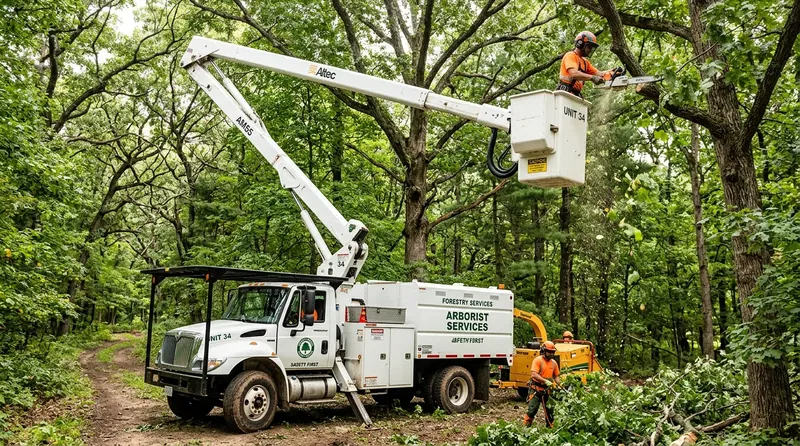
Linemen need aerial access for power line maintenance and construction. Tree trimmers use bucket trucks for canopy work. Telecom and cable installers use them for pole work. One financed bucket truck can expand your service capacity and win larger contracts. See equipment financing by type.
Bucket Truck Costs: New vs Used
New bucket trucks run roughly $80,000-$250,000+ depending on reach (35-65+ ft), chassis, and features. Digger derricks and material handlers add cost. Used 3-5 year old units typically cost 25-40% less. Get a written quote with make, model, reach, chassis, and VIN. See financing used equipment.
Financing Options: Loans vs Leases
Equipment loans spread the cost over 36-72 months; you own at payoff. Leases often have lower payments and full payment deductibility. See equipment loan vs lease. Use our calculator.
Credit and Down Payment Requirements
Most lenders look for 600+ FICO; 680+ qualifies for the best rates. Down payments: 0-15% for new, 10-20% for used. Utility contracts and revenue improve approval. See credit score for equipment financing and down payment requirements.
How Lenders Evaluate Bucket Trucks
Lenders consider make (Altec, Terex, etc.), reach, chassis, condition, and maintenance history. Boom inspections and certifications may be required. See what lenders look at for equipment financing.
Documentation and Approval Timeline
Gather: truck quote, 3-6 months bank statements, tax returns, P&L, formation documents, utility contracts if available. Many lenders approve in 24-48 hours. See equipment financing requirements and approval timeline.
Rates and Monthly Payments
Rates typically run 6-14%. For a $120,000 bucket truck at 8% over 60 months with 10% down, expect roughly $2,000-$2,200/month. Use our calculator. See typical equipment financing rates.
What You Are Usually Trying to Solve
Most searches here boil down to one of three problems: replacing an unreliable unit before it costs you a contract, adding reach or capacity to bid bigger utility or tree jobs, or preserving cash for payroll, insurance, and bond requirements while still putting a truck to work. Equipment loans and leases use the truck as collateral, which is different from unsecured working capital—if you need to smooth seasonal cash flow after the truck is funded, pairing equipment financing with a business line of credit is a common structure (understand costs and covenants on each). For very large fleet expansions or real estate-heavy operations, compare timelines with equipment financing vs SBA so you pick the right tool.
Insurance, Titles, and Operating Reality
Underwriters want to see that the truck matches how you operate. Be ready to discuss commercial coverage, how the lender may be listed as loss payee, and registration for the states you work in. For working trucks, maintenance history, boom hours, and any inspection or certification paperwork reduce collateral risk. If you are cross-shopping offers, read red flags in equipment finance agreements before you sign.
Frequently Asked Questions
How much does a bucket truck cost?
New bucket trucks run $80,000-$250,000+ depending on reach and features. Used 3-5 year old units may be 25-40% less.
Can I finance a bucket truck for a tree service?
Yes. Equipment lenders finance bucket trucks for tree trimmers, utility contractors, and telecommunications. Credit 600+, typical approval in 24-48 hours.
What credit score do I need for bucket truck financing?
Most lenders look for 600+ FICO. Scores of 680+ qualify for the best rates. Some programs work with 580+ when revenue and down payment support the application.
Does boom reach affect bucket truck financing?
Lenders consider reach, make, and condition. Higher-reach units cost more and may require larger down payment for used equipment.
How fast can I get approved for bucket truck financing?
Many lenders approve within 24-48 hours when documentation is complete. Utility contractor revenue and contracts improve approval odds.
Is bucket truck financing structured like equipment financing or a standard commercial auto loan?
Most bucket truck deals are underwritten as commercial equipment or specialty vocational vehicles with emphasis on boom specs, chassis, mileage, and resale. Very high-reach or customized units are rarely treated like a plain passenger or light-duty auto note.
Do lenders care about insurance, DOT setup, and boom inspections?
Yes. Expect questions about commercial coverage, lender loss payee requirements when applicable, registration, and maintenance or inspection records that support the collateral’s value and safe operation.
Can you finance a bucket truck?
Yes. Bucket and aerial-lift trucks finance as titled vocational vehicles through equipment and vocational-truck programs, typically over 48–72 months, with the truck as collateral.
What do lenders evaluate on a bucket truck?
The boom and its certification and inspection history, truck age and mileage, your utility or line-clearance contracts, credit, and time in business. A certified, well-maintained unit with steady contracts finances best.