
Updated June 11, 2026
Quick answer
Equipment financing funds in 3-10 days at 8-18% APR over 36-84 months; SBA 7(a)/504 funds in 30-90 days at ~prime+2.75% over 10-25 years. Pick equipment financing for speed and a single asset under $250k. Pick SBA when long-term rate savings on $250k+ outweigh the 6-12 week wait and the personal guarantee. They're not mutually exclusive — a broker can run both pools in parallel.
Compare payment estimates with the equipment financing calculator →
Quick Comparison: Equipment Financing vs SBA Loan
| Factor | Equipment Financing | SBA 7(a) / 504 |
|---|---|---|
| Speed to funding | 24–72 hours | 30–60+ days |
| Typical credit | 550–600+ (equipment-backed) | 660–680+ |
| Use of funds | Equipment only | 7(a): equipment, working capital, CRE, acquisition; 504: CRE, long-term equipment |
| Terms | 36–72 months (asset life) | 10–25 years |
| Rates | 8–30%+ APR (varies by credit) | Competitive, SBA-capped; 504 fixed |
| Down payment | 0–20% (often 100% financing) | 10–20% (504: 10% for CRE) |
| Documentation | Lighter (bank statements, equipment quote) | Heavier (tax returns, P&L, business plan) |
Equipment Financing: What It Is and When to Use It
Equipment financing includes equipment loans and leases. The equipment itself secures the financing, so lenders can approve borrowers with lower credit scores than unsecured loans require. Many equipment lenders accept 550–600+ FICO because they can repossess and resell the asset if you default. See equipment financing with bad credit for details.
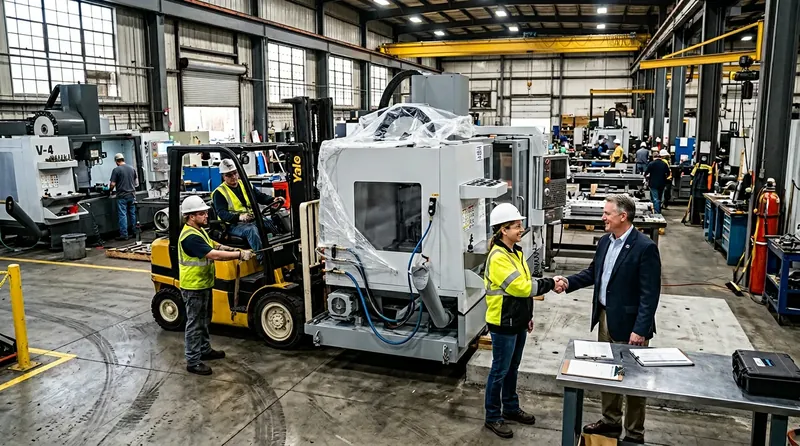
Funding is fast: 24–72 hours after approval for streamlined programs. Applications are simpler than SBA; you typically provide bank statements, equipment quote, and basic business info. Equipment financing funds only the equipment purchase, not working capital or real estate. For a single piece of machinery, a truck, or a technology upgrade, equipment financing is often the fastest path. Terms typically match the useful life of the asset—3–5 years for technology, 5–7 years for heavy machinery. Some programs offer 100% financing with no down payment for qualified borrowers. See how fast equipment financing can be approved for typical timelines.
SBA Loans for Equipment: 7(a) and 504
SBA loans are government-backed business loans. Two programs fund equipment:
- SBA 7(a): Flexible use. Funds equipment, working capital, inventory, real estate, and business acquisition. Up to $5 million, 10–25 year terms. Variable or fixed rates within SBA caps.
- SBA 504: Fixed assets only. Funds owner-occupied commercial real estate and long-term equipment (10+ year useful life). 10% down, 40% SBA second lien, 50% bank first. Long-term fixed rates.
SBA loans favor established businesses with 2+ years in business, solid credit (660–680+), and clean documentation. Approval takes 30–60 days or more. The payoff: lower rates, longer terms, and higher leverage than conventional loans. SBA 504 equipment loans require the equipment to have a 10+ year useful life; 7(a) is more flexible for general equipment. Startups and businesses with credit below 660 often find SBA out of reach, which is why equipment financing exists as a faster, credit-flexible alternative. See SBA 7(a) vs 504 for the full comparison.
When to Choose Equipment Financing
- You need funding quickly. A contract deadline, broken machine, or time-sensitive opportunity doesn't wait 60 days. Equipment financing funds in 24–72 hours after approval; SBA takes 30–60+ days. For urgent needs, equipment financing is the practical choice.
- Your credit is below 660. Equipment financing is asset-backed; many lenders accept 550–600+ when the equipment has strong resale value. SBA lenders typically require 660–680+.
- You only need equipment. No working capital, no real estate. Equipment financing is purpose-built and streamlined for equipment-only transactions.
- You're a newer business. 6–12 months in business may qualify for equipment financing with strong revenue. SBA favors 2+ years.
- You want minimal paperwork. Bank statements, equipment quote, and basic docs vs SBA's business plan, tax returns, and financial statements.
When to Choose an SBA Loan
- You have strong credit (660+). SBA loans offer the best rates for qualifying borrowers. If you qualify, the long-term savings can be meaningful.
- You can wait 30–60+ days. SBA isn't for emergencies. Plan ahead; the process takes time.
- You need equipment plus working capital or real estate. A 7(a) loan can fund equipment and working capital in one transaction. A 504 can combine real estate and equipment.
- You want the longest terms and lowest rates. 10–25 year terms and SBA-capped rates beat most equipment financing for prime borrowers. The total interest savings over the life of the loan can be substantial when you qualify.
- You are buying a building. SBA 504 is ideal for owner-occupied commercial real estate with 10% down. Equipment financing does not cover real estate.
Cost Comparison: Equipment Financing vs SBA
Prime borrowers (700+ FICO) typically get better rates with SBA loans. A $100,000 equipment purchase: SBA 7(a) might offer 9–11% APR over 10 years; equipment financing might be 10–14% over 5–7 years. SBA wins on rate and term length when you qualify.
For credit-challenged borrowers (600–650 FICO), equipment financing may be the only realistic option. SBA lenders often decline below 660. Equipment financing at 18–24% APR over 5 years is expensive, but it gets you the equipment. Refinancing into SBA or lower-rate equipment financing later is possible when your credit improves. Use our loan calculator to compare monthly payments and total interest. See typical equipment financing rates for rate ranges by profile.
Real-World Scenarios
Contractor needs an excavator in 2 weeks. A construction company wins a project and needs a $120,000 excavator. SBA would take 60+ days. Equipment financing approves in 48 hours and funds within a week. The contractor gets the machine, starts the job, and pays a higher rate but captures the contract. Equipment financing is the right choice.
Manufacturer with 700 FICO plans equipment upgrade. A 5-year-old manufacturing business needs $200,000 in CNC equipment. They have 6 months before the current machines need replacement. They apply for SBA 7(a), get approved at 10% APR over 10 years, and lock in low monthly payments. SBA is the right choice.
Startup restaurant needs kitchen equipment. A restaurant open 8 months needs $50,000 in refrigeration and cooking equipment. SBA favors 2+ years in business. Equipment financing approves with 15% down and 48-month terms. Equipment financing is the right choice. They can refinance with SBA or a lower-rate lender once established.
Documentation: What You Will Need
Equipment financing: Typically 3–6 months of bank statements, equipment quote or invoice, business formation documents, and sometimes tax returns. Applications are streamlined; some lenders approve with minimal paperwork for qualified equipment and revenue profiles.
SBA loans: Business plan, 2–3 years of tax returns (personal and business), profit and loss statements, balance sheet, debt schedule, use of funds narrative, and personal financial statements. SBA requires more documentation because the process is more thorough and the government backs a portion of the loan. Plan for several weeks of gathering and organizing documents. If you are unsure which path fits your profile, applying through a single channel that evaluates both SBA and equipment financing can surface your best options without multiple applications.
Equipment Loan vs Lease: Does It Matter for SBA vs Equipment Financing?
Equipment financing includes both loans and leases. SBA 7(a) and 504 typically fund equipment purchases (loans), not leases. If you prefer a lease structure—lower monthly payments, flexibility to upgrade at term end, or operating lease tax treatment—equipment financing is the path. SBA funds ownership; equipment financing funds both ownership and lease structures. See equipment loan vs lease for the full comparison.
Can You Use Both?
Yes. Businesses often combine SBA and equipment financing:
- SBA 504 for real estate + equipment: One 504 project can finance an owner-occupied building and long-term equipment. 10% down, fixed rates.
- SBA 7(a) for working capital, equipment financing for machinery: Use 7(a) for payroll and inventory; use equipment financing for a forklift or CNC machine. Each serves a different need.
- Equipment financing now, SBA later: Get equipment quickly with equipment financing. When your business matures and credit strengthens, refinance with SBA or conventional equipment loan for better terms.
Quick Decision Framework
- Need funding in under 2 weeks? → Equipment financing.
- Credit below 660? → Equipment financing (SBA typically requires 660+).
- Credit 700+ and can wait 60 days? → SBA likely offers better rates and terms.
- Need equipment plus working capital or real estate? → SBA 7(a) or 504 can combine in one deal.
- Prefer a lease over a loan? → Equipment financing (SBA funds purchases, not leases).
- New business (under 2 years)? → Equipment financing is more accessible.
Summary: Equipment Financing vs SBA Loan
Choose equipment financing when you need speed, have credit below 660, or want a simple equipment-only transaction. Choose an SBA loan when you have strong credit, can wait 30–60+ days, and want the lowest rates and longest terms. Both fund equipment; the right choice depends on your timeline, credit, and use of funds. If you're on the fence, apply once and let lenders evaluate both options. A marketplace or broker can route your application to SBA and equipment lenders, returning the best-fit offers so you can compare and decide. Get matched with lenders for both options to see what you qualify for.
Decision Framework: Equipment Loan vs SBA
Choose based on operational priorities. If speed and asset-focused underwriting are critical, equipment financing is often more direct. If you need broader use of proceeds and longer amortization, SBA may be the better fit despite heavier documentation and timeline requirements.
Don't compare only rate. Include closing speed, documentation burden, collateral scope, guarantees, and prepayment terms. A slower structure with lower rate can still be more expensive if project timing is missed.
Scenario-Based Selection
Use equipment financing when the asset itself drives repayment and timing is sensitive. Use SBA when the project includes multiple spending buckets and longer runway needs. In mixed cases, borrowers sometimes stage financing: equipment first for speed, then broader refinancing when operations stabilize.
Final Selection Guidance
Use equipment financing when speed and asset-specific underwriting are decisive. Use SBA when broader project scope and longer-term flexibility justify heavier process. Compare full lifecycle cost and execution risk before deciding.
Additional Note on Execution Risk
When project timing is tight, execution risk can outweigh nominal rate differences. A slightly higher-cost structure that closes on schedule can preserve far more value than a delayed lower-rate option.
Sources & Further Reading
- SBA 7(a) Loan Program — Official terms, eligibility and the $5 million program maximum for the SBA's primary business loan.
- IRS Publication 946: How To Depreciate Property — The authority on Section 179 expensing and bonus depreciation for financed equipment -- what actually determines the after-tax cost.
- Federal Reserve Small Business Credit Survey — Survey data on how small firms actually apply for and receive credit -- approval rates, funding speed and reasons for denial.
Rate, fee, and policy figures cited above reflect current published guidance as of the article publication date. Always confirm current figures with the cited source or your lender before acting on financing decisions.
Frequently Asked Questions
Should I use equipment financing or an SBA loan for equipment?
Use equipment financing when you need funding in 24-72 hours, have credit below 660-680, or want a simple, equipment-only transaction. Use an SBA loan when you have strong credit, can wait 30-60+ days, and want the lowest possible rates with 10-25 year terms. SBA 7(a) and 504 both finance equipment.
Is equipment financing faster than an SBA loan?
Yes. Equipment financing typically funds in 24-72 hours after approval. SBA 7(a) and 504 loans take 30-60 days or more due to documentation, SBA processing, and underwriting. Equipment financing is for speed; SBA is for best long-term terms.
Can an SBA loan be used for equipment?
Yes. SBA 7(a) loans fund general equipment. SBA 504 loans fund long-term equipment (10+ year useful life) and owner-occupied commercial real estate. Both offer competitive rates and long terms.
What credit score do I need for equipment financing vs SBA?
Equipment financing: many lenders accept 550-600+ FICO because the equipment secures the loan. SBA loans: most lenders prefer 660-680+ FICO. Equipment financing is more flexible for credit-challenged borrowers.
Can I use both SBA and equipment financing?
Yes. It's common to use SBA 504 for real estate and equipment in one project, or SBA 7(a) for working capital while using equipment financing for machinery. Each serves a different purpose; they can complement each other.