
Updated April 4, 2026
Quick answer
Construction and heavy equipment is the easiest category to finance because excavators, bulldozers, loaders, skid steers, dump trucks, and backhoes have deep secondary markets. Approval is routine at 600-650 FICO with 10-20% down on used equipment, often 0-10% down on new with 700+ FICO. Initial approvals come in 24-72 hours. Most asset-based lenders fund up to 100% of equipment cost (purchase plus tax and freight) for established contractors. For commercial vehicles, a TRAC lease can lower payments further.
Why Construction Equipment Is Easier to Finance
Heavy equipment is collateral lenders love. Excavators, bulldozers, wheel loaders, and skid steers hold their value well, have clear market pricing, and can be repossessed and resold if a borrower defaults. That reduces lender risk and makes construction equipment financing more accessible than financing for many other asset classes. Contractors with established revenue, reasonable credit, and a down payment can typically secure financing for new or used machinery. See what lenders look at for equipment financing for the full underwriting picture.
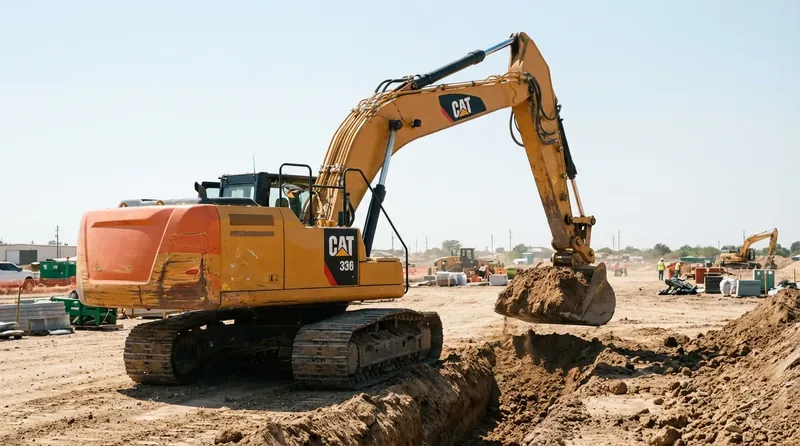
The construction industry also has predictable equipment needs: excavators for earthwork, loaders for material handling, bulldozers for grading, dump trucks for hauling. Lenders understand these use cases and have programs tailored to contractors, landscapers, demolition companies, and road builders. Whether you need a compact excavator for residential work or a large crawler for commercial sites, construction equipment financing is widely available. For broader contractor financing options, see construction business financing.
Types of Construction Equipment Commonly Financed
- Excavators: Mini (under 6 tons), mid-size (6-20 tons), and large excavators. Among the most financed construction assets.
- Bulldozers: Crawler and wheel dozers for grading, demolition, and site prep.
- Backhoes: Versatile loader-backhoe combinations for digging and loading.
- Skid steers and compact track loaders: Versatile machines for landscaping, demolition, and material handling.
- Wheel loaders and track loaders: For moving material, loading trucks, and site work.
- Dump trucks: Commercial vehicles for hauling dirt, gravel, and debris.
- Cranes: Mobile and crawler cranes for lifting and placement.
- Compactors and rollers: For asphalt and soil compaction.
Equipment with strong brand recognition (Caterpillar, John Deere, Komatsu, Bobcat, Kubota) typically finances more easily because resale values are well documented. See can you finance used equipment for how used heavy equipment is evaluated.
Typical Rates and Terms for Heavy Equipment Financing
Construction equipment financing rates vary by credit, equipment type, term length, and whether the equipment is new or used. Typical ranges:
- Prime borrowers (700+ FICO): 8-14% APR equivalent; terms up to 60-84 months; 0-10% down.
- Near-prime (650-699): 12-18% APR; 48-60 months; 5-15% down.
- Subprime (600-649): 16-24% APR; 36-48 months; 10-20% down.
Larger equipment (e.g., large excavators, cranes) may have longer terms because the asset life justifies it. Used equipment typically has shorter terms (36-48 months) and sometimes slightly higher rates. Use our loan calculator to estimate payments. See typical equipment financing rates for rate ranges across equipment types.
Credit Requirements for Construction Equipment Financing
Many equipment lenders accept credit scores of 600-650+ for construction equipment. Strong revenue, time in business, and a down payment can offset weaker credit. Some specialty programs work with 550+ for established contractors with solid cash flow. Equipment financing is asset-backed, so credit requirements are often more flexible than for unsecured business term loans or business lines of credit. See equipment financing with bad credit for strategies when credit is challenged.
Lenders also evaluate:
- Time in business: 1-2+ years preferred; 6+ months minimum for many programs.
- Revenue: Consistent bank deposits and positive cash flow.
- Down payment: 10-20% can improve approval and terms for marginal credit.
- Equipment value: New or lightly used equipment with strong resale value.
Down Payment Requirements
Down payments for construction equipment financing typically range from 0-20%. Prime borrowers with strong revenue may qualify for 100% financing on new equipment. Subprime borrowers or those financing used equipment often need 10-20% down. A larger down payment reduces the lender's exposure and can improve both approval odds and rates. See do you need a down payment for equipment financing for how down payment affects terms.
If cash is tight, consider trade-in value from older equipment. Many dealers accept trade-ins and apply the value as down payment. That can reduce or eliminate out-of-pocket cash while still improving your financing terms.
New vs. Used Construction Equipment Financing
Both new and used construction equipment can be financed. New equipment typically qualifies for longer terms (60-84 months), lower rates, and lower or no down payment for qualified borrowers. Used equipment—especially if it is older or has high hours—may require 10-20% down and shorter terms (36-48 months). Lenders prefer equipment that is under 5-7 years old and has reasonable hours; very old or high-hour machines are harder to finance. See financing used equipment for eligibility and rate differences.
Loan vs. Lease for Heavy Equipment
Contractors can choose between equipment loans and equipment leases. Each has advantages:
- Loan: You own the equipment at payoff; build equity; can take Section 179 or depreciation deductions if you qualify. Higher monthly payments than leases for similar terms. Best when you plan to keep the machine long-term.
- Lease: Lower monthly payments; flexible end-of-term options (buy, return, upgrade). No ownership until buyout. Lessor bears residual risk. Good when you want to preserve cash flow or plan to upgrade equipment regularly.
TRAC leases are common for construction equipment; they offer lower payments and a terminal adjustment at the end based on actual resale value. See equipment loan vs lease and TRAC lease benefits for detailed comparisons.
Dealer Financing vs. Third-Party Lenders
You can finance through the equipment dealer's preferred lender or through a third-party equipment finance company or marketplace. Dealer financing is convenient—often one-stop—and may include promotional rates or incentives. Third-party lenders can sometimes offer better rates or more flexible terms, especially for contractors with stronger credit or specific needs. Get a quote from both and compare total cost (rate, term, fees). See equipment financing pre-approval for how to lock a rate before dealer visits.
Documents Needed for Construction Equipment Financing
Typical documentation includes:
- Business formation documents (Articles of Incorporation, operating agreement, or equivalent)
- 3-6 months of business bank statements
- Equipment quote or invoice (make, model, price)
- Driver's license and possibly personal tax returns for owners
Some lenders request 1-2 years of business tax returns for larger transactions. See equipment financing requirements for a full checklist.
Approval Timeline
Construction equipment financing often approves in 24-72 hours when documentation is complete. Dealer programs and marketplaces that connect with multiple lenders can return offers same day or within 24 hours. Final funding may take 5-10 business days after approval and signed documents. See how fast equipment financing can be approved for typical timelines.
Industry-Specific Considerations
General contractors: Often finance multiple pieces. Consider consolidating through one lender for simpler administration.
Landscapers: Skid steers, compact excavators, and mowers are common. Smaller ticket sizes; quicker approval.
Demolition: Excavators, shears, and material handlers. High wear; lenders may prefer shorter terms.
Road and infrastructure: Graders, pavers, rollers. Larger equipment; longer terms available.
Mining and quarry: Large loaders, haul trucks. Specialized; may require lenders with industry experience.
Red Flags to Avoid
- Blanket liens on all business assets: Some lenders require a UCC filing on everything. This can restrict future financing. Prefer lenders that lien only the financed equipment.
- Prepayment penalties: If you may pay off early (e.g., when a project completes), avoid heavy prepayment penalties.
- Unclear rate or fee structure: Understand the total cost before signing. See red flags in equipment finance agreements.
Section 179 and Tax Benefits
If you buy equipment (rather than lease) and meet IRS requirements, you may qualify for Section 179 expensing or bonus depreciation. This can provide significant tax benefits for construction equipment purchases. Consult your CPA; the rules are specific and change periodically. Equipment loans typically allow these benefits when you take ownership; lease structures may differ.
Key Takeaways
- Construction and heavy equipment have strong resale value, making them easier to finance than many other asset types.
- Typical rates range from 8-24% APR depending on credit; terms of 36-84 months are common.
- Credit requirements are often 600-650+; down payments of 0-20% depending on profile and equipment.
- Both loans and leases work; compare total cost and cash flow before deciding.
- Approval often takes 24-72 hours; compare dealer and third-party financing for best terms.
Bottom Line
Construction and heavy equipment financing is widely available for excavators, bulldozers, loaders, backhoes, and related machinery. Strong collateral value supports competitive rates and flexible terms. Compare offers from dealers and third-party lenders, and get pre-approved before shopping to strengthen your negotiating position. Get matched with equipment lenders that serve the construction industry.
Frequently Asked Questions
What credit score is needed for heavy equipment financing?
Many construction equipment lenders accept credit scores of 600-650+ for qualified borrowers. Strong revenue, down payment, and equipment with good resale value can offset lower scores. Some programs work with 550+ for established contractors.
How much down payment is required for excavator financing?
Typical down payments range from 0-20% depending on credit and equipment. Prime borrowers may get 100% financing; subprime or used equipment often requires 10-20% down. Excavators have strong resale value, which supports lower down payment options.
Is it better to lease or finance heavy equipment?
Both work. Leases offer lower monthly payments and flexibility at term end; loans build ownership. Contractors who upgrade equipment frequently may prefer leasing; those who plan to keep machinery long-term often choose loans. Compare total cost and cash flow.
Can I finance used construction equipment?
Yes. Used excavators, bulldozers, loaders, and skid steers are commonly financed. Lenders typically require 10-20% down for used equipment and may offer shorter terms. Age and hours matter; newer used equipment (under 5-7 years) typically qualifies more easily.
How fast can I get approved for construction equipment financing?
Equipment financing often approves in 24-72 hours when documentation is complete. Dealers and marketplaces can speed the process. Heavy equipment has strong collateral value, so underwriting is typically faster than unsecured loans.