
Updated April 4, 2026
Quick answer
Restaurant equipment financing approves at 600-650 FICO for established restaurants with 6+ months of operating history; new restaurants need 10-20% down and 670+ FICO. Ovens, ranges, hoods, walk-in coolers, dishwashers, refrigeration, fryers, and POS systems all qualify. Lenders typically fund up to 100% of equipment cost on used; some include installation and soft costs in the financed amount. Approvals in 24-72 hours. Restaurant-specialty lenders are far more flexible than banks for new operators.
Why Restaurant Equipment Finances Well
Commercial kitchen equipment—ranges, ovens, refrigeration, hoods, dishwashers—has several characteristics that support financing. First, it has established resale markets. Used restaurant equipment sells routinely at auction and through dealers; lenders can value and liquidate it. Second, equipment is essential to restaurant operations; without it, the business cannot function. That gives lenders confidence in the use of funds. Third, the restaurant industry has clear equipment categories and pricing. See what lenders look at for equipment financing for the full underwriting picture.
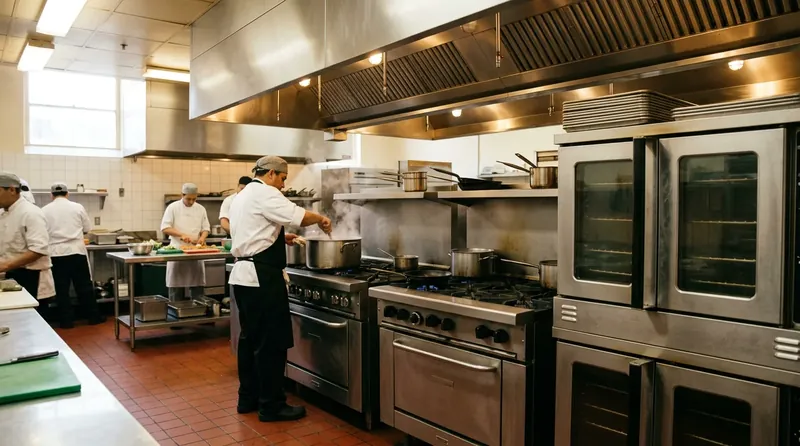
Lenders that serve restaurants understand the business: revenue cycles, seasonality, labor costs, and the importance of working equipment. Whether you are opening a new concept, adding a location, or replacing failing equipment, restaurant equipment financing is widely available. For broader restaurant financing options, see restaurant business financing.
Types of Restaurant Equipment Commonly Financed
- Cooking: Ranges, ovens (convection, pizza, combi), grills, fryers, steamers, griddles, cooktops.
- Refrigeration: Walk-in coolers and freezers, reach-in refrigerators, prep tables with refrigeration, ice machines.
- Ventilation: Hoods, exhaust systems, make-up air units.
- Dishwashing: Commercial dishwashers, dishmachines, sanitizers.
- Prep and storage: Prep tables, work tables, shelving, food storage.
- Point of sale (POS): Register systems, tablets, printers, software.
- Small wares and soft costs: Some lenders include installation, ductwork, and small equipment in a package.
Equipment from established brands (Vulcan, True, Hobart, Turbo Air, Alto-Shaam) typically finances more easily. See can you finance used equipment for how used restaurant equipment is evaluated.
Typical Rates and Terms
Restaurant equipment financing rates vary by credit, restaurant age, and whether the restaurant is new or established. Typical ranges:
- Established restaurants (700+ FICO): 8-14% APR equivalent; terms up to 60 months; 0-10% down.
- Mid-tier (650-699): 12-18% APR; 48-60 months; 5-15% down.
- New restaurants or lower credit (600-649): 16-24% APR; 36-48 months; 10-20% down.
New restaurants are inherently riskier; lenders may require higher down payments and charge higher rates. As the restaurant builds revenue history, refinancing at better terms may become possible. Use our loan calculator to estimate payments. See typical equipment financing rates for rate ranges.
Credit and Qualification Requirements
Many restaurant equipment lenders accept credit scores of 600-650+ for qualified borrowers. New restaurants may need 10-20% down and stronger personal credit. Lenders evaluate:
- Revenue: For established restaurants, consistent sales and bank deposits. For new restaurants, projected revenue and business plan.
- Time in business: 1-2+ years preferred for best terms; new restaurants can qualify with owner experience and down payment.
- Owner/guarantor credit: Personal FICO is often used for small restaurants.
- Equipment type: Standard commercial kitchen equipment finances more easily than highly customized or boutique items.
Equipment financing is asset-backed, so requirements are often more flexible than for unsecured business term loans. See equipment financing with bad credit for strategies when credit is challenged, and equipment financing for new businesses for startup-specific guidance.
New Restaurant vs. Established Restaurant
New restaurants can qualify for equipment financing, but terms are typically tighter. Lenders may require 10-20% down, stronger personal credit (650+), and a detailed business plan. Owner experience in the industry helps. Established restaurants with 1-2+ years of revenue history get better rates and terms. If you are opening a new location of an existing concept, lenders may use the performance of other locations to support approval. See equipment financing requirements for a full checklist.
Down Payment Requirements
Down payments for restaurant equipment typically range from 0-20%. Established restaurants with strong credit may qualify for 100% financing. New restaurants often need 10-20% down. A larger down payment reduces lender risk and can improve both approval odds and rates. If cash is limited, consider phased purchases—finance the highest-priority equipment first, then add more as revenue builds. See do you need a down payment for equipment financing for how down payment affects terms.
New vs. Used Restaurant Equipment
Both new and used commercial kitchen equipment can be financed. New equipment typically qualifies for longer terms and lower rates. Used equipment—refrigeration, ranges, prep tables—often requires 10-20% down and shorter terms (36-48 months). Lenders prefer equipment that is in good condition and has clear value; very old or heavily used equipment may be harder to finance. See financing used equipment for eligibility and rate differences.
Loan vs. Lease for Restaurant Equipment
Both loans and leases work for restaurant equipment. Key differences:
- Loan: You own the equipment at payoff. You can take Section 179 or depreciation deductions if you qualify. Higher monthly payments. Best when you plan to keep equipment 5+ years.
- Lease: Lower monthly payments; flexible end-of-term options (buy, return, upgrade). No ownership until buyout. Good when you want to preserve cash flow or may relocate or change concepts.
Restaurant equipment has moderate obsolescence—ovens and refrigeration last years. Leasing can still make sense for cash flow, especially for new restaurants. See equipment loan vs lease and lease benefits for detailed comparisons.
Dealer and Vendor Financing vs. Third-Party Lenders
Restaurant equipment dealers and kitchen supply companies often offer financing through partner lenders. Dealer financing is convenient—one application at point of sale—and may include promotional rates. Third-party equipment finance companies and marketplaces can sometimes offer better rates or more flexible terms. Compare both. Get a quote from the dealer and from an independent lender; use the better option. See equipment financing pre-approval for how to lock a rate before dealer visits.
Documents Needed
Typical documentation for restaurant equipment financing includes:
- Business formation documents (LLC, corporation, partnership)
- 3-6 months of business bank statements (for established restaurants)
- Equipment quote or invoice
- Driver's license; sometimes personal and business tax returns
For new restaurants, lenders may request a business plan, lease or purchase agreement for the space, and owner financial statements. See equipment financing requirements for a full checklist.
Approval Timeline
Restaurant equipment financing often approves in 24-72 hours when documentation is complete. Dealer programs can sometimes provide same-day preliminary approval. Final funding may take 5-10 business days after signed documents. This is faster than SBA loans, which can take weeks or months. See how fast equipment financing can be approved for typical timelines.
Section 179 and Tax Benefits
If you purchase equipment (rather than lease) and meet IRS requirements, you may qualify for Section 179 expensing or bonus depreciation. This can reduce the after-tax cost of restaurant equipment. The rules are specific; consult your CPA. Equipment loans typically allow these benefits when you take ownership.
Restaurant Type Considerations
Full-service restaurants: Higher equipment needs—full kitchen, multiple stations. Larger financing amounts.
Quick-service and fast-casual: Often franchise or chain; equipment lists may be standardized. Franchise approval can support equipment financing.
Bars and breweries: Tap systems, refrigeration, sometimes brewing equipment. Similar financing structure.
Catering and food trucks: Mobile and modular equipment. Some lenders specialize in food truck and mobile food equipment.
Bakeries and cafes: Ovens, mixers, refrigeration, display cases. Moderate ticket sizes.
SBA Loans vs. Equipment Financing
Some restaurateurs use SBA 7(a) loans to finance equipment along with build-out, working capital, or acquisition. SBA loans can offer lower rates and longer terms but have longer approval timelines and more documentation. Equipment financing is faster and often simpler for equipment-only purchases. If you need equipment quickly to open or meet a deadline, equipment financing may be a better fit. See equipment financing vs SBA loan for a full comparison.
Red Flags to Avoid
- Blanket liens: Some lenders lien all business assets. Prefer lenders that secure only the financed equipment.
- Prepayment penalties: If you may pay off early (e.g., when business improves), avoid heavy prepayment penalties.
- Unclear total cost: Understand rate, term, and all fees before signing. See red flags in equipment finance agreements.
Key Takeaways
- Restaurant and commercial kitchen equipment has established resale value and is essential to operations, making it financeable.
- Typical rates range from 8-24% APR depending on credit and restaurant maturity; terms of 36-60 months are common.
- New restaurants may need 10-20% down; established restaurants often qualify for 100% financing.
- Both loans and leases work; compare dealer and third-party financing for best terms.
- Approval often takes 24-72 hours; faster than SBA for equipment-only needs.
Bottom Line
Restaurant and commercial kitchen equipment financing is widely available for new and established restaurants acquiring ovens, refrigeration, grills, hoods, and related equipment. Compare offers from dealers and third-party lenders, and get pre-approved before negotiating with suppliers. Get matched with equipment lenders that serve the restaurant industry.
Operational Reality: Throughput, Utilities, and Downtime
Kitchen equipment financing should connect to ticket volume, labor scheduling, and maintenance access. Underwriters respond well when you show how the asset reduces cost or increases throughput with realistic ramp time.
Vendor, Install, and Health-Department Timing
Delays often come from install timelines and inspections. Share realistic open dates and vendor lead times. If financing must align with lease build-out milestones, document those dependencies clearly.
Equipment Collateral: Specs, Serials, and Advance Rates
Titling, UCC, and Lien Priority for Equipment
Insurance, Loss Payee, and Proof of Coverage
Frequently Asked Questions
What credit score is needed for restaurant equipment financing?
Many lenders accept credit scores of 600-650+ for restaurant equipment financing. New restaurants may need a down payment (10-20%) and stronger credit. Established restaurants with steady revenue often qualify more easily.
Can I finance restaurant equipment for a new restaurant?
Yes. New restaurants can qualify for kitchen equipment financing. Lenders evaluate owner experience, business plan, and often require 10-20% down. Some programs are designed for restaurant startups.
What restaurant equipment can be financed?
Ovens, ranges, grills, refrigeration, walk-in coolers, hoods, dishwashers, prep tables, POS systems, and most commercial kitchen equipment. Soft costs like installation may be included in some programs.
How long does restaurant equipment financing take?
Restaurant equipment financing often approves in 24-72 hours when documentation is complete. Funding may take 5-10 business days. Faster than SBA loans, which can take weeks or months.
Can I finance used restaurant equipment?
Yes. Used commercial kitchen equipment can be financed. Lenders may require 10-20% down and offer shorter terms. Refrigeration, cooking equipment, and POS systems with established resale value qualify most easily.