
Updated April 4, 2026
Quick answer
Medical and dental equipment finances well because lenders specialize in healthcare cash flow. Dental chairs, X-ray, CBCT scanners, autoclaves, lab equipment, and imaging systems approve at 620-650 FICO for established practices, often 0-10% down. New practices need 10-20% down and stronger personal credit (670+). Equipment-specific lenders understand insurance reimbursement timing and practice cash-flow cycles. Approvals in 24-72 hours; specialty programs offer deferred payments tied to practice ramp-up.
Why Medical and Dental Equipment Finances Well
Healthcare equipment—dental chairs, X-ray units, MRI and CT scanners, surgical instruments, lab analyzers—has several characteristics that support financing. First, it has established secondary markets. Used dental and medical equipment sells routinely; lenders can value and liquidate it if necessary. Second, practices generate predictable revenue from patient volume. Lenders view healthcare as a stable industry with recurring cash flow. Third, equipment upgrades are driven by technology and regulatory requirements, creating steady demand. See what lenders look at for equipment financing for the full underwriting picture.
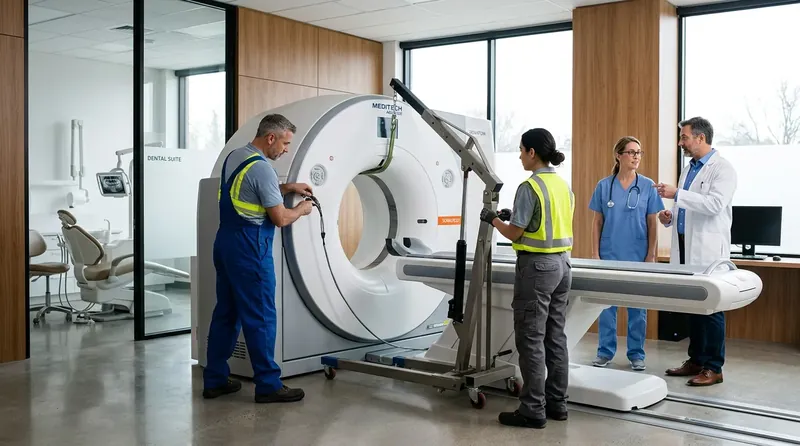
Lenders that specialize in healthcare understand practice economics: reimbursement cycles, insurance billing, and seasonal patterns. They offer programs tailored to dental offices, medical clinics, veterinary practices, imaging centers, and surgery centers. Whether you are opening a new practice, expanding an existing one, or upgrading technology, medical and dental equipment financing is widely available.
Types of Medical and Dental Equipment Commonly Financed
- Dental: Chairs, X-ray units (intraoral, panoramic, CBCT), sterilization systems, handpieces, curing lights, lab equipment, digital scanners, software.
- Medical imaging: X-ray, ultrasound, MRI, CT, mammography, fluoroscopy, PACS systems.
- Medical/surgical: Exam tables, surgical lights, anesthesia equipment, monitors, sterilizers, endoscopy equipment.
- Lab and diagnostics: Analyzers, centrifuges, microscopes, refrigerators, point-of-care testing devices.
- Veterinary: Similar to medical; X-ray, ultrasound, dental, surgical, and lab equipment.
Equipment with FDA clearance or CE marking, established brand names (Sirona, Planmeca, GE, Siemens, Philips), and documented resale values typically finances most easily. See can you finance used equipment for how used medical and dental equipment is evaluated.
Typical Rates and Terms
Medical and dental equipment financing rates vary by credit, practice age, and equipment type. Typical ranges:
- Established practices (700+ FICO): 7-12% APR equivalent; terms up to 60-84 months; 0-10% down.
- Mid-tier (650-699): 10-16% APR; 48-60 months; 5-15% down.
- New practices or lower credit (620-649): 14-22% APR; 36-48 months; 10-20% down.
Larger equipment (e.g., MRI, CT) may have longer terms due to higher cost and longer useful life. Software-only purchases may have shorter terms. Use our loan calculator to estimate payments. See typical equipment financing rates for rate ranges across equipment types.
Credit and Qualification Requirements
Many medical and dental equipment lenders accept credit scores of 620-650+ for established practices. New practices or those with weaker credit may need a down payment of 10-20% and may see higher rates. Lenders evaluate:
- Practice revenue: Consistent collections and positive cash flow.
- Time in business: 1-2+ years preferred for best terms; startups can qualify with strong owner profile.
- Owner/guarantor credit: Personal FICO is often used for small practices.
- Equipment type: Standard equipment with clear value finances more easily than highly customized systems.
Equipment financing is asset-backed, so requirements are often more flexible than for unsecured business term loans. See equipment financing with bad credit for strategies when credit is challenged, and equipment financing requirements for a full checklist.
New Practice vs. Established Practice
New dental and medical practices can qualify for equipment financing, but terms may be tighter. Lenders may require 10-20% down, stronger personal credit, and possibly a personal guarantee. Established practices with 2+ years of revenue history typically get better rates and terms. If you are opening a new practice, consider applying early and having a clear business plan; some lenders specialize in practice startups. See equipment financing for new businesses for startup-specific guidance.
Loan vs. Lease for Medical and Dental Equipment
Both loans and leases work for healthcare equipment. Key differences:
- Loan: You own the equipment at payoff. You can take Section 179 or depreciation deductions if you qualify. Higher monthly payments than leases. Best when you plan to keep equipment long-term (e.g., 5+ years).
- Lease: Lower monthly payments; flexible end-of-term options (buy, return, upgrade). No ownership until buyout. Good when technology changes quickly (e.g., imaging, software) or when you want to preserve cash flow.
Healthcare equipment often has rapid technological obsolescence. Leasing can allow you to upgrade to newer technology at term end without being stuck with outdated equipment. See equipment loan vs lease and lease benefits for detailed comparisons.
Vendor Financing vs. Third-Party Lenders
Equipment vendors (e.g., dental supply companies, imaging manufacturers) often offer financing through captive or partner lenders. Vendor financing is convenient—one application, often at point of sale—and may include promotional rates or 0% deals for qualified buyers. Third-party equipment finance companies and marketplaces can sometimes offer better rates or more flexible terms. Compare both. Get a quote from the vendor and from an independent lender; use the better option. See equipment financing pre-approval for how to lock a rate before vendor negotiations.
Documents Needed
Typical documentation for medical and dental equipment financing includes:
- Business formation documents (LLC, corporation, partnership)
- 3-6 months of business bank statements
- Equipment quote or invoice
- Driver's license; sometimes personal and business tax returns
For larger transactions (e.g., imaging systems over $100,000), lenders may request financial statements and proof of licensing. See equipment financing requirements for a full checklist.
Approval Timeline
Medical and dental equipment financing often approves in 24-72 hours when documentation is complete. Vendor programs can sometimes provide same-day preliminary approval. Final funding may take 5-10 business days after signed documents. See how fast equipment financing can be approved for typical timelines.
Section 179 and Tax Benefits
If you purchase equipment (rather than lease) and meet IRS requirements, you may qualify for Section 179 expensing or bonus depreciation. This can significantly reduce the after-tax cost of medical and dental equipment. The rules are specific and change periodically; consult your CPA. Equipment loans typically allow these benefits when you take ownership. Lease structures may pass through some tax benefits depending on the lease type.
Practice Type Considerations
Dental (general and specialty): High volume of equipment financing. Chairs, X-ray, and digital systems are standard. Orthodontists and oral surgeons may need specialized equipment.
Medical clinics: Exam rooms, imaging, lab, and EMR systems. Multi-location practices may finance equipment per location.
Imaging centers: MRI, CT, mammography. Higher ticket sizes; longer terms common.
Veterinary practices: Similar to medical; X-ray, ultrasound, dental, surgical. Growing segment for equipment lenders.
Ambulatory surgery centers: Surgical equipment, anesthesia, monitoring. May require larger amounts and longer terms.
SBA Loans vs. Equipment Financing
Some practices use SBA 7(a) or 504 loans to finance equipment along with real estate or working capital. SBA loans can offer lower rates and longer terms but have longer approval timelines (weeks to months) and more documentation. Equipment financing is faster and often simpler for equipment-only purchases. If you need equipment quickly or want to avoid SBA paperwork, equipment financing may be a better fit. See equipment financing vs SBA loan for a full comparison.
Red Flags to Avoid
- Blanket liens: Some lenders lien all practice assets. Prefer lenders that secure only the financed equipment.
- Prepayment penalties: If you may pay off early (e.g., when cash flow improves), avoid heavy prepayment penalties.
- Unclear total cost: Understand rate, term, and all fees before signing. See red flags in equipment finance agreements.
Key Takeaways
- Medical and dental equipment has strong resale value and stable practice revenue, making it attractive to lenders.
- Typical rates range from 7-22% APR depending on credit and practice maturity; terms of 36-84 months are common.
- Credit requirements are often 620-650+; new practices may need 10-20% down.
- Both loans and leases work; leases can be useful when technology changes quickly.
- Compare vendor and third-party financing; approval often takes 24-72 hours.
Bottom Line
Medical and dental equipment financing is widely available for practices acquiring imaging, chairs, sterilization, lab equipment, and related technology. Compare offers from vendors and third-party lenders, and consider loan vs. lease based on your cash flow and upgrade plans. Get matched with equipment lenders that serve healthcare practices.
Specialty Equipment Valuation and Vendor Verification
Medical and dental assets often require manufacturer or authorized dealer documentation. Lenders may verify serial numbers, warranty transferability, and installation timelines. Build those details into your package up front to prevent late-stage delays.
Revenue Patterns and Payment Sizing
Patient volume can be seasonal or payer-dependent. Provide enough history for underwriters to see stability beyond a short busy period. If you are expanding capacity, connect equipment impact to appointment throughput or procedure mix with conservative assumptions.
Compliance and Operational Risk Notes
Underwriters may ask about service contracts, calibration needs, and downtime risk. Showing a maintenance plan reduces perceived operational risk and supports stronger terms.
Payer Mix, Collections, and Cash Conversion
Underwriters often evaluate how quickly billed services convert to bank deposits. If collections lag, explain AR aging and collection actions. Strong clinical demand with slow cash conversion can still be financed when the story is documented.
Backup Planning for Downtime and Service
Equipment downtime can hit revenue quickly. A maintenance plan and vendor response expectations reduce perceived operational risk and can support approval quality.
Final Checklist for Specialty Equipment Files
- Vendor quote with delivery and installation scope.
- Warranty and service expectations documented.
- Revenue support tied to realistic utilization assumptions.
- Insurance and liability requirements confirmed early.
When these items are aligned, specialty financing usually moves faster because underwriters spend less time closing information gaps.
Implementation Planning for Clinical Teams
Include training time, calibration, and workflow changes in your timeline. Underwriters view implementation risk as operational risk. A realistic ramp reduces perceived uncertainty.
Staffing, Training, and Revenue Ramp
Specialty equipment often requires staff training before revenue follows. Underwriters may ask how long until productive utilization. Provide a conservative ramp schedule and explain how you will cover payments during training weeks.
Equipment Lifecycle and Replacement Planning
Plan for service intervals and eventual replacement. Lenders view borrowers who understand lifecycle costs as lower operational risk, which can translate into cleaner approvals.
Summary
Medical and dental equipment financing succeeds when clinical utility, vendor legitimacy, and cash-flow proof align. Prepare specialty documentation early and keep implementation timelines realistic for faster underwriting.
Final note: if you operate multiple locations, specify where equipment will be installed and ensure entity and insurance coverage match that footprint to prevent underwriting rework.
Tip: keep manufacturer service contacts and warranty transfer rules in your lender package. Underwriters view serviceability as a factor in collateral risk for specialty assets.
Also summarize infection-control or facility requirements that affect install timing. Unexpected install delays are a common reason funding conditions are not met on schedule.
If you are acquiring pre-owned specialty equipment, include inspection results and remaining useful life assumptions. Secondary-market clarity reduces collateral uncertainty for underwriters.
Strong packages pair clinical intent with financial clarity: that combination is what accelerates underwriting.
Equipment Collateral: Specs, Serials, and Advance Rates
Titling, UCC, and Lien Priority for Equipment
Insurance, Loss Payee, and Proof of Coverage
Cash-Flow Proof for Equipment Payments
Underwriters stress-test payments against historical bank behavior, not only revenue. Seasonal businesses should explain low months with evidence rather than narrative hand-waving.
Keep personal and business accounts coherent; unexplained transfers invite stipulations.
Vendor Quotes and Change Orders
Material spec or price changes after submission usually require re-approval. Batch changes into one update with a clear before-and-after summary for the credit file.
Retain vendor emails that confirm build timelines and delivery windows tied to disbursement conditions.
Frequently Asked Questions
What credit score is needed for dental equipment financing?
Many medical and dental equipment lenders accept credit scores of 620-650+ for established practices. New practices or those with weaker credit may need a down payment. Equipment has good resale value, which supports financing approval.
Can I finance dental chairs and X-ray equipment?
Yes. Dental chairs, X-ray units, imaging equipment, sterilization systems, and lab equipment are commonly financed. Lenders understand the healthcare market and offer programs tailored to practices.
How long does medical equipment financing take to approve?
Medical and dental equipment financing often approves in 24-72 hours when documentation is complete. Healthcare-specific lenders and general equipment finance companies both offer relatively quick turnaround.
Is medical equipment financing better than a bank loan?
It depends. Equipment financing is asset-backed and can approve faster with simpler documentation. Banks may offer lower rates for established practices with strong credit. Compare both—equipment lenders often specialize in healthcare and understand practice cash flow.
Can new dental practices get equipment financing?
New practices can qualify, but may need a down payment (10-20%) and stronger personal credit. Lenders evaluate practice revenue projections, owner experience, and equipment type. Some programs cater to practice startups.