
Updated June 3, 2026
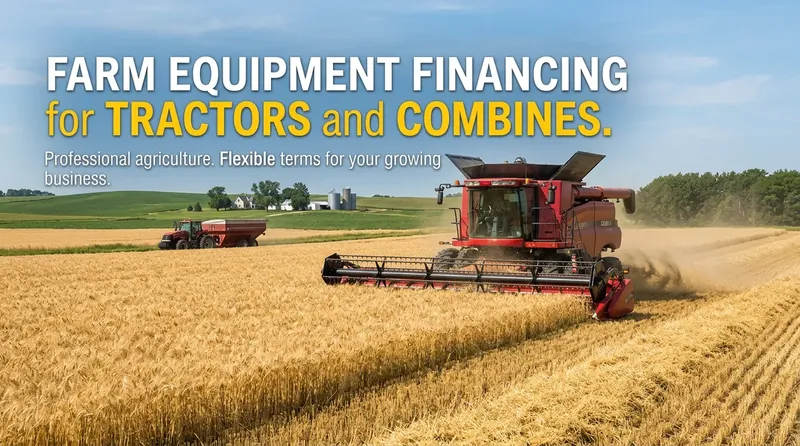
Why Finance Iron Instead of Paying Cash
Farm machinery is unique among purchases: a single combine or four-wheel-drive tractor can cost as much as a house, yet it earns its keep across a decade or more of seasons. That long productive life is precisely why financing usually beats paying cash. Drop $250,000 in cash on a combine in the spring and you’ve just removed the capital you needed for seed, fertilizer, fuel, and land rent — the inputs that actually generate this year’s crop. Finance the same machine and you spread its cost over the many seasons it will run, keeping your operating cash free to plant and grow. The equipment produces while you pay for it, which is the textbook case for financing a long-lived asset.
There’s a discipline that keeps this clean: separate machinery financing from operating credit. Your operating line funds the annual crop; equipment financing funds the long-lived assets. Mixing them — buying a tractor on the operating line, for instance — ties up the very capacity you need for inputs and can leave you short at planting. Matching each cost to financing built for its life is the foundation of stable farm cash flow.
What Farms Finance
- Tractors — from utility tractors to high-horsepower four-wheel-drives; see tractor financing.
- Combines & harvest equipment — headers, grain carts, and harvest support gear; see grain equipment financing.
- Planters, drills & tillage — the implements that put the crop in the ground.
- Sprayers & application equipment — self-propelled or pull-type.
- Handling & storage — augers, grain handling, and on-farm storage that protect marketing flexibility.
New and used both qualify. Well-maintained used machinery holds value and can be a strong financed buy, though older units may carry a shorter term or a bit more down.
Loan vs. Lease for Farm Equipment
The decision turns on use and replacement plans. A loan builds ownership and equity, which fits core machinery you’ll run for many seasons and keep until it’s well depreciated — once paid off, it keeps working with no payment. A lease generally lowers the payment and can suit equipment you want to trade on a regular cycle (to stay under warranty or current on technology) or that you use only seasonally. Leasing can also carry different tax treatment. Hours of annual use, how long you keep machines, and your accountant’s guidance should drive the choice — there’s no universally right answer, only the structure that matches how the iron earns on your operation.
Section 179 and the After-Tax Cost
Tax treatment is a real lever in farm equipment decisions. Under IRS Section 179 and bonus depreciation, a financed machine can often be deducted — in part or in full — in the year it’s placed in service, even though you only paid a down payment. For a profitable operation, that can substantially lower the true after-tax cost of a purchase and is one reason equipment buying often clusters near year-end. The limits and rules change annually, so the move is to plan the purchase and its timing with your accountant rather than assume a particular benefit. The point for cash planning is simply that the sticker price and the after-tax cost can be quite different, and that difference belongs in the buy decision.
A Worked Equipment Decision
Consider a farm weighing a $250,000 tractor. Paying cash in spring would consume a quarter-million dollars of capital right when inputs and rent are due — potentially forcing the operation to scale back acreage or lean harder on the operating line just to plant. Financing the tractor over a multi-year term tied to its useful life turns that into a manageable annual or semi-annual payment the machine helps earn through the seasons it works. The operating cash stays intact for the crop, the tractor produces from day one, and a possible Section 179 deduction may offset a chunk of the cost at tax time.
The comparison that matters isn’t “loan interest versus zero” — it’s “loan interest versus the return on the cash you preserve.” For a farm, that preserved cash funds the inputs that generate the year’s revenue, which is typically a far better use than sinking it into a single machine. The figures are illustrative, not a quote, but they capture why even cash-rich operations routinely finance machinery: it keeps the most flexible asset — cash — working where it earns the most.
What Agricultural Lenders Look For
Equipment financing weighs both the borrower and the machine, and because the equipment is collateral, approval is often more accessible than unsecured borrowing. Lenders consider the operation’s history and overall financial strength, the borrower’s credit, and the machine itself — newer, lower-hour units qualify for longer terms and lower down payments, while older equipment may need a shorter term or more down. A clean quote with the make, model, and hours, plus a clear picture of how the machine fits your operation, speeds approval. For the broader checklist, see equipment financing requirements; if credit is rebuilding, see business loans for bad credit.
Managing Machinery Across the Whole Fleet
A farm rarely finances one machine in isolation — it runs a fleet of tractors, a combine, planters, sprayers, and tillage, each on its own age and replacement curve. Thinking about machinery financing at the fleet level, rather than purchase by purchase, keeps the operation from over-committing. Two principles help. First, stagger replacements so you’re not retiring (and re-financing) several major machines in the same year; spreading trades across seasons keeps total machinery payments steady and inside what the operation comfortably supports. Second, watch total machinery debt service against working acres and expected revenue — the same way a lender will. A fleet that’s lightly financed has room to add capacity; one already carrying heavy payments should think hard before stacking another.
Trade timing matters as well. Late-model equipment often carries strong resale value, so trading on a planned cycle — before a machine ages into expensive repairs and falling trade value — can keep you in reliable iron without a dramatic jump in cost, particularly when paired with a lease structure built for regular turnover. Conversely, running good equipment longer and financing well-kept used machinery can minimize cost for an operation focused on its balance sheet. Neither is universally right; the point is to manage the fleet as a portfolio with a deliberate replacement plan, so each financed machine fits a strategy rather than reacting to the last breakdown.
Aligning that plan with your marketing and tax picture — trading or buying in a strong income year when a Section 179 deduction does the most good — turns equipment financing from a series of one-off decisions into a managed part of the operation’s finances.
Bottom Line
Farm machinery is long-lived, six-figure iron, so finance it like the multi-season asset it is — spreading the cost over its working life and keeping operating cash free for the crop. Match a loan or lease to how you’ll use and replace the machine, weigh Section 179 with your accountant, consider quality used equipment, and keep machinery financing separate from your operating line. Start at the agriculture business financing hub, then get matched to compare options.
Frequently Asked Questions
Can you finance a tractor or combine?
Yes. Tractors, combines, planters, and implements are commonly financed through equipment financing, often with little or no money down for established operations. New and used machinery both qualify when the equipment and borrower profile fit the program.
Should I lease or buy farm equipment?
A loan builds ownership and equity in machinery you'll run for many seasons. A lease lowers the payment and can suit equipment you want to upgrade on a cycle or use only seasonally. The right choice depends on hours of use, replacement plans, and your tax situation.
Why finance equipment instead of paying cash on a farm?
Financing preserves the operating cash a farm needs for seed, fertilizer, fuel, and land costs. The machine produces across many seasons, so spreading its cost over its useful life keeps capital available for the inputs that generate each year's crop.
Does Section 179 apply to farm equipment?
Financed farm equipment can often be deducted under IRS Section 179 or bonus depreciation in the year it's placed in service, even though you only paid a down payment. Limits and rules change yearly, so confirm current figures with your accountant.
Still deciding? Tell us about your business and compare real options. Free, no obligation, and checking won't affect your credit.