
Updated June 3, 2026
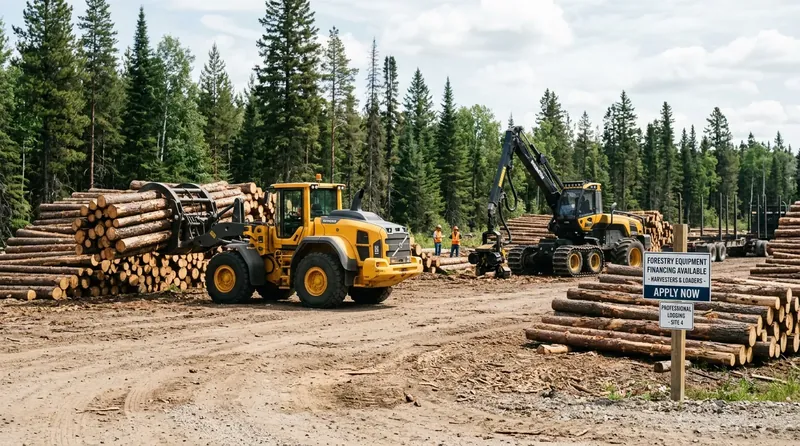
Logging Runs on Expensive, Hard-Working Iron
Few operations tie up as much capital in equipment as a logging crew. To put wood on a truck you may need a feller-buncher to cut, a skidder or forwarder to move logs to the landing, a loader to deck and load, and often a chipper or processor — each a major machine, and several running at once. Replace or add even one and you’re looking at a six-figure decision. Paying cash for that iron would strip an operation of the working capital it lives on, because logging also burns enormous amounts of fuel, parts, tires, tracks, and labor every single week, long before the mill pays for the wood.
That combination — very high equipment cost plus heavy ongoing operating cost — is exactly why financing the machines makes sense. The equipment produces across many years and many jobs; spreading its cost over that productive life keeps cash available for the fuel and payroll that keep the crew in the woods. Buy the iron with cash and you may own the machine but starve the operation that runs it.
What Logging Operations Finance
- Feller-bunchers & harvesters — the cutting machines at the front of the job.
- Skidders & forwarders — to move timber from stump to landing.
- Knuckleboom & log loaders — to deck and load trucks; pairs with log truck financing.
- Chippers, grinders & processors — to add chip products or process on site.
- Skid steers & support equipment — for landings and site work; see skid steer financing.
New and used both qualify, and a multi-machine package — outfitting or expanding a crew — can often be structured together.
New vs. Used: Weigh Uptime, Not Just Price
Quality used logging equipment is financeable and can put a lot of capability on the ground for less money — an attractive option for an operation watching its cost basis. But logging changes the usual new-versus-used calculus because downtime is brutally expensive here. When one machine in a tightly coupled crew goes down, the whole crew can stop — idle operators still drawing pay, a mill quota unmet, and wood not moving. That makes reliability and serviceability worth real money. Newer machines carry warranty and uptime advantages and qualify for longer terms and lower down payments; older iron costs less up front but may need a shorter term, more down, and a harder look at hours and condition. The right answer balances acquisition cost against expected uptime and repair exposure, not sticker price alone.
A Worked Machine Decision
Take an operation weighing a $220,000 skidder. Paying cash would wipe out the cushion it needs to cover fuel, parts, and payroll through the weeks between mill settlements — a dangerous position in a business where one breakdown or a muddy week can already strain cash. Financing the skidder over a term matched to its working life turns it into a manageable monthly payment the machine helps earn every load it skids. The operation keeps its working cash, the skidder produces from day one, and a possible Section 179 or bonus-depreciation deduction may offset part of the cost at tax time (confirm with your accountant).
The real comparison isn’t interest versus zero; it’s interest versus what that preserved cash protects — the ability to keep the crew fueled, paid, and cutting through the gaps and the inevitable repair. For a logging operation, that staying power is usually worth far more than the financing costs. The figures are illustrative, not a quote, but they explain why even well-capitalized operations finance their iron: it keeps cash where it does the most good.
What Lenders Look For
Equipment financing weighs both the borrower and the machine, and because the equipment is collateral, approval is often more accessible than unsecured borrowing. Lenders consider the operation’s history and financial strength, the borrower’s credit, and the machine’s age, hours, and resale market. What helps most in logging is evidence of steady production and committed work — cutting contracts, hauling agreements, or an established mill relationship — because it shows the machine will be utilized and the payments supported. A clean quote with make, model, and hours speeds approval. For the broader checklist, see equipment financing requirements; if credit is rebuilding, see business loans for bad credit. Keep machine financing separate from the working capital you use to bridge mill-payment timing.
Structuring a Multi-Machine Crew Buildout
Outfitting or expanding a full logging crew is rarely one purchase — it’s a feller-buncher, a skidder, a loader, and maybe a chipper, acquired together or in close succession. How you structure that buildout matters as much as the individual machine choices. The goal is to match the financing to how the crew actually earns: the machines work as a system to put wood on trucks, so their combined payments should sit comfortably inside the production that system generates, with margin for the inevitable repair and the occasional weather week.
A few principles keep a buildout sound. Match each term to the machine’s working life so you’re not still paying on a unit long after it should be traded, and not crushing cash flow with a term that’s too short. Sequence additions to utilization where you can — add the next machine when committed work justifies it, rather than speculatively, so each one is earning rather than idling. And watch total debt service against realistic production, stress-tested for soft prices, quota weeks, and downtime, not just a best-case month. A crew financed against optimistic, uninterrupted production is fragile; one financed against a realistic, interruption-adjusted output is durable.
Financing a multi-machine buildout as a planned package — rather than a string of reactive purchases after breakdowns — also tends to read better to a lender and can be structured more cleanly, since the use of funds and the production it supports are clear. The result is a crew that’s fully capable from the start and a payment structure that the work can actually carry. It also pays to keep one machine’s financing from dragging down the rest: if a single unit turns out to be a maintenance problem, structuring it separately makes it easier to trade or replace without disturbing the financing on the machines that are performing — another reason to plan the buildout deliberately rather than rolling everything into one rigid package.
Bottom Line
Logging equipment is six-figure iron that has to keep moving, so finance it like the long-lived, high-utilization asset it is — spreading the cost over its working life and protecting the cash that fuels and staffs the crew. Weigh uptime and condition, not just price, when choosing new versus used; structure multi-machine buildouts together; and keep equipment financing separate from working capital. Start at the forestry business financing hub, then get matched.
Frequently Asked Questions
Can you finance logging equipment like skidders and feller-bunchers?
Yes. Skidders, feller-bunchers, loaders, chippers, and forwarders are commonly financed through equipment financing, often with manageable down payments for established operations. New and used machines both qualify when the equipment and borrower profile fit the program.
Is it better to finance new or used logging equipment?
Both are financeable. Newer machines qualify for longer terms and lower down payments and carry warranty and uptime advantages; quality used iron costs less up front but may need a shorter term or more down. Because downtime is so costly in logging, reliability often justifies paying for condition.
Why finance logging equipment instead of paying cash?
Logging equipment is six-figure iron that produces for years. Financing spreads the cost over its working life and preserves the cash an operation needs for fuel, parts, payroll, and the gaps between mill payments. The machine earns while you pay for it.
What do lenders look for to finance logging equipment?
Lenders weigh the operation's history and financial strength, the borrower's credit, and the machine itself, which serves as collateral. Hauling or cutting contracts, consistent production, and clean records all strengthen the file and can improve terms.
Still deciding? Tell us about your business and compare real options. Free, no obligation, and checking won't affect your credit.