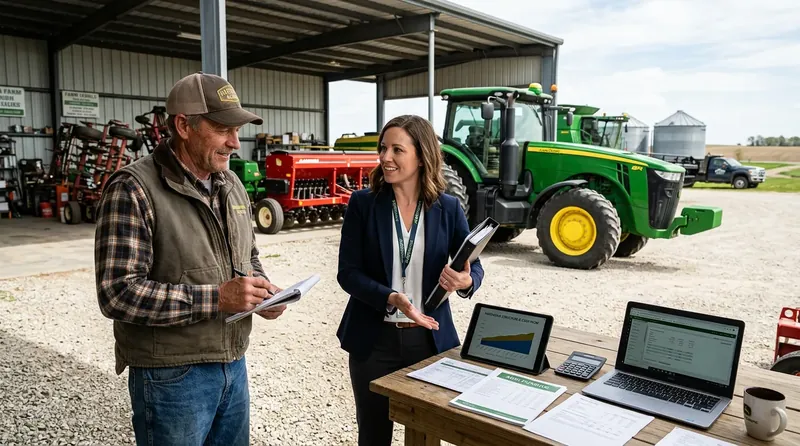
Farmers and ranchers frequently finance tractors, combines, and specialized equipment. Below are common types, typical cost ranges, and why businesses finance them. Lenders who specialize in agriculture equipment understand depreciation, resale value, and seasonal usage—often resulting in better terms and faster decisions.
Tractors
Tractors power planting, tillage, haying, and material handling. New row-crop and utility tractors typically cost $80,000–$400,000 or more depending on horsepower and features. Many farmers finance tractors to add capacity or replace aging units without large upfront outlays.
How to finance a tractor
Combines
Combines harvest grain, corn, soybeans, and other row crops. New combines typically cost $300,000–$500,000 or more. Financing helps farmers add or replace harvest capacity and match payments to seasonal revenue.
How to finance a combine
Skid Steers
Skid steers handle feeding, material handling, and cleanup on livestock and crop operations. They typically cost $25,000–$75,000. Financing helps farmers add versatile equipment for daily tasks.
How to finance a skid steer
Hay Balers
Hay balers produce round or square bales for livestock feed and sale. Balers typically cost $20,000–$80,000 or more. Financing helps livestock and hay producers add or upgrade baling capacity.
How to finance a hay baler
Sprayers
Sprayers apply fertilizer, herbicides, and pesticides to crops. Self-propelled and pull-type sprayers range from roughly $30,000 to $400,000 or more. Financing helps farmers improve application efficiency and crop protection.
How to finance a sprayer
Grain Handling & Storage
Grain augers, conveyors, and bins move and store harvested grain. Equipment costs range from roughly $10,000 to $100,000 or more depending on capacity. Financing helps farmers add storage and handling to improve marketing flexibility.
How to finance grain equipment
Greenhouses & Growing Structures
Commercial greenhouses, high tunnels, and controlled-environment growing structures are capital-intensive builds that pay back over many seasons. Financing spreads the cost so growers can expand protected acreage without draining working capital.
How to finance greenhouses