
Updated April 10, 2026
Why the Zero-Turn vs Standard Decision Matters
Zero-turn mowers run $4,000-$15,000+; standard riders $2,500-$6,000. The productivity gain from zero-turns can pay for the extra cost in 1-2 seasons for busy landscapers. Financing spreads the cost either way. See equipment financing by type.
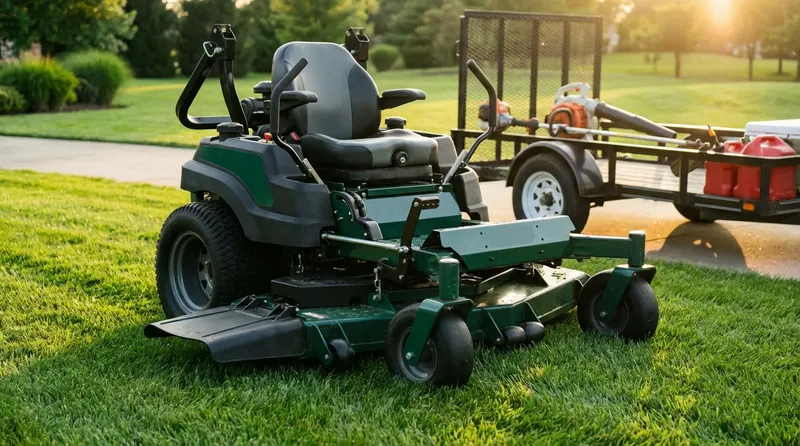
Zero-Turn Mower Costs and Benefits
Commercial zero-turns run roughly $6,000-$15,000+. They cut faster, pivot in place, and reduce trimming time. Best for large lawns, commercial lots, and high-volume operations. See equipment financing requirements.
Standard Mower Costs and Benefits
Standard riders run $2,500-$6,000. They suit smaller properties, tighter budgets, and operations that don't need maximum productivity. Easier to operate for some crew members.
Financing Both Types
Equipment loans and leases work for zero-turn and standard mowers. Multiple mowers can be financed in one package—landscape contractors often finance 2-4 mowers for their fleet. Terms typically run 36-60 months. See equipment loan vs lease. Use our calculator to model payments.
Credit and Down Payment Requirements
Most lenders look for 600+ FICO; 680+ qualifies for the best rates. Down payments: 0-15%. Landscaping businesses with strong revenue typically qualify readily. Mowers are standard collateral. See credit score for equipment financing.
Making the Right Choice for Your Operation
Choose zero-turn when you have large properties, commercial lots, or need maximum productivity—the speed and tight-turn capability often justify the higher cost. Choose standard when you have smaller accounts, tight budgets, or crew members who prefer traditional operation. Many landscapers run a mix: zero-turns for large commercial, standard riders for residential. Financing is available for both. See zero-turn mower financing overview.
Documentation and Approval Timeline
Gather: equipment quote (make, model, deck size), 3-6 months business bank statements, tax returns, P&L, formation documents. Many lenders approve mower financing within 24-48 hours. See approval timeline. Get matched with lenders who finance commercial mowers.
Frequently Asked Questions
Is a zero-turn mower worth the extra cost?
For commercial landscaping, zero-turns typically cut 30-50% faster. The productivity gain often pays for the higher cost over 1-2 seasons.
How much more does a zero-turn cost than a standard mower?
Zero-turns run $4,000-$15,000+; standard riders $2,500-$6,000. Commercial zero-turns typically $6,000-$15,000.
Can I finance both zero-turn and standard mowers?
Yes. Equipment lenders finance both. Multiple mowers can be financed in one package.
What credit score do I need for commercial mower financing?
Most lenders look for 600+ FICO. Landscaping businesses with strong revenue typically qualify readily.
When should I choose a standard mower over zero-turn?
Standard riders suit smaller properties, tight budgets, or operations that don't need maximum productivity.
Worked Example: The Productivity Math for a Landscaper
A commercial landscaping crew is choosing between a $5,000 standard riding mower and an $11,000 commercial zero-turn. The zero-turn costs more than twice as much to finance, but it cuts significantly faster and maneuvers around obstacles without three-point turns — so on dense commercial properties a crew can finish more lawns per day. If the faster machine lets the crew add even one or two extra accounts a week, the additional revenue can outrun the higher payment. For a business that mows for a living, the decision is a productivity calculation, not just a price comparison.
For a homeowner or a light-use operator, the math flips: the standard mower's lower payment wins because the extra speed never gets converted into extra billable work. The right machine is the one whose payment your usage can justify.
Financing Considerations
- Commercial vs. residential grade — commercial zero-turns are built for daily hours and hold resale value, which supports financing; box-store units depreciate fast.
- Seasonality — landscapers often prefer terms that keep payments manageable through the slower winter months.
- Bundle the deck and attachments — financing the right cutting width and accessories for your properties improves efficiency from day one.
- Business vs. personal use — commercial operators may finance through equipment programs with terms tied to the machine's working life.
Should I finance a zero-turn or a standard mower?
A zero-turn costs more but cuts large or complex properties far faster, so for a commercial landscaper the productivity often justifies the higher payment. A standard mower suits smaller or simpler jobs where the speed premium does not pay back.
Can you finance commercial mowers?
Yes. Zero-turn and standard commercial mowers finance as equipment, typically over 36–60 months, with the mower as collateral. Strong credit and an operating landscaping business make for easy approvals.
Is it cheaper to lease or buy a commercial mower?
Buy with a loan if you will run the mower hard for years and want to own it; lease for lower payments and easier replacement if you upgrade frequently or face heavy seasonal wear. Many crews finance their primary zero-turn and keep older units as backups.