
Updated April 8, 2026
Quick answer
Restaurants are natural MCA candidates because qualification leans on card volume, not FICO, and funding lands in 1-3 business days. Repayment is either a percentage holdback (typically 10-20% of daily card sales) or a fixed daily ACH. Costs are factor rate, not APR — a $50K advance at 1.30 factor repays $65K. The risk is daily debits during slow weeks; restaurants with 80%+ card penetration and consistent volume absorb it best. For ovens or kitchen build-outs, equipment financing or SBA at 30-90 days is far cheaper than rolling MCAs.
Why Restaurants Use Merchant Cash Advances
Restaurants turn to MCAs for several reasons. First, funding is fast: 1–3 business days when other options take weeks. Second, underwriting emphasizes card volume and bank deposits rather than credit score, so restaurants with lower FICO or thin credit history may qualify. Third, the application process is lighter than SBA or traditional bank loans. When you need cash for payroll, inventory, a repair, or a seasonal rush, MCA can fill the gap quickly. See what is a merchant cash advance and how does it work. Compare with restaurant business financing for broader options.
How MCA Holdback Works for Restaurants
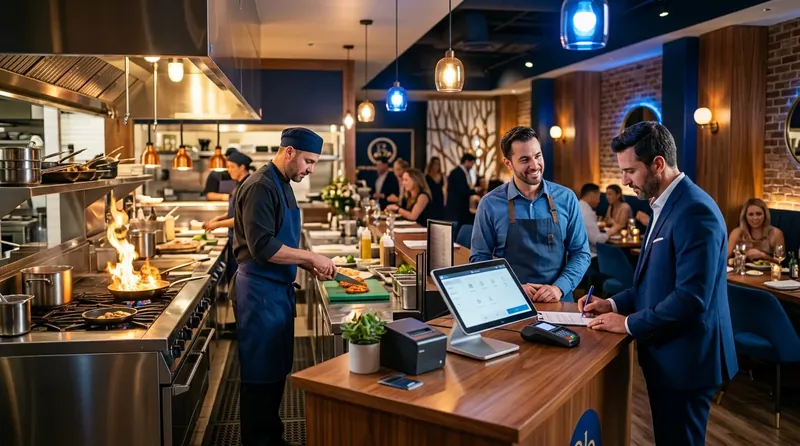
MCA repayment is based on “holdback”—a percentage of your daily credit card sales or a fixed daily ACH debit. With percentage-based holdback, if you do $5,000 in card sales and your holdback is 15%, $750 goes to the provider that day. Your obligation is satisfied when the total amount (advance × factor rate) is repaid. With fixed ACH, a set amount (e.g., $400/day) is debited regardless of sales. On slow days, percentage holdback reduces your payment; fixed ACH does not. That difference matters for restaurants with uneven revenue. See how much you can qualify for and the relationship to holdback.
The Daily Repayment Pressure
Daily debits or holdbacks create ongoing cash flow pressure. Every day, a portion of your card revenue or a fixed amount leaves before you pay vendors, payroll, or rent. In busy periods, repayment is manageable. In slow periods—post-holiday, summer doldrums, bad weather, or unexpected closures—the same daily obligation continues while revenue drops. Some providers offer payment relief or modifications, but not all. Before signing, model your slowest weeks: can you still meet payroll, rent, and the MCA obligation? If not, MCA may be too risky. See what lenders look for in MCA for underwriting focus.
Revenue Volatility: The Core Risk
Restaurant revenue is inherently volatile. Week-to-week swings, seasonality, and external events (weather, construction, competition) affect sales. MCA is designed for businesses with consistent daily card volume. When volume drops, percentage holdback stretches the repayment period (you pay less per day but for longer); fixed ACH can create a cash crunch. Avoid stacking multiple MCAs; overlapping daily obligations compound the risk. Use MCA for a specific, short-term need and have an exit plan. See how to refinance MCA debt for strategies to move to lower-cost financing.
Factor Rates and Total Cost
MCA cost is expressed as a factor rate (e.g., 1.25 or 1.35), not APR. A $50,000 advance at 1.30 means you repay $65,000 total. Because repayment happens over months, the effective APR equivalent can be very high. Always calculate total dollars repaid and compare to your expected cash flow. Use our loan calculator to estimate. For restaurants with seasonal peaks, a short-term MCA may be acceptable if you can repay quickly during a busy period. Long repayment during slow months increases effective cost. See credit requirements for MCA; lower credit often means higher factor rates.
Card vs. Cash Sales: Why It Matters
MCA providers base qualification and holdback on card sales (or sometimes total bank deposits). If a large share of your revenue is cash, it may not count toward your holdback obligation in a card-split program, but it also may not count toward qualification. Restaurants with high card penetration (e.g., 80%+ card) are a natural fit. If you are cash-heavy, confirm how the provider counts cash and whether ACH-based repayment (tied to bank deposits) is an option. See MCA vs working capital loan for a repayment comparison.
Alternatives to MCA for Restaurants
| Option | Best For | Typical Speed |
|---|---|---|
| SBA loan | Acquisition, build-out, long-term capital | 30–90 days |
| Equipment financing | Ovens, refrigeration, kitchen equipment | 1–5 days |
| Business line of credit | Ongoing working capital, flexibility | 1–2 weeks |
| Working capital loan | Payroll, inventory, lump-sum needs | 1–2 weeks |
| Revenue-based financing | Monthly revenue-aligned repayment | 3–7 days |
Equipment financing is especially relevant for restaurants: see restaurant commercial kitchen equipment financing. For acquisition or real estate, SBA loans offer better long-term terms.
When MCA Makes Sense for Restaurants
MCA can be acceptable when:
- You need funds in 1–3 days and no other option is available in time
- You have a specific short-term need (e.g., emergency repair, seasonal inventory) and a plan to repay quickly
- You have strong, consistent card volume and can absorb the daily holdback even in slow weeks
- You understand the total cost and have run the numbers
See how fast you can get an MCA for timeline expectations.
Red Flags Before You Sign
Before committing to an MCA for your restaurant:
- High holdback or fixed ACH: Ensure you can handle the daily obligation in your slowest weeks.
- Stacking: Do not take a second MCA before repaying the first unless you have fully modeled the combined impact.
- Unclear terms: Understand the factor rate, total repayment, holdback type (percentage vs. fixed), and any fees.
- Confidentiality clauses: Some agreements restrict switching processors or discussing terms. Know what you are agreeing to.
See red flags in financing agreements for general contract caution.
Bottom Line
MCA can provide fast capital for restaurants, but daily holdbacks and revenue volatility create risk. Understand the factor rate, holdback structure, and total cost. Model your slowest weeks before signing. Explore equipment financing, lines of credit, and working capital loans first. Use MCA only for defined short-term needs with a clear exit plan. Get matched with financing options including MCA and alternatives, or read how MCA works and restaurant business financing for more context.
Document decisions and outcomes after each review cycle so future financing choices are guided by measured results rather than assumptions.
Shortening the duration of high-cost debt remains one of the highest-impact financial improvements for restaurant operators.
Even a small weekly margin gain can materially improve debt durability under daily remittance pressure.
Frequently Asked Questions
How does MCA holdback work for restaurants?
MCA holdback is a percentage of your daily card sales (often 10-20%) withheld until the advance is repaid. On a $5,000 card day with 15% holdback, $750 goes to the provider. Higher holdbacks or fixed daily ACH can strain cash flow during slow periods.
Why is MCA risky for restaurants?
Restaurant revenue is volatile. Slow weeks, seasonal dips, or unexpected closures mean less revenue but the same daily obligation. Fixed ACH holdback does not flex with sales. Factor rates can make the effective cost high. Stacking MCAs can create a debt spiral.
What are alternatives to MCA for restaurants?
Consider SBA loans, equipment financing for kitchen equipment, business lines of credit, working capital loans, or revenue-based financing. Restaurant business financing programs and equipment financing may offer better terms for qualified borrowers.
Can restaurants with bad credit get MCA?
MCAs often accept lower credit scores because underwriting focuses on card volume and bank deposits. However, lower credit may mean higher factor rates and less favorable terms. Compare options and understand total cost before committing.
What percentage of card sales does MCA typically take?
Holdback percentages typically range from 10% to 25% of daily card sales, depending on the provider and your profile. Some use fixed daily ACH instead. Understand whether your holdback is percentage-based or fixed before signing.