
Updated June 8, 2026
Hand-Digging Is Your Capacity Ceiling
A fence company that digs by hand or with a one-man auger is limited to a certain number of post holes a day, and in hard, rocky, or root-bound ground that number drops fast. Since post-setting is the slow, labor-heavy part of almost every job, your daily dig rate is effectively your revenue ceiling: it caps how many jobs a crew finishes in a week and how large a project you can quote without the timeline scaring the customer off. Crews also burn out on manual digging, which shows up as turnover — another hidden cost of staying under-equipped.
The reason many fence companies stay hand-powered isn’t preference — it’s that a skid steer is a big cash outlay, and renting one for every job quietly eats margin. Financing breaks that trade-off. Instead of choosing between capacity and cash, you put the machine to work now and pay for it gradually out of the extra throughput it creates. For a trade where productivity per crew-day is everything, that’s the difference between scaling and staying small.
How Equipment Financing Works for Fence Companies
Fencing equipment is financed as equipment financing with the machine as collateral. Because the lender can recover the asset, approvals are more accessible than unsecured borrowing — often from around a 550 FICO, with rate and down payment improving as credit, time in business, and revenue strengthen. Terms typically run 36 to 72 months, matched to the equipment’s working life, and decisions frequently come back in 24 to 48 hours once you submit a credit application and recent bank statements. New or used, a single attachment or a machine-plus-trailer package, the structure is the same, and related costs — an auger or post-driver attachment, a trailer to haul it — can often be bundled into one loan. For how lenders price these deals, see typical equipment financing rates.
The Gear That Pays for Itself
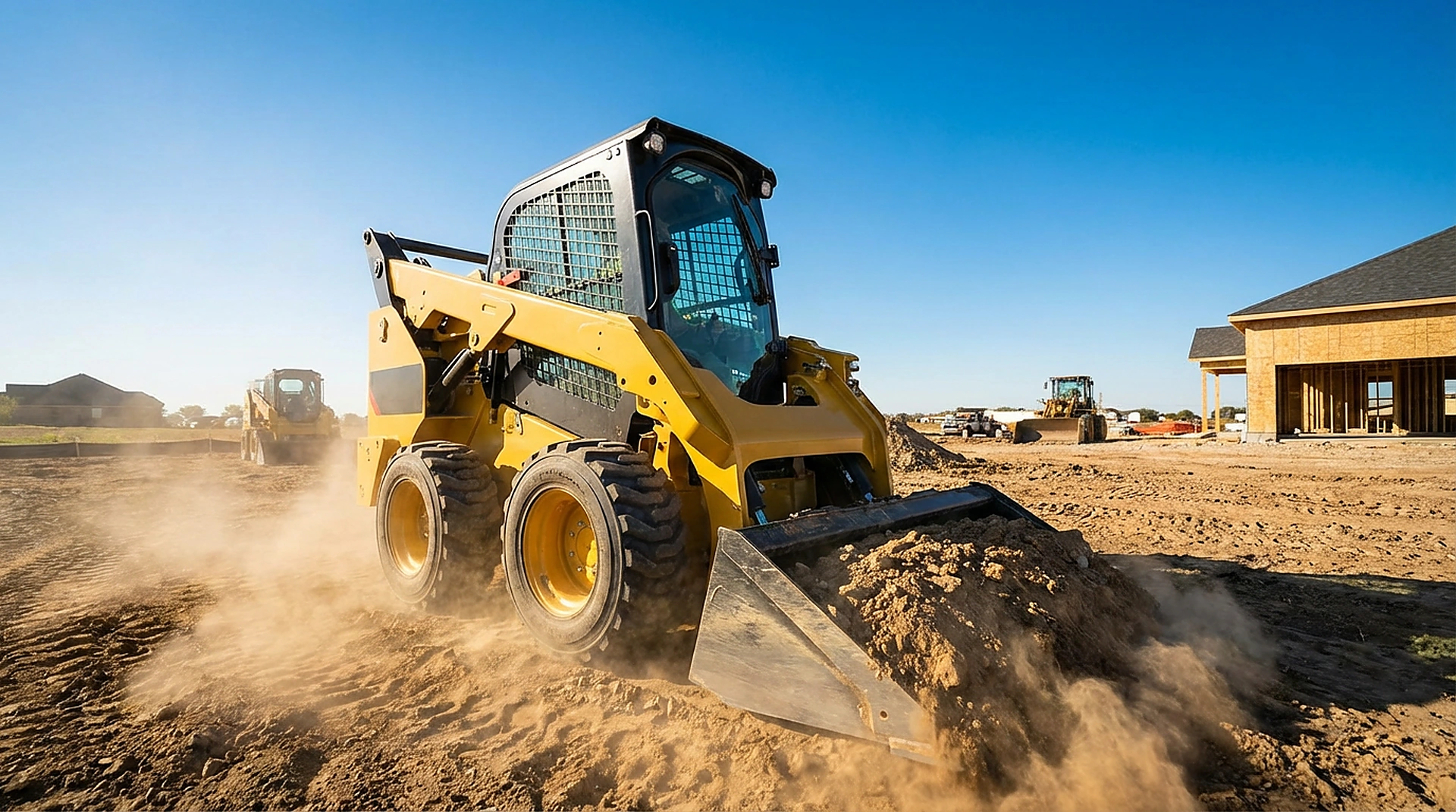
A few pieces of equipment do the heavy lifting for a scaling fence company. A skid steer with an auger is the single biggest jump — it powers through holes that would take a crew all day by hand, and the same machine moves materials and grades the line. A hydraulic post driver, on a skid steer or as a standalone, sets steel and wood posts in seconds and shines on long agricultural and commercial runs. A trailer hauls the machine and materials so you stop renting and start running your own rig. And for ornamental, aluminum, and chain-link work, a welder and generator let you fabricate and repair on site. Each is financeable the same way; the question is which unlocks the most revenue for the least cost given the work you do.
New vs Used
New machines earn the most attractive terms — lowest rates, longest terms, smallest down payment — and come with warranties that keep a busy-season machine out of the shop. Used skid steers and attachments, though, are very financeable and often the smartest buy for a fence company: a clean used machine costs far less up front and the productivity gain over hand-digging is identical. Expect lenders to weigh hours, age, and condition, which can mean a slightly higher rate, a shorter term, or a larger down payment, and a high-hour machine may need an inspection. Even so, the lower price often makes used the cheaper path to capacity. See can you finance used equipment for how used deals are structured.
Equipment Opens Commercial Work
The biggest payoff isn’t just finishing residential jobs faster — it’s qualifying for work you couldn’t take before. Commercial, municipal, industrial, and agricultural fence projects — school yards, solar farms, DOT right-of-way, warehouse perimeters, ranch and farm fencing — are large, post-heavy runs that are only profitable if you can set posts fast. With a skid steer, auger, and trailer in your fleet, you can bid those projects on a timeline that wins and a cost that pencils. That moves you out of the crowded small-residential market and into higher-ticket, often repeat, commercial accounts. Just note those accounts usually pay net-30/60 — covered in getting paid on commercial fence jobs.
A Worked Equipment Payment
Make it concrete. Say you finance a $55,000 skid steer with an auger attachment over 60 months at an illustrative 9%. The payment lands around $1,140 a month. Now weigh that against the productivity: if the machine lets a crew complete even one extra job a week through the season — or finish jobs a day faster, freeing time for more work — the added revenue runs into the thousands per week, many multiples of the monthly payment. Add the commercial runs you can now bid, and the machine isn’t a cost center, it’s the asset that raises your ceiling. Buy a clean used skid steer at, say, $32,000 over 48 months and the payment drops under $800, at the cost of a slightly higher rate and more maintenance attention.
The figures are illustrative, not a quote — your rate depends on credit, the machine, and time in business. But the structure is the point: financed fencing equipment is a self-funding asset. The payment is fixed and modest; the throughput it unlocks is many multiples of that payment across a season. Run the numbers with the payment calculator, then line up financing before the busy season so the machine is earning during the weeks that matter. If the purchase is part of a bigger expansion, weigh straight financing against an SBA loan that can bundle equipment with working capital.
Bottom Line
Hand-digging caps your fence company at a crew’s daily dig rate. A financed skid steer, auger, post driver, or trailer raises that ceiling — the gear is the collateral, the payment is spread over its working life, and the labor saved plus the commercial jobs you can now win cover the cost many times over. Match the equipment to your work, weigh new against used, and line it up before the season. Start at the fencing contractor financing hub, then get matched.
Frequently Asked Questions
Can a fencing contractor finance a skid steer?
Yes. Skid steers and their attachments (augers, post drivers, trenchers) are financed with the equipment as collateral, new or used, with terms typically 36 to 72 months and decisions often back in 24 to 48 hours. Because the machine secures the loan, lenders work with a wide range of credit, often starting around 550 FICO.
Does equipment really pay for itself on fence jobs?
On a labor-intensive trade like fencing, yes. A skid steer with an auger can turn a day of hand-digging into a few hours, so the crew completes more jobs per week. The labor saved and the extra jobs run typically exceed the monthly payment many times over, which is why financing the gear usually beats renting it job by job.
Can fencing contractors finance used equipment?
Yes. Used skid steers, augers, and trailers are financed routinely. Lenders weigh age, hours, and condition, so expect a slightly higher rate, a shorter term, or a larger down payment than a new unit. A clean used machine is often the smartest buy for a growing fence company.
What equipment opens up commercial fence work?
Commercial, municipal, and industrial fence jobs reward speed and volume: a skid steer with an auger or hydraulic post driver, an equipment trailer to move it, and sometimes a welder for ornamental and chain-link work. That package lets a fence company bid larger runs profitably instead of being limited to small residential jobs.
Still deciding? Tell us about your business and compare real options. Free, no obligation, and checking won't affect your credit.