How to Finance a Service Van
Costs, credit requirements, new vs used, and the approval process for service and cargo van financing.
Read moreConnect with lenders who understand plumbing contracting. Finance service trucks and sewer equipment, cover payroll and materials while you wait on GC and property-manager payments, and keep crews rolling on emergency calls. One application, we match you with the right programs.
Plumbing runs on a brutal cash-flow lag. On new-construction and remodel jobs, you front the cost of pipe, fittings, fixtures, and labor up front, then wait 30, 60, or 90 days to get paid by the general contractor or property manager — often in stages tied to draw schedules you don't control. Meanwhile payroll, truck payments, fuel, and insurance come due every week regardless. That gap between when money goes out the door and when it comes back is the single biggest constraint on growth for most plumbing shops.
Service-call work is a different animal again. Emergency calls — burst lines, backed-up sewers, no hot water — arrive around the clock and pay fast, but staying ready for 24/7 demand means stocked trucks, on-call techs, and spare equipment sitting in the shop. Mix in big-ticket jobs like sewer and water-line replacements that need excavation, and the capital needs add up fast. That's why plumbing-specific financing matters: lenders who understand the trade evaluate your real cash flow — not just a static snapshot — and structure equipment loans around the life of a service truck or drain machine, working capital around your billing cycle, and SBA loans for acquisition or a permanent shop. Axiant Partners connects residential and commercial plumbing contractors with lenders who get the business. One application, and we match you with programs suited to your profile. See all industries we serve. Apply now to see what you qualify for.

From adding a service truck to covering payroll while you wait on a draw, here are the most common uses — and how we connect you with the right product.
Add or replace service trucks, vans, and crew vehicles. Equipment financing spreads the cost over the vehicle's useful life so you can put another truck on the road for service and emergency calls without draining cash. New or used, single unit or fleet. See service van financing.
Drain machines, hydro-jetters, sewer cameras, and pipe locators are what let you say yes to the high-value calls. Equipment financing lets you outfit new crews and upgrade gear without a large upfront outlay. Many programs fund quickly so you can take on more jobs.
Cover payroll, fuel, and bulk material buys on installs while you wait 30-90 days for the GC or property manager to pay. Working capital loans bridge the gap between buying pipe and collecting on the invoice — essential when you're scaling up crews.
Revolving credit you draw on to staff 24/7 calls, restock trucks, or cover a slow stretch, then repay as invoices clear. A business line of credit keeps you ready for the next burst pipe without committing to a fixed-term loan you don't always need.
Buy out a competitor, acquire a book of service contracts, or purchase a permanent shop with a yard for trucks and inventory. SBA 7(a) and 504 loans offer longer terms and lower down payments — ideal for bigger, longer-horizon moves. Plan for 30-60+ days.
Stop leasing your shop. Commercial real estate loans and SBA 504 help you buy or refinance a building with secure storage and yard space for pipe and trucks, building equity while freeing capital for equipment.
Financing sizes vary by product, use of funds, and business profile. Here are representative ranges we see across the U.S.:
Your actual amount depends on revenue, credit, collateral, and lender. Use our financing calculator to estimate monthly payments. Apply now to get matched with programs for your situation.
We connect you with lenders who offer equipment financing, working capital, lines of credit, and SBA loans. Understanding the options helps you choose the right fit·and we guide you through that decision.
Axiant Partners connects you with lenders and guides you from application to funding.
Tell us about your operation, equipment needs, and use of funds — service-call work, new construction, or both. One application goes to multiple lender partners. We determine whether equipment, working capital, a line of credit, SBA, or a combination fits best.
Our team analyzes your profile and identifies lenders whose programs align with your needs — whether you need a service truck this week or a shop next quarter.
Equipment financing often needs minimal docs·application, bank statements, equipment quote. Working capital and SBA need more. We tell you exactly what's needed. Equipment decisions in 24-48 hours; SBA 30-60+ days.
Once approved, funds disburse per your loan type. Equipment·lender pays the vendor or you. Working capital·deposited to your account. SBA·per closing docs. You're funded and ready to take on more work.
Equipment financing: 24-48 hours. Working capital: days to weeks. SBA: 30-60+ days. Apply now to get started.
Plumbing contractors frequently finance vehicles and equipment that would otherwise tie up cash. Below are common types, typical cost ranges, and why businesses finance them.
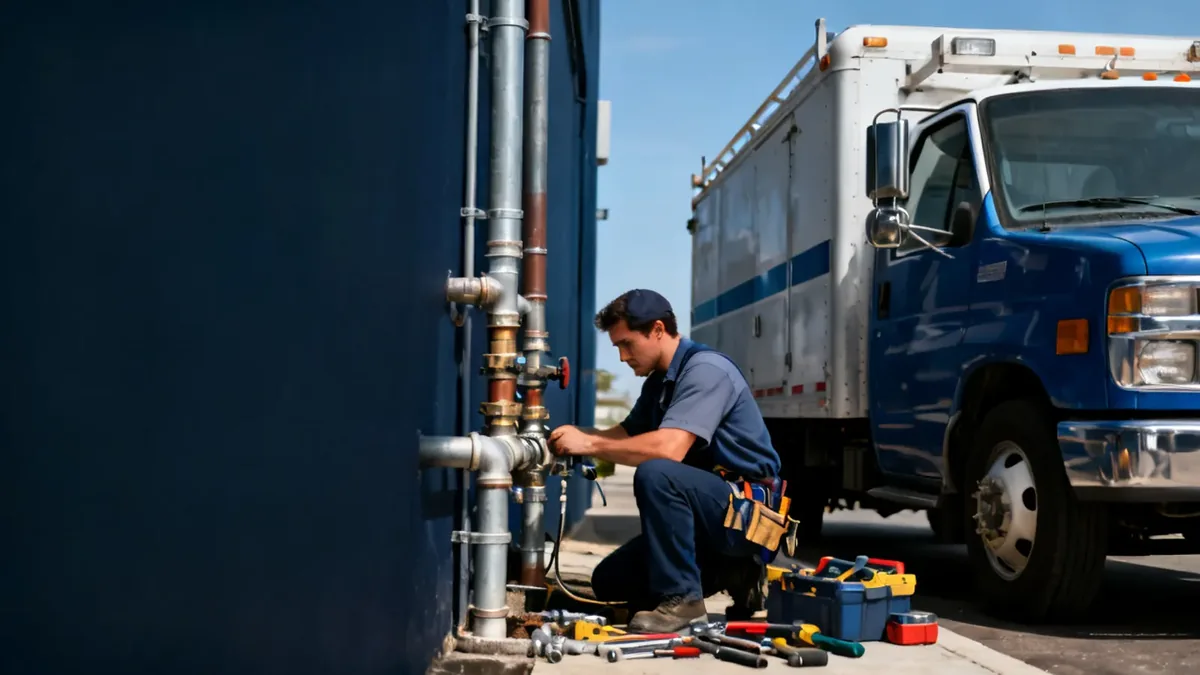
Outfitted service trucks and vans are the backbone of a plumbing fleet. A new work-ready unit typically runs $40,000–$90,000 once shelved, racked, and wrapped. Financing lets you add capacity for service and emergency calls without a large cash outlay. How to finance a service van
Cable drain machines and trailer- or truck-mounted hydro-jetters let you clear roots, grease, and blockages instead of subbing the work out. Quality units run $1,500–$50,000+ depending on capacity. Finance drain & jetting equipment
Push cameras, crawler cameras, and pipe/line locators let crews diagnose blockages and breaks fast and sell the repair on the spot. Systems typically cost $3,000–$20,000 per crew. Finance inspection equipment
Power pipe threaders, press tools, benders, and fabrication gear let you cut and prep pipe in-house and run bigger commercial jobs. Shop tooling can range from $5,000 to $50,000+. Finance pipe & shop tools
Sewer and water-line replacements need digging. A mini excavator or trencher can pay off quickly versus renting on every line job. Compact machines run $30,000–$120,000+. Finance a mini excavator
Dispatch software, field-service platforms, and office hardware keep techs scheduled and invoices flowing — critical for 24/7 call volume. These can often be bundled into an equipment package. Finance business systems
Requirements vary by product and lender. Here's what most lenders consider:
Strong operations with clear use of funds and solid documentation typically qualify for favorable terms. Challenged credit? Options exist·terms may differ. Apply now and we'll match you with lenders whose criteria fit your profile.
We focus on connecting contractors with the right lenders and moving your application forward efficiently.
One application, multiple options, support at each stage. Apply now to get started.
Plumbing contractors can access equipment and vehicle financing for service trucks, drain machines, hydro-jetters, and sewer cameras; working capital loans to cover payroll and materials between billing cycles; lines of credit for emergency demand and slow stretches; and SBA loans for acquisition or a permanent shop. Amounts typically range from $25,000 to $5,000,000. Apply to see what you qualify for.
Equipment and vehicle financing often receives decisions within 24-48 hours. Working capital and lines of credit can fund in days to a couple of weeks. SBA loans typically take 30-60+ days. When you need another service truck or a hydro-jetter on the road fast, equipment-style financing is usually the quickest route.
Yes. Equipment and vehicle financing programs often work with newer businesses because the asset secures the loan. Many lenders look for 6-12 months in business for working capital, while startups may use equipment financing or startup-friendly programs. Strong personal credit and a clear use of funds improve approval odds.
Equipment and vehicle financing programs often accept 550+ FICO. Working capital and lines of credit vary by lender. SBA loans typically favor 650-680+ credit. Strong credit improves terms; options exist for challenged credit with different structures. Apply and we'll match you with lenders that fit your profile.
Plumbers often front the cost of pipe, fixtures, and labor on new-construction and remodel jobs, then wait 30, 60, or 90 days to get paid. Many use a business line of credit or working capital loan to cover payroll, fuel, and materials during that lag, then repay as invoices and draws clear. Matching financing to your billing cycle keeps trucks rolling and crews paid.
Explore our most popular articles on equipment and business financing. For equipment-specific guides by type, see Equipment by Type. For all articles, see Equipment Financing Articles.
Costs, credit requirements, new vs used, and the approval process for service and cargo van financing.
Read moreCredit requirements for equipment loans and leases. Programs for 550+, 600+, 700+ FICO. Improve approval odds.
Read moreYes. Guide to used equipment financing·terms, rates, age limits, and what lenders evaluate for pre-owned vehicles and tools.
Read moreHow plumbing and trade contractors use working capital to cover payroll and materials while waiting on draws and invoices.
Read moreWe also provide financing for construction and HVAC businesses, plus other trades. View all industries.
Plumbing contractors need financing that fits emergency demand and the lag between buying materials and getting paid on draws. Axiant Partners connects plumbing businesses with lenders that offer equipment and vehicle loans, working capital, lines of credit, SBA loans, and more. Submit your information once and we match you with programs suited to your business profile.