
Updated April 10, 2026
FAQ Quick Hits
Can I finance scan tool software subscriptions too?
Sometimes. Many lenders finance hardware only, but some dealer programs can bundle part of software/update costs into the package.
Do lenders finance used diagnostic scan tools?
Yes, in many cases, if equipment condition, value, and vendor documentation meet lender requirements.
Scan Tool ROI and Operations Policy for Growing Shops
Scan tool financing performs best when paired with an operational policy, not just a purchase decision. Shops that define diagnostic workflow standards, software update cadence, and technician utilization targets usually capture better ROI from financed tools than shops that buy first and optimize later.
Start by assigning the tool to a revenue objective: faster diagnostic throughput, broader make/model coverage, or higher-ticket electrical work. Then track weekly diagnostic billable hours and comebacks. If financed equipment doesn't shift those metrics, the issue is usually process training, not financing structure.
- Workflow: standardize intake-to-diagnostic handoff by vehicle type
- Training: schedule periodic feature refresh for each technician
- Updates: align subscription renewals with volume and model mix
- Bundling: add adjacent equipment only if bay throughput supports it
This page is scan-tool specific; broader multi-equipment buildout decisions should live on package-financing pages to keep topical boundaries clear.
Shop Manager Implementation Checklist (First 90 Days)
Financing gets the tool into the shop, but implementation quality determines whether the investment actually improves gross profit. In many shops, diagnostic equipment is underused because intake, technician assignment, and follow-through processes were never redesigned around faster diagnostics. A first-90-days checklist keeps the new tool tied to measurable outcomes.
During the first month, focus on baseline metrics: average diagnostic cycle time, conversion rate from diagnostic to approved repair, and comeback rate for electrical issues. During months two and three, optimize usage by assigning vehicle classes to technicians with strongest tool proficiency and scheduling refresher training on underused capabilities. This is where many shops recover hidden margin.
Budget discipline also matters. Subscription updates and accessory modules can create silent cost creep if they are added without production justification. Treat each add-on like a mini-capex decision: require expected usage and revenue rationale before committing recurring spend.
- Days 1-30: establish baseline KPIs and enforce diagnostic process consistency
- Days 31-60: optimize technician usage by platform and fault category
- Days 61-90: audit profitability impact and adjust update/module spend
- Quarterly: compare financed payment burden against incremental margin lift
If KPI movement is weak, don't assume financing was the wrong choice. Usually the bottleneck is workflow adoption. Tight process management can convert the same financed asset from a cost center into a strong throughput driver.
Keep this page focused on scan-tool economics and implementation. Use adjacent pages for lift packages, full-bay buildouts, or broader new-shop capitalization topics so each page retains distinct search intent.
Vendor and Warranty Coordination
Include vendor support quality in financing decisions. Response time for repairs, update support, and warranty clarity can influence downtime and realized ROI as much as payment terms.
Request written support timelines and update policy before signing. This reduces operational surprises and helps protect financed productivity targets.
Set quarterly review checkpoints on tool uptime, diagnostic throughput, and subscription value capture so financing performance is tied to measurable operational outcomes.
Shops that review performance on schedule usually recover more value from financed equipment and make better follow-on purchase decisions.
When results are tracked consistently, future financing decisions become easier because the shop can demonstrate clear ROI from prior equipment investments.
Consistent tracking also improves vendor accountability and helps managers decide when to upgrade, expand, or reconfigure diagnostic capacity.
In competitive markets, this operational clarity becomes a strategic differentiator by helping shops price diagnostics more confidently and reduce turnaround time without sacrificing quality.
With each quarter of clean results, the shop builds a stronger case for future equipment financing decisions and better capital efficiency overall.
This consistency also improves budgeting confidence, since managers can forecast diagnostic capacity and software costs with better accuracy.
Over time, that predictability supports better staffing decisions, steadier bay utilization, and stronger service quality outcomes.
It also gives ownership clearer evidence on when additional diagnostic capacity will actually improve profitability.
That data-backed timing reduces expensive overbuying and keeps growth aligned with demand.
When decisions are made with this level of discipline, financing becomes a performance tool rather than a simple purchase mechanism, helping the shop scale profitably while maintaining quality and turnaround standards customers expect.
Why Auto Shops Need Scan Tools
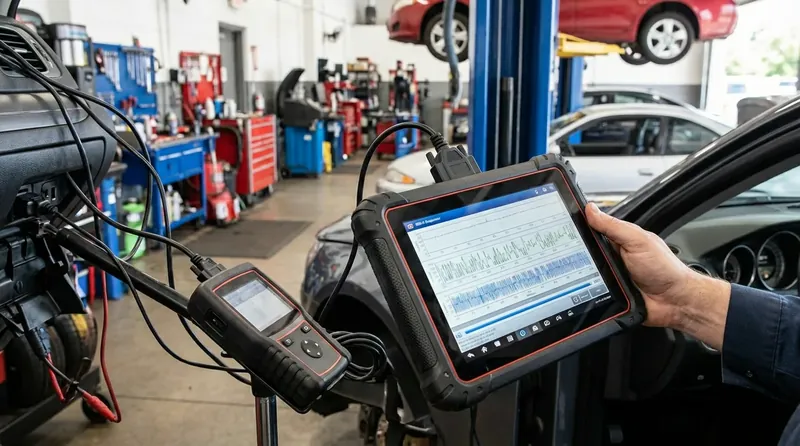
Modern vehicles rely on complex computer systems. Professional scan tools read OBD II codes, live data streams, and enable bi-directional diagnostics and programming. Without the right diagnostic equipment, shops can't efficiently troubleshoot check engine lights, emissions issues, or manufacturer-specific faults. One financed scan tool can expand service offerings, reduce diagnostic time, and justify higher labor rates. Hybrid and electric vehicles add complexity—coverage for multiple makes and models is increasingly important. See equipment financing by type. Bundling scan tools with other shop equipment can streamline approval.
Scan Tool Costs
Professional scan tools run roughly $2,000-$15,000+ depending on features, manufacturer coverage, and capabilities. Entry-level OBD II tools: $2K-$4K. Mid-range with bi-directional control and multiple make coverage: $4K-$8K. Premium tools (Snap-on, Autel, Launch, Bosch) with full OEM-level access: $8K-$15K+. Manufacturer-specific tools (e.g., Ford IDS, GM Tech2) add cost. Software subscriptions for updates may be separate. Get a written quote from your dealer. See equipment financing requirements.
Financing Options: Loans vs Leases
Equipment loans spread the cost; you own at payoff. Leases often have lower payments and can suit technology that updates frequently—software subscriptions may outlive hardware. Scan tools have a useful life of 5-7+ years; both structures work. See equipment loan vs lease. Use our calculator to model payments.
Bundling Scan Tools with Other Shop Equipment
Scan tools can be financed alone or bundled with lifts, tire equipment, tool storage, and other diagnostic gear. Bundling may simplify approval, improve terms, and reduce total administrative effort. Lenders often prefer packages that show a complete shop fit-out. Work with a dealer who can provide a bundled quote. See auto shop equipment package financing.
Credit and Down Payment Requirements
Most lenders look for 600+ FICO; 680+ qualifies for the best rates. Scan tools are smaller-ticket than lifts—some lenders have minimums ($5K-$10K); bundling helps. Down payments: 0-15% for qualified applicants. See credit score for equipment financing. New shops may need stronger personal credit.
Software Updates and Subscriptions
Financing typically covers the hardware. Software subscriptions for manufacturer updates, new model coverage, and troubleshooting databases may be separate—monthly or annual. Some dealers bundle first-year updates. Factor ongoing costs into your decision. Obsolete coverage limits the tool's value; keep updates current.
Documentation for Scan Tool Financing
Gather: equipment quote (make, model, features), 3-6 months business bank statements, tax returns, profit and loss statement, business formation documents. For new shops: business plan. Complete documentation speeds approval. See equipment financing approval requirements.
Where to Find Scan Tool Financing
Equipment lenders, tool distributors, and specialty auto shop financiers offer scan tool financing. Dealer financing is common—Snap-on, Matco, and other tool trucks have programs. A marketplace like Axiant Partners submits one application to multiple lenders. Approval often within 24-48 hours when documentation is complete. Get matched for scan tool and diagnostic equipment financing.
What Shop Owners Are Usually Trying to Solve
Most intent behind this topic is practical: keep bays turning when OEM-level diagnostics are required, avoid draining operating cash on a single $8K-$15K purchase, or standardize coverage across multiple techs. Equipment financing fits when the tool directly supports billable hours. For payroll, parts inventory, or marketing gaps, working capital loans or a business line of credit may be a better match than forcing everything into an equipment contract. If you're outfitting a new location, equipment financing for new businesses explains what underwriters typically want to see.
Financing vs Paying Cash or Using Plastic
Paying cash is cheapest when you have stable reserves. Credit cards are flexible but often carry higher APRs and can hurt utilization. Term equipment financing spreads cost over 24-60 months with a fixed payment that's easier to budget against labor sales. Before you sign, compare total payback and prepayment rules—see red flags in equipment finance agreements and how to avoid overpaying equipment financing.
Frequently Asked Questions
My shop needs a diagnostic machine immediately—what financing options work?
Equipment loans or leases are usually the fastest path when you have a dealer quote and basic business documents ready; many lenders decide in 24–48 hours. Get matched to compare options in one pass.
How much does a professional scan tool cost?
Professional scan tools run $2,000-$15,000+ depending on features. Entry-level $2K-$4K; premium $8K-$15K+.
Can I finance a scan tool for my auto shop?
Yes. Equipment lenders routinely finance scan tools. Credit 600+, typical approval in 24-48 hours. Can be bundled with other shop equipment.
What credit score do I need for scan tool financing?
Most lenders look for 600+ FICO. Smaller tickets may have flexible requirements when bundled.
Does scan tool financing include software updates?
Financing typically covers hardware. Software subscriptions may be separate. Check your quote.
How fast can I get approved for scan tool financing?
Many lenders approve within 24-48 hours. Bundled with other shop equipment, approval may be streamlined.
Can a new repair shop finance scan tools on day one?
Often yes, with stronger personal credit, a solid quote, complete bank statements, and sometimes a larger down payment or a bundled package that shows how the shop will generate revenue from day one.
Is dealer or tool-truck financing the same as equipment lender financing?
Not always. Compare annual percentage rate or total finance charge, term, fees, and prepayment rules. Independent equipment lenders and marketplaces can offer alternatives to a single captive program.