
Updated April 4, 2026
Quick answer
Yes — equipment financing can build business credit when structured properly. The keys: confirm the lender reports to D&B, Experian Business, and Equifax Business; register a D-U-N-S number; apply with the business EIN and pay from the business account; pay early or on time (early payments earn 90-100 PAYDEX); and stack additional reported tradelines (vendor accounts, business credit card). Equipment loans paid from personal accounts often don't count toward business credit.
How Business Credit Works
Business credit is separate from personal credit and is tracked by agencies such as Dun & Bradstreet, Experian Business, and Equifax Business. Unlike personal credit, business credit is tied to your company's EIN (Employer Identification Number) and reflects how the business manages debt, pays vendors, and meets financial obligations. Benefits of a strong business credit profile include:
- Improve future financing approvals
- Reduce interest rates
- Increase credit limits
- Strengthen vendor relationships
- Improve negotiating leverage
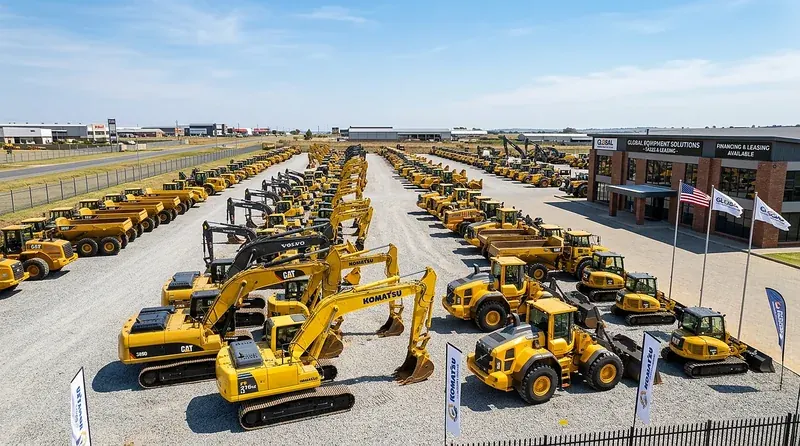
Building business credit requires trade lines and payment history reported under the company's EIN.
Does Equipment Financing Report to Business Credit Bureaus?
It depends on the lender. Some equipment financing programs report on-time payments, payment history, and outstanding balances to commercial credit bureaus. Others may only report to personal credit bureaus if a personal guarantee is involved.
Before finalizing a transaction, ask: "Does this lender report to business credit bureaus?" and "Is reporting tied to the business EIN?" Choosing the right program matters if credit building is part of your long-term strategy.
How Equipment Financing Builds Credit
When the lender reports to business credit bureaus under your company's EIN, each on-time payment contributes to a positive trade line. Over a 24- to 60-month term, that history adds up. Structured properly, equipment financing can strengthen credit in several ways:
1. Establishes Trade History
Consistent, on-time monthly payments create a positive trade line, demonstrating payment reliability, debt management ability, and financial discipline.
2. Improves Payment Performance Record
Consistent on-time payments over a 24–60 month term significantly strengthen business credit. Late payments, however, can damage it.
3. Builds Borrowing Capacity
As your business establishes a history of successfully managing equipment financing, lenders may be more willing to extend higher credit limits, larger equipment loans, more flexible terms, and unsecured credit lines. A business that has repaid a $50,000 equipment loan on time may qualify for a $150,000 line of credit or a larger equipment loan for its next purchase. Building credit is a gradual process–each on-time payment reinforces your profile and expands future options.
Timing: When to Prioritize Credit Building
If building business credit is a goal, structure your equipment financing with that in mind. Choose a lender that reports to business bureaus, ensure the tradeline is under your company's EIN, and prioritize on-time payments. Even if you could pay cash, financing a portion and repaying consistently can establish credit history that pays dividends later. The cost of the financing–interest and fees–may be worth it when viewed as an investment in your company's long-term borrowing capacity.
Will Equipment Financing Affect Personal Credit?
In many cases, yes–especially for small and mid-sized businesses, since most equipment financing programs require a personal guarantee. A credit inquiry may appear on your personal report, payment history may impact personal credit, and default could affect your personal credit score. Some lenders report only to business bureaus; others report to both. Ask your lender before signing. See credit score requirements for equipment financing for context. If your business has grown and strengthened financially, you may qualify for programs that rely less heavily on personal credit alone, reducing the impact on your personal report.
Equipment Loan vs. Lease and Credit Impact
Both equipment loans and leases can contribute to credit building if reported properly. The key is whether the lender reports to business credit bureaus under your company's EIN. Lease structures may still report payment performance depending on lender reporting policies–some lessors report to Dun & Bradstreet, Experian Business, or Equifax Business, while others do not. When comparing options, ask explicitly: "Do you report to business credit bureaus?" If credit building is a goal, choose a program that reports. Review equipment loan vs lease differences to align with your long-term financial strategy.
What If My Business Has No Credit History?
Equipment financing can serve as one of the first tradelines for newer businesses. Even if the company is relatively new, on-time equipment payments can establish credit history, structured financing demonstrates operational stability, and responsible repayment builds credibility. Lenders may rely more heavily on personal credit and revenue for startups, but once the loan or lease is in place and reporting begins, the business starts building its own profile. Startups may face stricter approval criteria–higher down payments, shorter terms, or stronger personal guarantees–but equipment financing solutions can provide both capital access and credit-building opportunity.
Monitoring Your Business Credit Profile
As you use equipment financing to build credit, monitor your business credit reports through Dun & Bradstreet, Experian Business, and Equifax Business. Ensure your business information is correct, tradelines are reporting accurately, and there are no errors that could harm your profile. Dispute inaccuracies promptly. Over time, a strong payment history on equipment financing can improve your Paydex score, credit limits, and future financing terms.
What Factors Still Matter?
Even if equipment financing helps build credit, lenders will continue to evaluate revenue consistency, time in business, industry risk, equipment type, and down payment contribution. See down payment requirements for equipment financing if unsure about upfront requirements.
How to Use Equipment Financing Strategically
If your goal is to build business credit while acquiring assets:
- Choose programs that report to business credit bureaus.
- Make all payments on time.
- Avoid overextending borrowing capacity.
- Maintain strong business bank balances.
- Monitor your business credit profile regularly.
Equipment financing is both an operational tool and a long-term credit-building strategy.
Final Thoughts
Equipment financing can build business credit when structured with reporting in mind–by establishing tradelines, demonstrating payment consistency, and responsibly managing debt. Credit building should not be the only reason to pursue financing; equipment must still align with operational and growth objectives. Evaluate equipment purchases and understand how financing may impact your credit profile. Reviewing structured equipment financing options aligned with your goals can help you decide with confidence.
How Equipment Obligations Can Show Up on Business Credit
Business credit reporting is not identical to consumer reporting. Not every equipment lender reports to every bureau, and some leases may report differently than term loans. What is consistent is that a documented trade line with on-time payments gives future underwriters a verified repayment history tied to your business identity. That history is especially useful when your consumer credit is strong but your business file is thin.
Ask early whether the program reports to commercial bureaus and which ones. If reporting is important for your roadmap, factor it into program selection alongside rate and term. A slightly higher payment with reporting may beat a cheaper silent loan if your goal is file depth.
Actions That Strengthen the Credit Story Alongside Financing
Equipment financing works best as one layer of a deliberate credit stack. Keep vendor accounts in good standing, resolve any tax or lien issues quickly, and separate business and personal expenses so financial statements tell a coherent story. If you operate under multiple DBAs, ensure the borrowing entity matches how you file taxes and open bank accounts.
- Verify business identifiers: EIN, address, and legal name consistency across applications.
- Monitor filings: UCC filings for equipment should be expected; understand lien release timing at payoff.
- Plan the next milestone: twelve to twenty-four months of clean payment history often unlocks larger approvals.
Mistakes That Undermine Credit-Building Goals
Late payments, even if eventually cured, can blunt the benefit of a new trade line. So can over-applying across many lenders in a short window, which fragments inquiries and can signal distress. Prefer a structured comparison through a single intake when possible. Also avoid co-mingling equipment loans with unrelated personal expenses on the same cards or accounts—underwriters use statements to validate business health.
A Realistic Timeline for Business Credit Depth
Most meaningful business credit profiles develop over several trade lines and multiple years of consistent behavior. Equipment financing can accelerate that path if you treat payments as non-negotiable operating expenses and avoid periodic re-aging through hardship programs that hide stress until later.
After twelve months of clean history, revisit your limits and pricing. After twenty-four months, you may qualify for broader programs with fewer documentation burdens, especially if your financial statements improved in parallel.
Related Topics to Review Next
If you are also managing personal credit alongside the business, see equipment financing with challenging credit for how lenders weigh blended profiles. For documentation expectations, documents needed for equipment financing lists common file types that keep applications moving.
Renewals, Payoffs, and How They Appear on Business Credit
Paying off an equipment obligation early can help liquidity, but confirm how the account will report closure. Some bureaus retain history; others emphasize open trades. If you plan another equipment purchase soon, sequencing payoffs and new applications avoids gaps that make your file look thinner than reality.
When negotiating renewals or upgrades with the same lender, ask whether reporting continues seamlessly across schedules. Continuity can be better for bureau depth than starting from zero with a new creditor every cycle.
Bottom Line on Equipment Financing and Business Credit
Equipment financing can be a practical way to add depth to your business credit profile when payments are managed as a core operating discipline. Pair financing with clean books, consistent deposits, and a plan for renewals so each transaction strengthens the next. When you are ready to compare programs, route a single polished package through matching to keep your story consistent across lenders.
One-Line Takeaway
Equipment financing can support business credit growth when reporting programs, payment discipline, and financial consistency align. Treat each obligation as a long-term relationship with your credit file, not a one-off transaction, and your next approval is usually easier than the last.
Frequently Asked Questions
Can equipment financing help build business credit?
Yes, when structured properly. Confirm the lender reports to Dun & Bradstreet, Experian Business, and Equifax Business; register a D-U-N-S number; apply with the business EIN; and pay from the business account.
How do you make equipment financing build business credit?
Use the business EIN, pay from the business account, pay early or on time (early payments earn a 90-100 PAYDEX), and stack additional reported tradelines such as vendor accounts and a business credit card.
Does every equipment lender report to business credit bureaus?
No. Only financing from lenders that report builds business credit, so confirm reporting to Dun & Bradstreet, Experian Business, and Equifax Business before signing.
Does equipment financing affect personal credit?
It can, especially when paid from a personal account or backed by a personal guarantee. Paying from the business account and using reporting lenders keeps the benefit on the business profile.