
Bridge Loan to Pay Off Construction Debt

Refinance construction debt at completion, then exit to permanent financing

The Construction-to-Permanent Gap

Construction loans typically mature at substantial completion or within a short period after. The lender expects payoff. Permanent lenders (SBA, banks, life companies) underwrite completed, stabilized properties. They may require certificates of occupancy, final inspections, and sometimes a lease-up period. If your construction finishes before permanent financing is ready, you face a timing gap. Bridge financing pays off the construction lender and holds the property until permanent takeout closes. See when to use a commercial bridge loan.
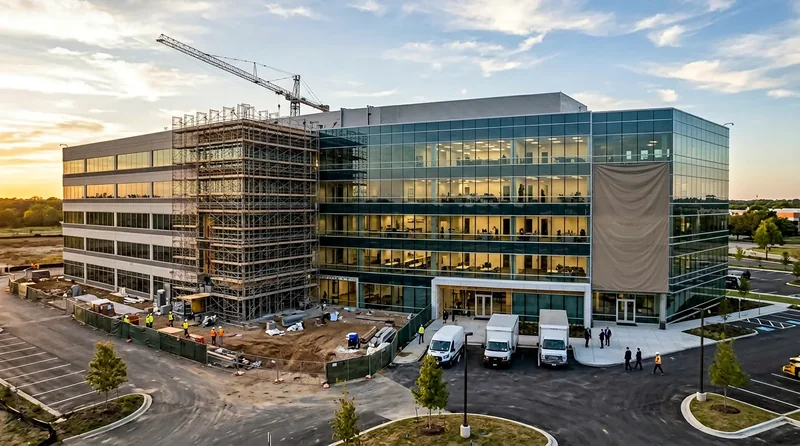
Bridging out construction debt on commercial projects

When Bridge Makes Sense for Construction Payoff

  • Permanent financing delayed: Your SBA or conventional loan is in process but will not close before construction maturity. Bridge buys time.
  • Lease-up required: The permanent lender wants 6–12 months of occupancy before funding. Bridge carries the project through lease-up.
  • Rate or term mismatch: Construction loan converts to a mini-perm or higher rate. Bridge may offer better interim terms.
  • Construction finished early: The project completed ahead of schedule; permanent financing was timed for a later date.

Typical Bridge Structure for Construction Payoff

Bridge loans that pay off construction debt:

  • Fund the construction loan payoff amount (plus fees, reserves if applicable)
  • Term of 12–24 months, aligned with when permanent financing is expected
  • Interest-only payments
  • Underwriting based on as-completed value and NOI (stabilized or projected)
  • Exit: refinance into SBA 504, conventional, or other permanent financing

See what lenders look for in a commercial bridge loan.

What Bridge Lenders Need

For construction payoff, lenders typically want:

  • Certificate of occupancy or substantial completion
  • Final construction cost summary
  • Payoff statement from construction lender
  • As-completed appraisal
  • Rent roll or lease-up projections
  • Exit plan: permanent financing application status, expected close date

Lenders want assurance the project is complete, the value supports the loan, and refinance is achievable. See how fast you can close a commercial bridge loan.

Construction Loan Extension vs Bridge

Some construction lenders offer extensions. If the extension cost and terms are favorable, that may be simpler than a new bridge loan. If the construction lender will not extend or the terms are unattractive, bridge financing to pay off and refinance is the path. Compare both options.

Owner-Occupied vs Investment

Owner-occupied (your business will occupy 51%+): SBA 504 is a common permanent takeout. SBA 504 can finance owner-occupied commercial real estate including build-to-suit. SBA loan for owner-occupied commercial property explains the structure. Investment (multi-tenant): Conventional CRE or other permanent financing is the typical takeout. See SBA 504 vs conventional CRE.

Lease-Up Bridge

When permanent lenders require occupancy before funding, a lease-up bridge carries the project from completion through the required lease period. The bridge term should cover lease-up plus buffer for permanent underwriting. Lease-up bridges are common for multi-tenant office, retail, and industrial.

LTV and Advance Rates

Bridge lenders typically advance 65–75% of as-completed value. For newly completed projects without lease-up, value may be based on stabilized projections. Lease-up and absorption risk can affect advance rates. Strong sponsors and clear exit plans support higher LTV.

Timing: When to Secure Bridge for Construction Payoff

Start the bridge process 4–8 weeks before construction maturity. Bridge lenders can close in 7–21 days, but having payoff amounts, appraisals, and documentation ready speeds the process. Coordinate with your permanent lender to understand their timeline; the bridge term should exceed the expected permanent close date.

Bottom Line

Bridge loans can pay off construction debt when permanent financing is not yet in place. They provide 12–24 months to complete permanent underwriting, lease-up, or other requirements. Prepare completion documentation, payoff amounts, and a credible exit plan. Get matched with bridge lenders for construction payoff, or explore commercial bridge loan options.

Bridge Loan Pay Off Construction Debt: Bridge Framework and Execution Controls

Commercial bridge financing works best when speed is balanced with a credible exit plan. Start by defining why bridge structure is necessary now, what event unlocks exit, and how repayment remains feasible if timing extends. Underwriters focus on certainty of completion and certainty of exit. Files that clearly connect business plan, asset strategy, and contingency controls tend to move faster and price more cleanly.

Prepare a lender-ready package that includes property-level assumptions, project milestones, and operating safeguards. Where construction or repositioning is involved, map budget dependencies and timeline risk points. Add plain-language notes for unusual conditions so reviewers do not infer hidden risk from missing context.

  • Use-case clarity: acquisition, payoff bridge, repositioning, or timeline bridge to permanent debt.
  • Exit certainty: refinance or sale path with timing assumptions and backup options.
  • Control metrics: draw discipline, reserve management, and milestone verification cadence.
  • Communication protocol: proactive updates when assumptions shift materially.

Risk Model and Post-Close Governance

Run a three-case model before closing: base, moderate delay, and severe delay. Include cost overruns, lease-up lag, or valuation slippage as applicable. If the structure fails under moderate delay, resize terms or improve reserves before committing. This protects optionality and reduces extension risk.

After funding, maintain a monthly governance rhythm with documented actions and owner accountability. Bridge deals reward disciplined execution. Teams that track variance early and communicate clearly typically preserve better flexibility and stronger takeout outcomes.

Execution Playbook and Exit-Certainty Controls

Bridge debt delivers value when execution is tightly managed from day one. Build a playbook that ties draw usage to milestone completion, reserve governance, and an explicit exit path. Define what must happen by month, what evidence confirms progress, and which actions are required if timelines slip. This structure reduces uncertainty for both borrower and lender.

Underwriters evaluate bridge files through a certainty lens: certainty of collateral progress, certainty of borrower control, and certainty of exit timing. Improve certainty by presenting reconciled budgets, documented contingency plans, and a monthly reporting schedule. If assumptions change, communicate early with revised scenario outcomes and corrective actions.

  • Milestone discipline: link draw requests to verified progress checkpoints.
  • Reserve controls: monitor carry costs, contingency usage, and liquidity runway.
  • Exit management: maintain refinance/sale readiness documents before maturity pressure.
  • Variance response: trigger preplanned actions when schedule or budget drifts.

Keep one owner accountable for timeline integrity and one owner for data integrity. Split ownership without clarity often causes delays and inconsistent messaging. Clear ownership improves speed, lowers friction, and protects negotiation position if extension discussions become necessary.

Timeline Recovery Matrix for Stalled Bridge Deals

When bridge timelines slip, move to a recovery matrix instead of ad-hoc fixes. Classify delay drivers (documentation, third-party reports, legal dependencies, scope changes, market shifts), assign owners, and set a dated resolution path for each item. Include lender communication milestones with evidence packets attached so progress remains transparent.

A good recovery matrix also defines escalation thresholds: when to rebase timeline assumptions, when to adjust budget allocations, and when to initiate extension or refinance contingencies. This helps avoid last-minute pressure near maturity and preserves optionality.

Run matrix reviews weekly until key blockers are cleared. Structured recovery behavior usually restores momentum faster than broad follow-up requests.

Management Protocol and Weekly Action Cadence

Bridge projects benefit from a weekly action cadence with explicit blockers, owners, and due dates. Use one operating tracker for timeline, budget variance, lender requests, and third-party dependencies. Each weekly review should close the loop on unresolved items and confirm whether assumptions remain valid.

When assumptions fail, update the plan immediately and communicate targeted changes with evidence. This behavior improves lender confidence and reduces extension risk.

Delay Diagnostics and Corrective Sequence

For slower-moving bridge files, run delay diagnostics weekly: identify root cause, gather only required evidence, assign owner, and set resolution deadline. Avoid broad responses that create more review work. Focused, evidence-based responses resolve underwriting blockers faster and keep funding momentum intact.

Document diagnostics and outcomes so your next deal starts with a stronger checklist and fewer repeat delays.

Final Governance Layer and Deal-Cycle Improvement

Bridge strategies are strongest when governance does not stop at approval. Add a final governance layer that standardizes weekly issue reviews, monthly variance reporting, and post-close retrospectives. This layer should capture what assumptions failed, what actions worked, and what checklist updates are required before the next deal. Consistent governance converts one-off learning into repeatable execution quality.

Use a structured review template: current status, top risks, corrective actions, owner accountability, and expected resolution date. Keep this format consistent across deals so performance can be compared over time. As this dataset grows, lenders gain confidence that the borrower manages bridge complexity systematically rather than reactively.

  • Weekly rhythm: unblock dependencies and confirm timeline integrity.
  • Monthly rhythm: report budget variance, reserve health, and exit-readiness progress.
  • Quarterly rhythm: refresh stress scenarios and contingency actions.
  • Post-close rhythm: capture lessons and integrate them into next-cycle playbooks.

The benefit is cumulative: fewer recurring delays, cleaner lender dialogue, and stronger control over extension and refinancing decisions. In competitive markets, this governance track record can be as important as headline pricing.

For payoff bridges, reconcile contractor claims, lien status, and completion milestones before each draw request so lender reviews remain predictable and fast.

Closing Discipline and Post-Close Verification

As bridge transactions approach close, process discipline matters more than optimism. Run a closing protocol that verifies condition satisfaction, final document versions, and disbursement dependencies in a single tracker. Confirm that legal, title, insurance, and third-party deliverables are synchronized to prevent last-minute blockers.

Immediately after close, perform a post-close verification checklist: reserve balances, draw controls, covenant or reporting obligations, and milestone calendar ownership. Early verification prevents administrative drift from becoming material timeline or cost risk.

Teams that formalize closing discipline generally reduce preventable delays and maintain stronger control over the exit path. That control is a core factor in preserving economics over the full bridge lifecycle.

Extended Recovery and Extension-Decision Framework

If timeline pressure persists, move from tactical fixes to extension-decision framework. Quantify remaining work, revised completion timing, and reserve sufficiency under conservative assumptions. Compare extension economics against alternative exits and define decision checkpoints with dates.

Prepare an evidence-backed lender brief that includes root-cause summary, completed corrective actions, and updated risk controls. Clear, data-driven communication improves probability of constructive extension outcomes and protects negotiating leverage.

Do not wait for maturity pressure to force decisions. Early framework activation preserves optionality and reduces forced-error risk.

For construction payoff scenarios, align completion evidence, reserve monitoring, and lender communication cadence so transition risk remains controlled from payoff through takeout.

A disciplined payoff transition plan with clear evidence standards helps prevent last-mile delays and improves confidence in permanent-takeout readiness.

During payoff transitions, validate completion evidence, reserve adequacy, and timing assumptions at each stage so the bridge remains a controlled handoff rather than a prolonged carry-risk position.

Keep evidence trails clear at every transition step.

Maintain clear milestone evidence and update assumptions in real time.

Document each update.

Bridge Financing: Exit Clarity, Timeline Risk, and Documentation

Bridge lenders underwrite to a credible take-out or asset sale path, not hope. They stress interim cash flow, collateral control, and the feasibility window for your exit.

Spell out fees, extension options, default triggers, and reserve requirements before you sign. Ambiguity during the bridge term becomes expensive when deadlines slip.

Underwriting Reality: What Files Actually Prove

Lenders underwrite to repayment durability under stress, not headline revenue. They reconcile deposits or NOI, financials where required, and use of funds. Inconsistent entity names, partial statement months, or unexplained transfers invite delays and re-trades.

Assign one owner for stipulations and deadlines. Batch responses instead of dribbling partial documents. The fastest approvals usually belong to borrowers who treat underwriting as a controlled process.

  • Cash-flow proof: operating accounts or rent rolls that tell a coherent story.
  • Collateral proof: appraisals, title, schedules, or equipment quotes when applicable.
  • Execution proof: who signs, who responds, and when.
  • Risk proof: downside scenarios with mitigation steps.

Comparing Offers Without Single-Metric Bias

Rate alone misleads. Map total cost, payment frequency, prepayment rights, covenants, and personal or recourse guarantee breadth. Overlay obligations on a real cash calendar with payroll, taxes, debt service, and property carry.

Alternatives may include working capital loans, business lines of credit, or equipment financing when the use case matches collateral or term structure.

Post-Close Monitoring and Refinance Readiness

After funding, track actual payment strain versus forecast. If performance weakens, communicate early with facts and a corrective plan. Lenders often work with transparent operators; silence until negative events narrows options.

Archive executed agreements, disbursement records, and amendment letters. Clean history speeds future refinancing and reduces disputes.

Scenario Planning and Governance

Build base and stress cases for revenue, NOI, or margin. Stress should include slower collections and higher costs. If financing fails the stress test, reduce size or choose a more flexible structure before commitment.

Monthly review of liquidity, debt service, and variance drivers prevents small gaps from becoming covenant or cash crises. Get matched for options aligned to your profile and use our calculator to model payments.

Communication, Brokers, and Data Integrity

Contradictory answers from multiple contacts undermine credibility. Designate a single source of truth for financial figures. If brokers are involved, map how many simultaneous submissions exist—duplicate applications can fragment lender views of your file.

When material facts change, send one consolidated update rather than many partial emails. Underwriting teams process structured corrections faster than threaded ambiguity.

Long-Term Capital Quality and Repeatability

Borrowers who treat capital as a recurring operating system—not a one-time event—maintain better pricing over time. Document assumptions at origination and compare to actuals quarterly. Adjust operations or structure when variance persists.

Repeatable financing outcomes correlate with disciplined reporting, early problem surfacing, and product fit tied to use of funds—not urgency alone.