
Updated June 3, 2026
A Bay Is a Revenue Engine, Not an Expense
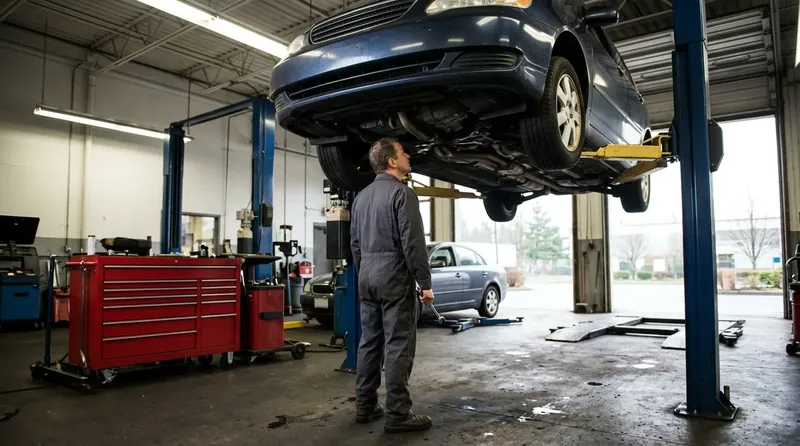
Auto repair is one of the clearer cases where equipment directly equals earning capacity. A shop’s revenue is gated by how many cars it can have in the air at once and how efficiently techs move between them. Add a productive bay and you don’t just gain a tool — you gain a station that can bill labor hours every working day. That is why a lift is better understood as a revenue engine than as a purchase: the relevant comparison is the monthly payment against the labor that bay generates, and for most busy shops that comparison isn’t close.
Specialty equipment extends the same logic into new services. An alignment rack adds alignment revenue you may currently turn away. A modern tire machine and balancer let you keep tire work in-house. A dedicated diagnostic or A/C station speeds throughput on every car. Each one either adds a service line or removes a bottleneck that was capping how many cars you could finish in a day.
Run the Bay Payback Before You Buy
The discipline that makes equipment financing a confident decision is a quick payback estimate. Figure the additional billable hours a new lift or bay realistically adds per month, multiply by your effective labor rate and margin, and compare that monthly profit to the financing payment. A productive bay in a shop with steady car count often generates several times its payment in labor — the payment is small next to the hours. If the bay only pays for itself assuming you stay slammed every day, that tells you to wait or start with a less expensive setup. Lenders also respond well to this kind of grounded reasoning in an application.
What Shops Finance in This Category
- Lifts — two-post, four-post, scissor, and heavy-duty; see auto lift financing.
- Alignment racks & aligners — to add alignment as a service line.
- Tire machines & balancers — to keep tire work and its add-ons in-house.
- A/C machines, brake lathes, presses, and air systems — throughput and capability across every bay.
New and used both qualify, and a multi-item buildout for a new bay can often be financed as a single package.
Lease vs. Buy for Durable Shop Equipment
Unlike fast-moving diagnostic technology, core shop equipment like lifts and tire machines is durable and runs productively for many years — which usually argues for a loan and ownership. You build equity, and once it’s paid off the bay keeps earning with no payment. A lease can still make sense to lower the monthly payment, preserve cash, or for equipment you expect to upgrade sooner. As with any business equipment, financed purchases may qualify for Section 179 or bonus depreciation in the year placed in service — check current limits with your accountant.
Preserve Cash for Parts and Payroll
Paying cash for a $12,000 lift can feel responsible until a slow week leaves you short for parts or payroll. Financing the equipment keeps your operating cash and any line of credit free for day-to-day needs, while the bay starts contributing immediately. That separation — finance the long-lived asset, keep working capital for short-cycle needs — is the same principle that keeps any equipment-heavy business flexible. Equipment lenders look for reasonable time in business, consistent revenue, and credit around 600+ (best pricing 650–680+), with the equipment as collateral; see equipment financing requirements.
A Worked Bay Payback
Capacity math is the clearest way to justify a lift. Suppose a two-post lift plus the tooling to make the bay productive runs about $12,000, financed over a typical term — a modest monthly payment. Now value the bay: a productive bay billing labor through the working day generates far more revenue per week than that payment represents per month. Even a bay that’s only busy part of the time clears its own payment easily; a consistently booked bay clears it many times over.
The same logic scales into specialty equipment. An alignment rack lets you keep alignment work — and the tire and suspension jobs that ride along with it — instead of sending customers down the street. A modern tire machine and balancer keep tire sales and their add-ons in-house. Each of these either adds a service you currently turn away or removes a bottleneck that capped how many cars you could finish in a day. The payment is fixed and small; the throughput it unlocks is recurring.
New versus used is worth a moment here, because lifts and many shop machines hold up well. A quality used lift in good condition can deliver nearly the same billable capacity as new at a lower price, which shortens the payback further — and used equipment is financeable, though older units may carry a shorter term or a bit more down. The trade-off is reliability and warranty: a bay that’s down for repairs isn’t billing, so for a machine you’ll run hard every day, the cheapest sticker price isn’t always the best return. Weigh condition and expected uptime, not just price.
Layout and workflow matter too. Adding a bay only pays if your shop can actually route cars through it — the right lift type for your mix (two-post for general service, four-post for alignment and heavier work), adequate space, and the staffing to keep it busy. A lift in a cramped corner that techs avoid doesn’t bill hours. Plan the bay as a workflow addition, not just an equipment purchase, and the capacity it adds translates cleanly into the billable hours that cover the payment. Done right, the sequence compounds: more capacity lets you take more cars, which justifies the next tech and eventually the next bay — each financed addition paying for itself before the following one begins.
The figures are illustrative, not a quote — plug in your own labor rate and realistic utilization. The discipline that keeps this honest is to base the decision on bookings you can actually see, not a hoped-for surge: if your existing bays are consistently full and customers are waiting, another bay is almost pure upside; if they sit half-idle, the new bay won’t magically fill itself. Add capacity to meet demand you already have, and a financed lift is one of the most reliable returns in the shop.
Bottom Line
A lift or specialty machine is bay capacity, and bay capacity is billable hours — so finance it like the revenue engine it is. Run the payback against the added hours, favor a loan for durable gear you’ll run for years, and keep your cash free for parts and payroll. Start at the auto repair business financing hub, then get matched to compare options.
Frequently Asked Questions
Can you finance an auto lift?
Yes. Two-post, four-post, and scissor lifts are commonly financed through equipment financing, frequently with little or no money down for established shops. New and used lifts both qualify when the equipment and borrower profile fit the program.
How much does it cost to add a bay to an auto shop?
The equipment for a productive bay, a lift plus the tooling that goes with it, often runs from several thousand dollars for a basic lift to $20,000-$50,000+ for an alignment or specialty setup. Financing spreads that across the bay's productive life.
How do I know a new bay will pay for itself?
Estimate the additional billable hours the bay enables per month and the average labor margin, then compare that monthly profit to the financing payment. If the added hours clear the payment with room to spare, the bay is self-funding.
Should I lease or buy shop equipment like lifts?
Durable equipment like lifts is often a buy because it runs productively for many years; a loan builds ownership and then keeps earning payment-free. A lease can lower the monthly payment or suit equipment you expect to upgrade sooner.
Still deciding? Tell us about your business and compare real options. Free, no obligation, and checking won't affect your credit.