
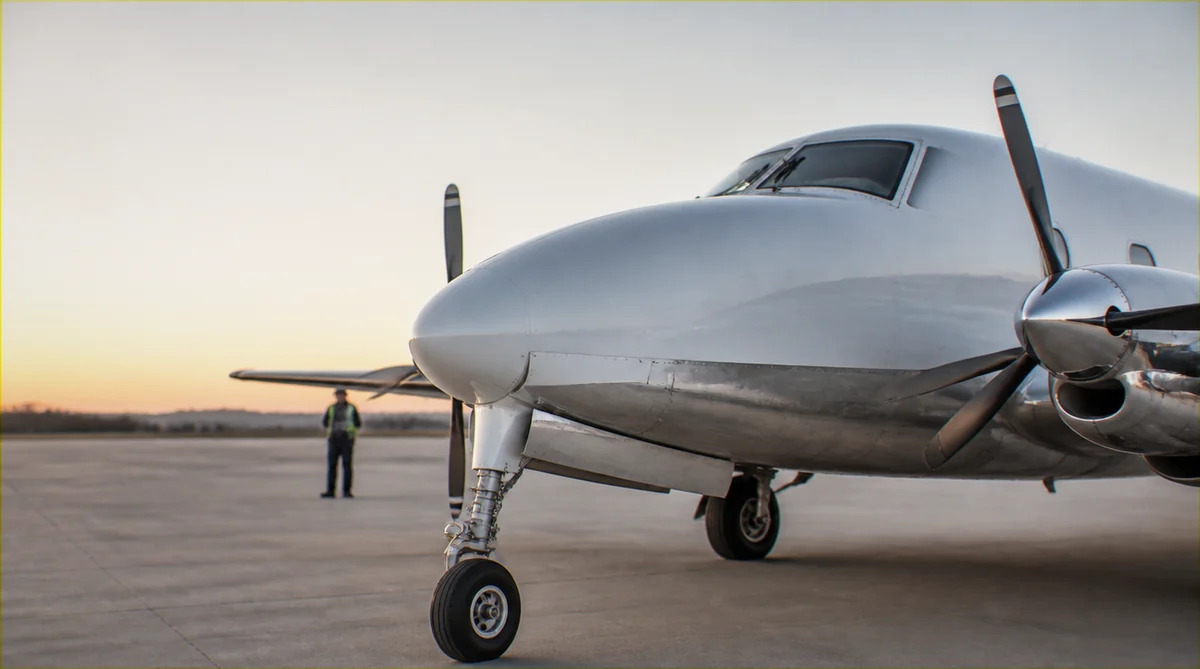
Financing program
Financing and loans for business jets, turboprops, piston aircraft, and helicopters — new and used, structured to your mission and cash flow.
Updated September 02, 2026
Quick answer
Yes, aircraft can be financed. Business jets, turboprops, piston airplanes and helicopters are all established collateral, funded through a loan or a lease with the aircraft itself securing the debt. Both new and used aircraft qualify. Structure is driven by the mission the aircraft flies and by your cash flow, rather than by the airframe alone.
Aircraft financing is a loan or lease used to purchase a business or private aircraft — a jet, turboprop, piston airplane, or helicopter — with the aircraft itself serving as the collateral.
Aircraft financing funds nearly any airworthy aircraft bought for business or personal use, with the aircraft securing the loan. Common categories:
Financing works for both new deliveries and pre-owned aircraft. Because an aircraft holds value and is a well-understood asset class, lenders can underwrite it efficiently once the airframe, engine times, and logs check out.
There are two main ways to finance an aircraft, and the right one depends on how long you will keep it and your tax situation:
Rates can be fixed or floating, and structures range from full-payout loans to balloon notes and leases. A larger down payment, a newer airframe, and strong operator financials all improve terms. get matched with lenders to compare structures for your mission.
Aircraft financing terms track the asset and the borrower:
Because aviation lenders specialize, matching your deal to the right lender is what gets the best terms — a corporate jet, a training piston, and a utility helicopter are underwritten very differently.
Lenders underwrite both the aircraft and the borrower. Expect them to weigh:
A pre-buy inspection and current logs move approvals fastest.
Both new and pre-owned aircraft finance readily, but the deal differs. New aircraft from the manufacturer have clear value, a warranty, and often the best terms and lowest down payment. Pre-owned aircraft are more common and cost less, but lenders weigh age, total time, engine program status, and inspection results — a pre-buy is essential. Many buyers finance a well-maintained used aircraft on an engine program to balance cost and financeability.
Say a company is buying a pre-owned light jet for $3,000,000 with 20% down ($600,000). A common structure finances the remaining $2.4M over, say, 10 years with a balloon — keeping the monthly payment manageable while the aircraft, which will fly for decades, is not force-amortized in a handful of years. The lender confirms value through logs, engine-program status, an appraisal, and a pre-buy inspection. A newer airframe or a larger down payment would lower the rate; an older or specialized aircraft would raise the down payment. The same deal placed with a lender that specializes in that jet type will almost always beat a generalist bank on both rate and structure.
Aviation lenders vary widely by aircraft type, mission, and appetite — the right lender for a corporate jet is rarely the right one for a training piston or a utility helicopter. Rather than approach banks one at a time, tell us about the aircraft and your mission once and compare real aircraft financing offers side by side, so the rate and structure you get are ones a lender will actually honor.
Yes. Aircraft financing is a well-established asset class. Business jets, turboprops, piston airplanes, and helicopters can all be financed with a loan or lease secured by the aircraft, for both new and pre-owned purchases. Terms depend on the aircraft type and age, your down payment, and your financials.
Down payments commonly run 10 to 20 percent or more. Newer aircraft with strong buyers can see lower down payments, while older or specialized airframes typically require more. A larger down payment improves your rate and approval odds.
Because aircraft are long-lived assets, financing is often structured over several years with a balloon rather than fully amortizing, and rates can be fixed or floating. The exact term depends on the aircraft type and age, the down payment, and the borrower or operator strength.
Yes. Pre-owned aircraft and helicopters are financed regularly. Lenders weigh the age, total time, engine program status, damage history, and a pre-buy inspection. A well-maintained airframe with current logs finances much more easily.
Match your deal to a lender that specializes in your aircraft type and mission — a corporate jet, a training piston, and a utility helicopter are underwritten very differently. Comparing multiple aviation lenders on structure, rate, and down payment from one application is the fastest way to the best terms.
Aircraft financing is not one market. Lenders divide it by how the aircraft is used and how liquid it is, and those two things decide the terms far more than the buyer's balance sheet does.
| Segment | Typical use | How lenders treat it |
|---|---|---|
| Piston single and twin | Owner-flown, flight training | Smallest amounts and shortest terms; a deep resale market keeps it financeable |
| Turboprop | Regional charter, utility, cargo | Well understood; values hold reasonably and terms lengthen |
| Light and mid jet | Corporate and charter | Larger amounts, longer terms, closer scrutiny of the operating plan |
| Helicopter | Utility, EMS, tour, survey | Underwritten on the contract behind it as much as the airframe |
| Ageing airframes | Any | Hardest — term is capped by remaining life, not by your credit |
The pattern worth taking from that table is that resale depth drives the terms. A common airframe with an active market supports a longer term and a higher advance than a rare one of the same value, because the lender is pricing how quickly it could sell.
Beyond the segment, five things do most of the work:
Age matters less than the two things people assume it stands for: remaining life on the major components, and whether the history is documented.
Financing covers the aircraft. It does not cover the reason aircraft ownership surprises first-time buyers, which is that the purchase price is the beginning of the commitment rather than the end of it.
Lenders ask about these because an owner who has not budgeted for them is a borrower whose aircraft will be deferred-maintenance collateral within two years. Having credible figures improves the file as well as the decision.
How the aircraft will be used is not an administrative detail. It changes the insurance, the maintenance regime and the paperwork, and lenders ask early because it changes their risk.
An aircraft flown privately by its owner is a straightforward proposition. One placed on a commercial certificate and flown for hire carries a heavier maintenance and inspection burden, different insurance, and a revenue stream that a lender may want to understand — particularly if that revenue is part of how the loan gets repaid.
Two practical consequences worth planning for:
Aircraft lending rewards preparation more than most categories, because so much of the decision rests on documents that either exist or do not.
That last point catches first-time buyers. Insurance for a newly-rated pilot moving into a more complex type can be both expensive and slow to arrange, and it is a closing condition rather than an afterthought. Get the quote while the offer is still being negotiated.
Down payments, operating basis, pre-buy inspections and the loan-or-lease question, for buyers and operators. See all 5 guides.
Tell us about the aircraft and your mission, and Axiant matches you with aviation lenders for jets, turboprops, pistons, and helicopters. One application, real offers, no obligation, and checking won't affect your credit.