
2-4 Unit: The Residential Multifamily Sweet Spot
Properties with 2-4 units are typically classified as residential for lending. Many fix and flip lenders fund them under similar programs as single-family. Five units and above are usually commercial—different loan products, underwriting, and terms. For 2-4 unit flips, you can often use the same fix and flip programs as single-family, with some adjustments. See maximum LTV—leverage may be slightly more conservative for multifamily. Compare typical rates.
ARV for Multifamily: Comparable Sales vs Income Approach
For single-family, ARV is driven by comparable sales. For 2-4 unit, lenders may use:
- Comparable sales: Sales of similar 2-4 unit properties in the area. May be fewer comps than single-family; spacing and adjustments matter.
- Income approach: Value = NOI — cap rate. Project rents post-rehab, subtract expenses, capitalize. Useful when comps are thin.
Lenders may take the lower of the two or average them. Your job: provide solid support for ARV. Rental comparables (what similar units rent for) support the income approach. Sales comparables support the sales approach. See ARV in fix and flip for calculation details. Overstated ARV hurts approval; conservative numbers help.
| Property Type | ARV Method | Notes |
|---|---|---|
| Single-family | Comparable sales | Primary method |
| 2-4 unit | Comps + income approach | Lender may use both; take lower or average |
| 5+ units | Income approach primary | Commercial; see commercial bridge |
Rehab Scope: Multiplying Across Units
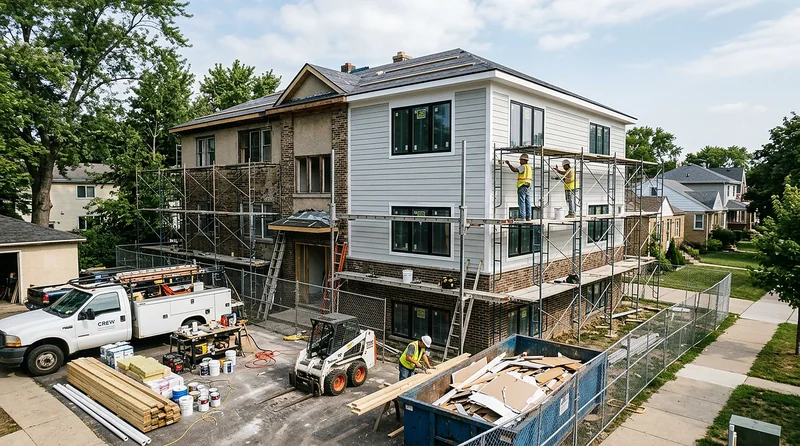
Multifamily rehab scope is larger than single-family. Each unit may need:
- Kitchen updates (cabinets, counters, appliances)
- Bathroom updates (vanity, tile, fixtures)
- Flooring, paint, lighting
Plus common areas: halls, exterior, landscaping, possibly roof, HVAC, electrical panels. Systems may need upgrading to serve multiple units (separate meters, updated panels). Budget per unit and add common-area and systems work. A detailed, line-item scope is essential. Lenders want to see you have thought through the full project. See what lenders look for. Rehab costs for a 4-plex can easily run 1.5-2x a comparable single-family. Factor that into your 70% rule. See down payment for typical requirements.
Leverage and Terms for 2-4 Unit Fix and Flip
Typical leverage: 65-75% of ARV, similar to single-family. Some lenders are slightly more conservative on multifamily—65-70%—because:
- Larger project size and complexity
- Thinner comparable sales in some markets
- Longer hold and sell timeline (multi-unit can take longer to sell than SFR)
Loan terms (6-18 months typical) are often the same. Points and rates may be similar or slightly higher for multifamily. See typical rates. Compare maximum LTV.
Exit Strategy: Sell vs Rent
Fix and flip loans assume a sale. For 2-4 unit, you may consider a rent-and-hold strategy if the market shifts. That requires different financing—refinance into a long-term rental loan. Fix and flip lenders expect a sale within the loan term. If you think you might hold, structure the deal so a sale is viable; have a backup plan (refinance) but don't depend on it for the flip loan exit. See commercial real estate loans for buy-and-hold multifamily.
When Multifamily Becomes Commercial: 5+ Units
Properties with 5+ units are commercial real estate. Fix and flip programs for residential typically cap at 4 units. For 5+ unit value-add or rehab, commercial bridge loans apply. Different underwriting: income-based, commercial appraisal, often different leverage and terms. If you are scaling from 2-4 unit flips to larger multifamily, expect to shift to commercial lending. See commercial bridge vs hard money.
Due Diligence for Multifamily Fix and Flip
Beyond standard fix and flip due diligence:
- Rent roll: Current rents, vacancies, lease terms. Affects income-based ARV.
- Operating expenses: Taxes, insurance, utilities, maintenance. Needed for NOI and income approach.
- Unit mix and condition: Per-unit condition affects rehab scope and budget.
- Systems: Age of roof, HVAC, electrical, plumbing. Multifamily systems are more complex and costly.
See closing timelines—multifamily may take slightly longer due to additional underwriting.
Documentation for Multifamily Fix and Flip
Expect standard fix and flip docs plus:
- Rent roll and lease abstracts
- Operating expense history
- Per-unit rehab breakdown
- Rental comparables (for income approach to ARV)
See credit requirements—similar to single-family, 660-700+ typically.
Key Takeaways
- 2-4 unit multifamily is fundable with fix and flip loans; 5+ units typically require commercial bridge.
- ARV for multifamily may use comparable sales and income approach; lenders often take the more conservative.
- Rehab scope multiplies across units—budget per unit plus common areas and systems.
- Leverage may be slightly more conservative (65-70%) for multifamily vs single-family.
Next Steps
Structure your 2-4 unit flip with clear ARV support and detailed rehab scope. Confirm your lender funds multifamily. Get matched with fix and flip lenders who fund 2-4 unit properties.
Multifamily Flip Underwriting Checklist (2-4 Unit Focus)
Small multifamily flips are underwritten differently than single-family projects because scope complexity and tenant-related factors can affect timeline certainty. Lenders focus on realistic ARV support, rehab sequencing across units, code-compliance risk, and contractor capacity for multi-system work. Presenting this clearly improves approval quality and draw efficiency.
Break your budget into repeatable categories by unit plus shared systems (roof, electrical, plumbing, common areas). This gives lenders clearer visibility into contingency adequacy and helps avoid draw friction later.
- ARV support: comps adjusted for unit mix, condition, and neighborhood demand.
- Scope discipline: per-unit rehab plan plus shared-system reserve.
- Timeline realism: include permit and inspection variability in schedule.
Multifamily Exit Strategy Control
Define exit early: resale as stabilized asset, unit-by-unit strategy where legal, or refinance hold scenario. Match renovation standard to target buyer profile instead of over-improving beyond neighborhood ceiling.
Track weekly budget variance and expected net proceeds against exit assumptions so adjustments happen before profitability erodes.
Scope Control for Multifamily Renovation Profitability
Multifamily renovations can lose margin quickly when scope expands unevenly across units. Lock a standardized scope template for unit turns and separate discretionary upgrades from required compliance work. This preserves comparability and helps draw approvals move faster.
Track per-unit cost variance weekly. Early variance detection is critical because overruns multiply across units faster than single-family projects.
Disposition Planning Before Rehab Completion
Set listing and pricing strategy before final punch list completion. Early buyer/agent feedback on finish level and rent-ready presentation can prevent over-improvement and shorten hold time. Time-to-exit often matters as much as gross resale price in flip profitability.
Use a rolling net-proceeds model so strategy adjusts with market conditions.
Scenario Modeling and Execution Controls
Before finalizing any financing strategy, run three planning cases: baseline, moderate stress, and severe stress. Baseline reflects current operating assumptions. Moderate stress should include a realistic revenue slowdown plus mild cost pressure. Severe stress should test whether the structure remains survivable if revenue softens and timing delays occur at the same time. This level of planning prevents decisions built only on optimistic conditions.
Translate each scenario into specific operating controls. Define what spending pauses first, which metrics trigger intervention, and who owns each corrective action. Ambiguous plans fail under pressure; operational precision preserves both performance and lender confidence when conditions shift unexpectedly.
- Baseline case: expected operating environment and standard debt behavior.
- Moderate stress: temporary dip with controlled recovery actions.
- Severe stress: capital-preservation mode with predefined escalation steps.
Document decisions after each review cycle. Over time this creates an evidence trail that improves future financing conversations because lenders can see disciplined management behavior rather than one-time projections.
Monthly Review Rhythm for Better Financing Outcomes
Create a monthly review rhythm that links financing decisions to operating performance. Review cash timing, debt behavior, variance-to-plan, and forward obligations in one concise meeting. The purpose is to correct drift early before it becomes a refinancing problem.
Use a one-page scorecard so leadership and advisors evaluate the same signals. Include short commentary on what changed, why it changed, and what action is next. This improves decision speed and reduces reactive borrowing behavior.
Repeatable review discipline is one of the strongest long-term indicators lenders look for when assessing management quality across multiple funding cycles.
Execution Example and Action Steps
A practical way to improve outcomes is to run a short action cycle every 30 days: identify one constraint, implement one operational change, and measure one financial result tied directly to financing durability. For example, if cash compression appears in week three of each month, you might adjust purchasing cadence, tighten receivable follow-up, or rebalance labor scheduling. The key is linking each change to measurable debt-service impact rather than broad goals.
At the end of each cycle, document what worked and what did not. Over multiple cycles this builds an internal playbook that reduces repeat mistakes and improves future capital decisions. Businesses that keep this evidence trail often negotiate better because they can demonstrate operational control with specifics, not just intent.
Operating Scorecard Template
Use a simple scorecard template each month to keep financing decisions grounded in operating reality. Track revenue consistency, gross-margin stability, mandatory expense coverage, debt-service comfort, and short-term liquidity runway. Then classify trend direction as improving, flat, or deteriorating and assign one owner for each corrective action. This keeps discussions factual and prevents vague plans from delaying necessary decisions.
Include one leading indicator and one lagging indicator for each risk area. Leading indicators help you intervene early; lagging indicators confirm whether interventions worked. Over time, this structure creates a reliable decision loop that supports better capital outcomes and reduces the chance of repeated financing stress.
When scorecards are maintained consistently, lenders and advisors can evaluate progress quickly, which often improves trust and decision speed during future applications or refinances.
Multifamily Project Closeout Controls
Closeout discipline protects net proceeds. Finalize punch lists by unit, verify permit sign-offs, and confirm market-ready positioning before launch. Small delays at closeout can extend hold cost and erase margin faster than expected.
Track final budget-to-actual variance and document lessons for the next deal. Repeated process learning is one of the strongest drivers of long-term flip performance.
Repeatable closeout controls help protect net proceeds and improve financing confidence on the next multifamily flip cycle.
Continuous Improvement Cycle
Strong financing outcomes come from continuous improvement, not one-time optimization. Use a structured cycle each month: review operating results, identify one preventable risk, implement one targeted change, and measure impact on cash resilience. The cycle should be documented so future decisions are based on evidence rather than assumptions.
Each cycle should also include a communication checkpoint with internal stakeholders and external financing partners when relevant. Clear, concise updates improve trust and shorten decision time during future funding events. When stakeholders understand your operating controls and response pattern, they are more likely to support flexible solutions if conditions shift.
Over multiple cycles, this process creates a compounding advantage: fewer repeated mistakes, better timing of capital decisions, and stronger confidence from lenders and advisors. Businesses that treat financing as an operating system usually outperform those that treat financing as a one-off transaction.
Fix-and-Flip Capital: ARV Discipline, Draw Control, and Timeline Risk
Rehab lenders underwrite to completed value, credible scope, and your ability to execute through volatility. Weak comps, thin liquidity, or vague contractor plans increase rate, reduce advance, or kill the deal.
Map points, fees, extension terms, and draw mechanics before you commit. Short holds still need room for inspection, permit, and resale friction.
Underwriting Reality: What Files Actually Prove
Lenders underwrite to repayment durability under stress, not headline revenue or ARV optimism. They reconcile bank data, leases, budgets, and third-party reports. Inconsistent entity names, partial months, or unexplained transfers invite delays and re-trades.
Assign one owner for stipulations and deadlines. Batch responses instead of dribbling partial documents. The fastest approvals usually belong to borrowers who treat underwriting as a controlled process.
- Cash-flow proof: operating accounts, rent rolls, or processor data that reconcile.
- Collateral or asset proof: appraisals, budgets, schedules, or insurance as applicable.
- Execution proof: who signs, who responds, and when.
- Risk proof: downside scenarios with mitigation steps.
Comparing Offers Without Single-Metric Bias
Rate or factor alone misleads. Map total cost, payment frequency, prepayment rights, covenants, and guarantee or recourse breadth. Overlay obligations on a calendar with taxes, payroll, property carry, or remittance.
Alternatives may include working capital loans, business lines of credit, equipment financing, or other structures when use of funds fits.
Post-Close Monitoring and Refinance Readiness
After funding, track actual strain versus forecast. If performance weakens, communicate early with facts and a corrective plan. Lenders often work with transparent operators; silence until negative events narrows options.
Archive executed agreements, disbursement records, and amendment letters. Clean history speeds future refinancing and reduces disputes.
Scenario Planning and Governance
Build base and stress cases for revenue, NOI, or project timeline. Stress should include slower sales, higher input costs, or longer rehabs. If financing fails the stress test, reduce size or choose a more flexible structure before commitment.
Review liquidity, debt service, and variance drivers regularly. Get matched for options aligned to your profile and use our calculator to model payments.
Communication, Brokers, and Data Integrity
Contradictory answers from multiple contacts undermine credibility. Designate a single source of truth for financial figures. If brokers are involved, map how many simultaneous submissions exist—duplicate applications can fragment lender views of your file.
When material facts change, send one consolidated update rather than many partial emails. Underwriting teams process structured corrections faster than threaded ambiguity.
Long-Term Capital Quality and Repeatability
Borrowers who treat capital as a recurring operating system—not a one-time event—maintain better pricing over time. Document assumptions at origination and compare to actuals quarterly. Adjust operations or structure when variance persists.
Repeatable financing outcomes correlate with disciplined reporting, early problem surfacing, and product fit tied to use of funds—not urgency alone.
