
Quick Answer: To finance an excavator in 2026, most lenders want a machine quote, 3–6 months of bank statements, and a borrower profile that supports the payment (commonly 600+ credit, with better pricing at 650–680+). Typical down payment is 0–20% and terms run 24–72 months, depending on the machine’s age, hours, and your business strength. If you want the broader picture first, read the excavator financing guide and full equipment financing requirements. To compare lender options quickly, get matched here.
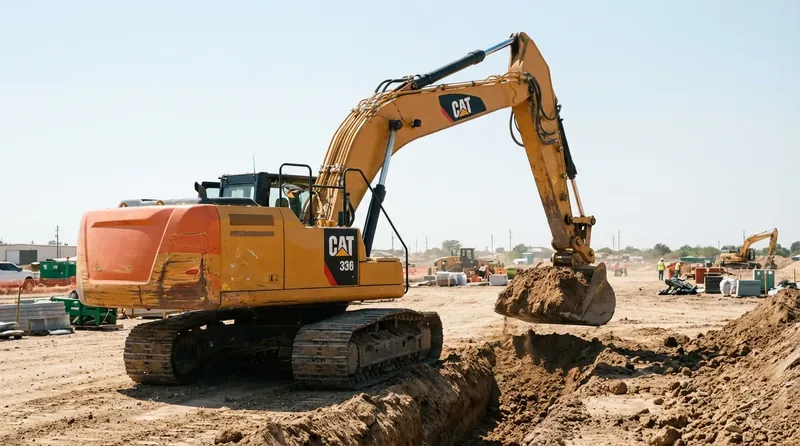
Step 1: Pick an excavator lenders will actually finance
Approvals are fastest when the machine has clear market value and strong resale demand. Lenders weigh size class (compact/mini vs. standard vs. large), engine hours (the excavator equivalent of truck mileage), age, condition, and often brand (Caterpillar, John Deere, Komatsu, Bobcat, Kubota, and similar resell well). Starting with a unit outside typical program limits can cost you days chasing an approval that will not come.
- Newer, low-hour machines usually qualify for longer terms and lower down payments.
- Used excavators can be financed, but high-hour or older units may need more cash down or a shorter term — see used excavator financing.
- Documentation matters: a clean quote with the serial number and seller details reduces friction.
Step 2: Set your down payment and monthly budget
Most excavator deals land in a down payment range of 0–20%. The right number depends on risk: credit strength, time in business, and the machine itself. The figures below are illustrative ranges, not quotes — your actual terms depend on your profile and the lender program:
| Excavator class | Typical price (illustrative) | Down payment |
|---|---|---|
| Mini / compact (1–6 ton) | ~$30K–$90K | 0–15% with solid credit |
| Standard (10–25 ton) | ~$100K–$300K | 10–20% typical |
| Large (30 ton+) | $300K+ | 15–25%+; reserves help |
| Used / high-hour unit (any class) | Varies | Often +5–10% over new |
Run a quick scenario in the calculator or the excavator financing calculator so you know what monthly payment is realistic for your cash flow before you apply. If you’re weighing structures, the excavator lease vs. loan breakdown shows how each affects up-front cash and monthly payment.
Step 3: Make sure you meet the core requirements
Most equipment lenders underwrite the same core pillars:
- Credit profile: many lenders look for 600+ and prefer 650–680+ for top-tier pricing.
- Cash flow: deposits and balances should support the new payment plus existing obligations, even in slower seasons.
- Time in business: established contractors qualify more easily, but startup and first-time-buyer programs exist.
- Machine quality: age, hours, and resale market matter because the excavator is the collateral.
Buying a smaller unit? Contractor-specific guidance is here: mini excavator financing for contractors.
Step 4: Gather documents (where most deals slow down)
Fast approvals are mostly about preparation. When your file is complete on day one, underwriting can move quickly — often a decision in 24–48 hours for qualified files.
- Machine quote / purchase order (with serial number, hours, price, and seller info)
- 3–6 months bank statements (business account preferred)
- Business formation documents (LLC, corporation, etc.)
- Tax returns / P&L (often required above roughly $150,000)
For the broader checklist that applies across machine types, see equipment financing requirements.
Step 5: Apply once and match to the right lender
Submitting many applications creates confusion and extra hard credit pulls. A cleaner approach is to apply once and match to lenders whose programs fit your machine and borrower profile. That also avoids “soft yes” quotes that fall apart once underwriting sees the actual hours, age, and seller details. Buying alongside other machines (dozers, loaders)? The construction equipment financing guide covers mixed fleets.
Step 6: Underwriting, inspection, and funding
Once you’re matched to a lender, the rest is mostly verification: confirm borrower details, verify the machine (sometimes an inspection or photos), and finalize terms. After documents are signed, funds typically go to the seller and you take possession.
A note on taxes: Section 179 and excavators
Financed equipment can often still be deducted. Under IRS Section 179 and bonus depreciation, businesses can frequently deduct a portion (or all) of qualifying equipment cost in the year it’s placed in service, even when the machine is financed and you’ve only made a down payment. Limits and rules change yearly, so confirm current figures with your CPA — but for many contractors this materially lowers the true after-tax cost of buying versus renting.
Common mistakes that delay approvals
- Choosing the machine first without checking age/hours eligibility against lender programs.
- Missing or incomplete bank statements (skipped pages, personal-only accounts).
- Underestimating down payment for used or high-hour units.
- Sizing the payment to a strong month instead of a realistic slow season.
- Applying to non-construction generalist lenders that don’t understand machine resale.
Summary
Financing an excavator is mostly a process problem, not a mystery. Start with a machine that fits lender guidelines, confirm your down payment and payment range, gather documents up front, and apply once to match with construction-friendly lenders. Get matched to compare excavator financing options based on your machine and profile.