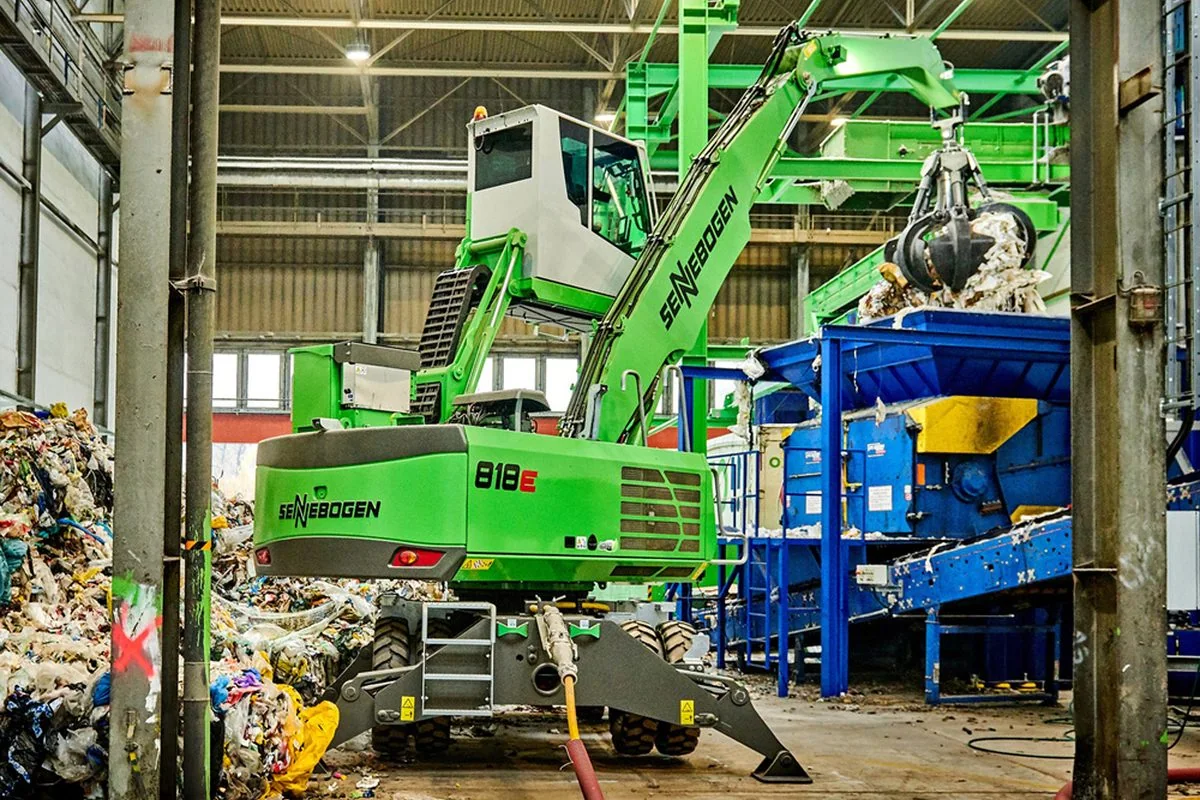
 32 ft 8 in
818 E
Recycling, waste & light scrapelectric or dieselmobile, crawler or pedestal


Purpose-built material handlers for scrap yards, recycling plants, transfer stations, sawmills and ports — from the 818 E at 32 ft of reach up to the 895 E at 131 ft. Unlike a converted excavator, these are designed from the ground up to move material all day: an elevating cab that puts the operator above the pile, a boom geometry built for reach rather than digging force, and hydraulics sized for continuous cycling. Cable-electric, battery and diesel power are all available, and every machine here can be financed through Axiant. How equipment financing works →
All financeable through Axiant. Live inventory & pricing on SENNEBOGEN.
32 ft 8 in36 ft 0 in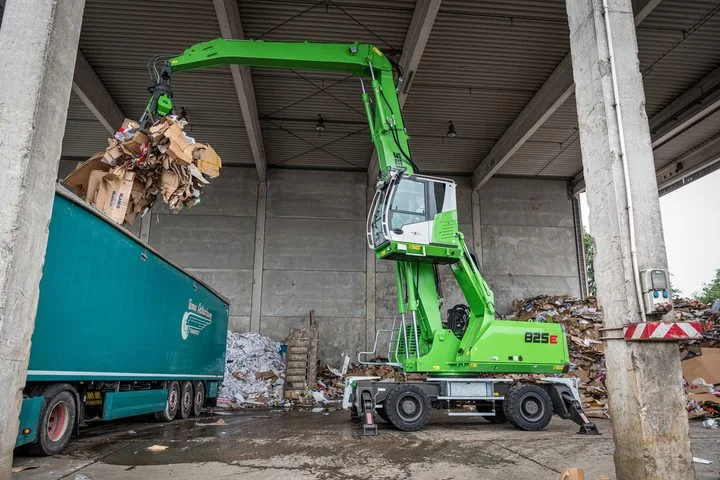 45 ft 11 in55 ft 9 in62 ft 4 in
 65 ft 7 in68 ft 10 in68 ft 10 in82 ft 0 in88 ft 7 in95 ft 2 in124 ft 4 in131 ft 3 in36 ft 1 in36 ft 1 in
| Model | Capacity | Configuration | Links |
|---|---|---|---|
| 818 E | 32 ft 8 in | Recycling, waste & light scrap · electric or diesel · mobile, crawler or pedestal | View ↗ · Finance |
| 821 E | 36 ft 0 in | Sorting & loading · fully electric, dual-power or diesel | View ↗ · Finance |
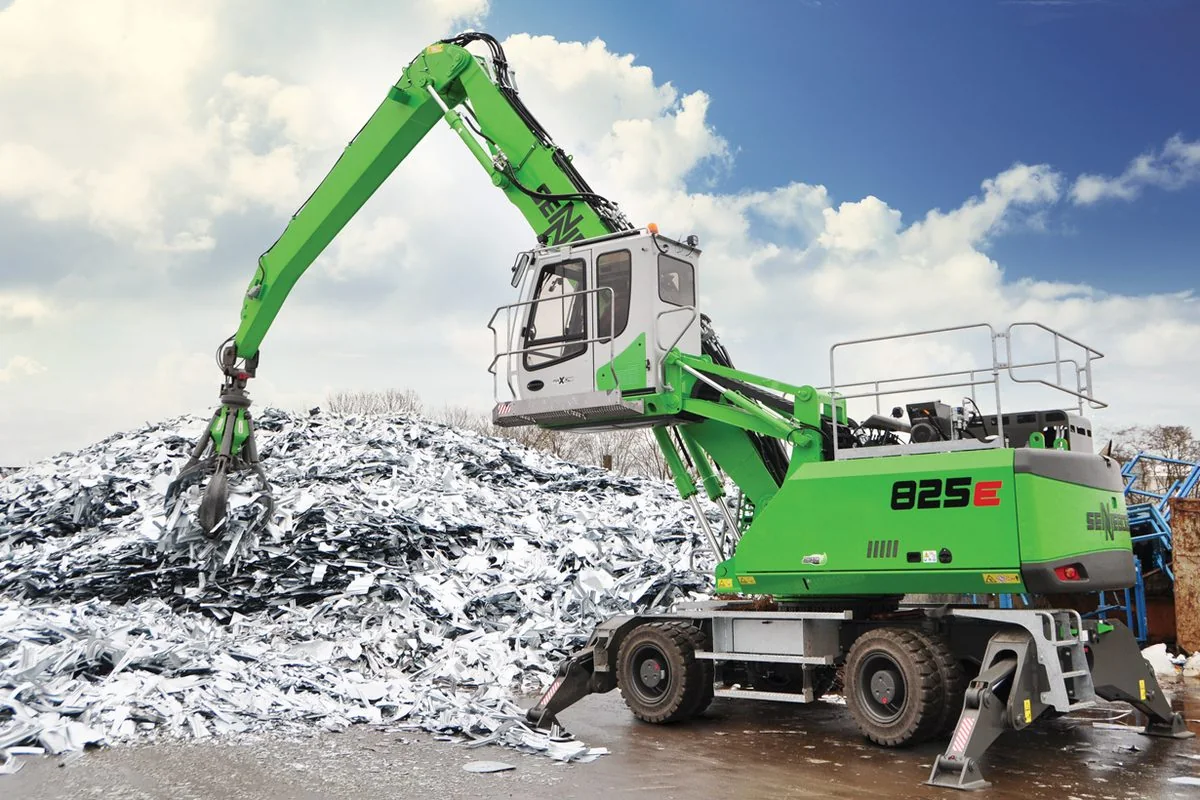
| 825 E | 45 ft 11 in | The scrap-yard workhorse · scrap, recycling & industrial · battery, cable or diesel | View ↗ · Finance |
| 830 E | 55 ft 9 in | Long-reach scrap, timber & recycling · electric or diesel | View ↗ · Finance |
| 835 E | 62 ft 4 in | Port, scrap & timber · high-volume loading | View ↗ · Finance |
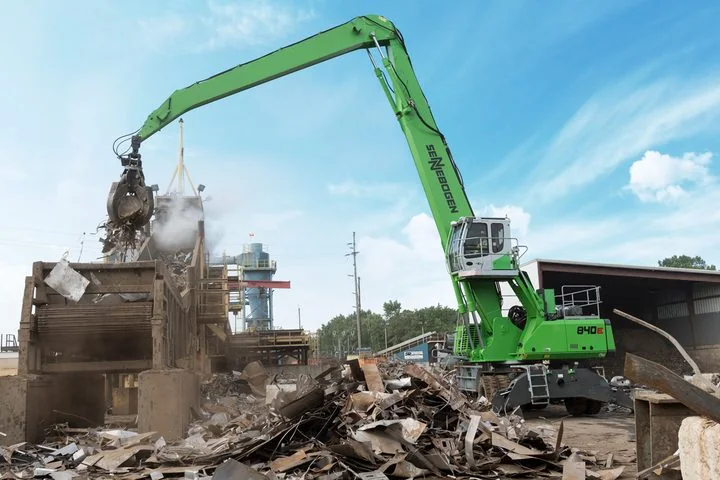
| 840 E | 65 ft 7 in | Port, scrap & bulk material | View ↗ · Finance |
| 850 E | 68 ft 10 in | Heavy scrap & ship loading | View ↗ · Finance |
| 855 E Hybrid | 68 ft 10 in | Port & cargo handling · energy-recovery hybrid | View ↗ · Finance |
| 865 E Hybrid | 82 ft 0 in | Heavy port handling | View ↗ · Finance |
| 870 E Hybrid | 88 ft 7 in | Port handling & ship loading | View ↗ · Finance |
| 875 E Hybrid | 95 ft 2 in | Port & heavy industrial | View ↗ · Finance |
| 885 G Hybrid | 124 ft 4 in | Bulk & general cargo · port terminals | View ↗ · Finance |
| 895 E Hybrid | 131 ft 3 in | The largest — heavy-duty port operations | View ↗ · Finance |
| 730 E | 36 ft 1 in | Timber pick & carry · sawmills & log yards | View ↗ · Finance |
| 735 E | 36 ft 1 in | Timber pick & carry · high-volume log yards | View ↗ · Finance |
SENNEBOGEN machines are manufactured by SENNEBOGEN and sold in North America through its authorized dealer network. Axiant Partners is an independent equipment finance broker — we are not a SENNEBOGEN dealer and are not affiliated with SENNEBOGEN. We arrange the financing for the buyer; machine pricing, configuration and availability come from SENNEBOGEN and its dealers. Specifications shown are from SENNEBOGEN North America and are for reference only — confirm every figure with the dealer before you buy. Financing is subject to credit approval.
| Model | Max Reach | Built For | Specs |
|---|---|---|---|
| 818 E | 32 ft 8 in | Recycling, waste & light scrap · electric or diesel · mobile, crawler or pedestal | Specs ↗ |
| 821 E | 36 ft 0 in | Sorting & loading · fully electric, dual-power or diesel | Specs ↗ |
| 825 E | 45 ft 11 in | The scrap-yard workhorse · scrap, recycling & industrial · battery, cable or diesel | Specs ↗ |
| 830 E | 55 ft 9 in | Long-reach scrap, timber & recycling · electric or diesel | Specs ↗ |
| 835 E | 62 ft 4 in | Port, scrap & timber · high-volume loading | Specs ↗ |
| 840 E | 65 ft 7 in | Port, scrap & bulk material | Specs ↗ |
| 850 E | 68 ft 10 in | Heavy scrap & ship loading | Specs ↗ |
| 855 E Hybrid | 68 ft 10 in | Port & cargo handling · energy-recovery hybrid | Specs ↗ |
| 865 E Hybrid | 82 ft 0 in | Heavy port handling | Specs ↗ |
| 870 E Hybrid | 88 ft 7 in | Port handling & ship loading | Specs ↗ |
| 875 E Hybrid | 95 ft 2 in | Port & heavy industrial | Specs ↗ |
| 885 G Hybrid | 124 ft 4 in | Bulk & general cargo · port terminals | Specs ↗ |
| 895 E Hybrid | 131 ft 3 in | The largest — heavy-duty port operations | Specs ↗ |
| 730 E | 36 ft 1 in | Timber pick & carry · sawmills & log yards | Specs ↗ |
| 735 E | 36 ft 1 in | Timber pick & carry · high-volume log yards | Specs ↗ |
A material handler is a machine built to pick up, move and load loose material — scrap steel, mixed recyclables, waste, logs, bulk cargo — over and over, all shift. It looks like an excavator, and people often buy an excavator to do the job, but the two are engineered for opposite things. An excavator is built to dig: heavy counterweight, short powerful boom, high breakout force. A material handler is built to reach and cycle: a longer two-piece boom, an elevating cab so the operator can see down into the truck or the pile, and a hydraulic system tuned for fast, repeated swings rather than brute force. Run an excavator on a scrap line and you pay for it in fuel, cycle time and wear.
Reach is the number that decides most of it, because reach determines what you can load without repositioning:
The undercarriage matters just as much. Mobile (rubber-tired) machines reposition themselves around a yard; crawler machines hold better on soft or uneven ground; a pedestal or gantry mount is fixed over a shredder or sorting line and is often the cheapest way to run electric. Your dealer will spec this with you — and we will finance whichever way it lands.
A material handler is usually the single largest purchase a scrap or recycling operation makes, and it is a textbook financing case: the machine is a hard, liquid asset that holds value, so the equipment carries a lot of the deal itself. That matters most for younger yards, where the balance sheet alone might not carry a six- or seven-figure purchase. Terms are normally set against the life of the machine rather than a fixed calendar, so the payment lines up with the tons it moves for you. New and used both finance, as do dealer-refurbished units. See what your machine qualifies for, or read how used-equipment financing works.
An excavator is built to dig — short heavy boom, high breakout force. A material handler is built to reach, lift and cycle loose material all day: a longer boom, an elevating cab so the operator sees into the truck or pile, and hydraulics tuned for repeated swings. Doing scrap or recycling work with an excavator costs you cycle time, fuel and wear.
Most scrap yards land on the 825 E class, at about 46 ft of reach — enough to work across a trailer and feed a shredder, while still transporting easily. Indoor sorting and transfer stations often go smaller (818 E / 821 E); log decks, barge loading and ports go bigger.
It ranges widely with size, power type and attachments, and SENNEBOGEN prices through its dealers rather than publishing list prices — a mid-size machine is generally a high six-figure purchase and the largest port machines run well beyond that. Ask the dealer for a quote on the exact configuration; the number that usually decides the purchase is the monthly payment, and we can size that for you. Ask us for a payment estimate.
Yes — both, including dealer-refurbished machines. Equipment financing is asset-based, so a machine that holds its value carries much of the deal. Approvals commonly come back in about 24 hours. See how equipment financing works.
Spec your SENNEBOGEN with the dealer and let Axiant handle the financing — new or used, approvals in as little as 24 hours. Keep your cash working the yard while the machine moves the tons.
A material handler is a machine built to pick up, move and load loose material — scrap steel, mixed recyclables, waste, logs, bulk cargo — over and over, all shift. It looks like an excavator, and people often buy an excavator to do the job, but the two are engineered for opposite things. An excavator is built to dig: heavy counterweight, short powerful boom, high breakout force. A material handler is built to reach and cycle: a longer two-piece boom, an elevating cab so the operator can see down into the truck or the pile, and a hydraulic system tuned for fast, repeated swings rather than brute force. Run an excavator on a scrap line and you pay for it in fuel, cycle time and wear.
Reach is the number that decides most of it, because reach determines what you can load without repositioning:
The undercarriage matters just as much. Mobile (rubber-tired) machines reposition themselves around a yard; crawler machines hold better on soft or uneven ground; a pedestal or gantry mount is fixed over a shredder or sorting line and is often the cheapest way to run electric. Your dealer will spec this with you — and we will finance whichever way it lands.
A material handler is usually the single largest purchase a scrap or recycling operation makes, and it is a textbook financing case: the machine is a hard, liquid asset that holds value, so the equipment carries a lot of the deal itself. That matters most for younger yards, where the balance sheet alone might not carry a six- or seven-figure purchase. Terms are normally set against the life of the machine rather than a fixed calendar, so the payment lines up with the tons it moves for you. New and used both finance, as do dealer-refurbished units. See what your machine qualifies for, or read how used-equipment financing works.
An excavator is built to dig — short heavy boom, high breakout force. A material handler is built to reach, lift and cycle loose material all day: a longer boom, an elevating cab so the operator sees into the truck or pile, and hydraulics tuned for repeated swings. Doing scrap or recycling work with an excavator costs you cycle time, fuel and wear.
Most scrap yards land on the 825 E class, at about 46 ft of reach — enough to work across a trailer and feed a shredder, while still transporting easily. Indoor sorting and transfer stations often go smaller (818 E / 821 E); log decks, barge loading and ports go bigger.
It ranges widely with size, power type and attachments, and SENNEBOGEN prices through its dealers rather than publishing list prices — a mid-size machine is generally a high six-figure purchase and the largest port machines run well beyond that. Ask the dealer for a quote on the exact configuration; the number that usually decides the purchase is the monthly payment, and we can size that for you. Ask us for a payment estimate.
Yes — both, including dealer-refurbished machines. Equipment financing is asset-based, so a machine that holds its value carries much of the deal. Approvals commonly come back in about 24 hours. See how equipment financing works.