
Working capital loan vs business line of credit for U.S. businesses: when a term loan beats a revolving LOC on repayment, cost, and flexibility. Pick the structure that matches your cash cycle; get matched. A working capital loan is typically a term-based loan designed to provide a lump sum of funding for operational expenses.
What Is a Working Capital Loan?
A working capital loan is typically a term-based loan designed to provide a lump sum of funding for operational expenses.
Common characteristics:
- Fixed loan amount
- Defined repayment schedule
- Interest charged on full loan amount
- Structured for a specific capital need
These loans are often used for:
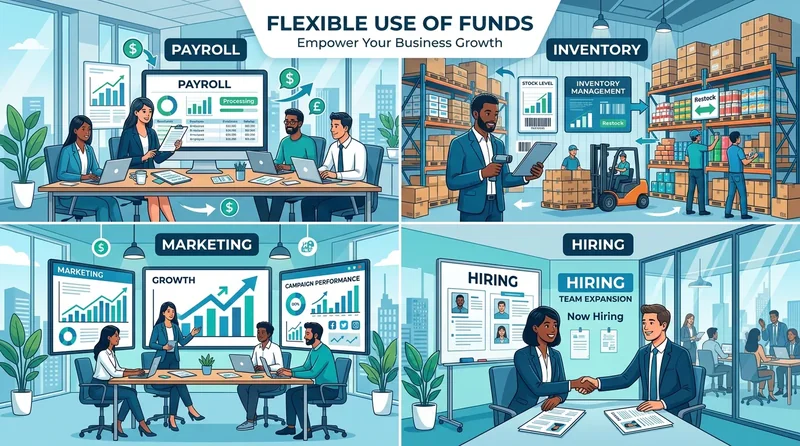
- Covering payroll
- Purchasing inventory
- Funding new contracts
- Managing seasonal revenue dips
- Short-term operational expansion
Working capital loans for established businesses typically range from $10,000 to $2,000,000+. Learn more about working capital loans.
What Is a Business Line of Credit?
A business line of credit is a revolving credit facility that allows a company to draw funds as needed up to a pre-approved limit.
Key features:
- Revolving structure
- Interest charged only on amount drawn
- Funds become available again after repayment
- Ongoing access to liquidity
Lines of credit are commonly used for:
- Managing receivables timing
- Seasonal fluctuations
- Payroll gaps
- Vendor payments
- Ongoing operational liquidity
Learn more about business lines of credit.
Working Capital Loan vs Business Line of Credit: Comparison
| Characteristic | Working Capital Term Loan | Business Line of Credit |
|---|---|---|
| Amount | Lump sum amount | Revolving |
| Flexibility | Fixed | Ongoing access |
| Cost | Interest on full amount | Interest on amount drawn |
| Use For | Defined capital need | Recurring liquidity management |
| Approval Time | 3-5 days | 7-10 days |
When a Working Capital Loan Is the Better Option
Consider a working capital term loan when:
- You need a specific capital amount
- You are funding a defined business objective
- You need fixed repayments and terms
- You prefer predictable monthly payments
Examples:
- Funding a marketing expansion campaign
- Purchasing bulk inventory
- Covering a temporary revenue gap
- Expanding operations into a new location
If your capital need is defined and short-term, a structured term loan may provide clarity and stability.
When a Business Line of Credit Is the Better Option
Consider a line of credit when:
- You need flexible access to capital
- Your business has recurring liquidity needs
- Revenue fluctuates seasonally
- You want to borrow only when necessary
Examples:
- Managing payroll cycles
- Covering receivables delays
- Handling seasonal slowdowns
- Maintaining ongoing liquidity buffer
A line of credit is often best for businesses that need repeat access to capital rather than a one-time funding event.
Cost Comparison Example
Your business needs $50,000 for 6 months. Option A–Term loan: You borrow $50,000 at 12% APR for 12 months. You pay interest on the full $50,000 even if you only need the funds for 6 months. Approximate interest over 6 months: ~$3,000. Option B–Line of credit: You have a $75,000 line, draw $50,000, and repay over 6 months. You pay interest only on the outstanding balance as it declines. Approximate interest: ~$1,500–$2,000 depending on draw pattern. If your need is short-term and variable, a line of credit can be more cost-efficient. If you need the full amount for the full term, a term loan's predictability may be preferable.
Cost Considerations
Working capital loans:
- Charge interest on the full amount
- Offer fixed repayment schedules
- May have shorter term structures
Lines of credit:
- Charge interest only on drawn funds
- May offer greater flexibility
- Can be re-used after repayment
The true cost depends on:
- How long funds are used
- Total capital drawn
- Interest rates
- Fees
Strong credit and revenue profiles receive more competitive terms in both structures.
Can You Use Both?
Yes, many established businesses use a term loan for a specific project and a line of credit for ongoing liquidity. This layered approach can create a balanced capital strategy.
Qualification Differences
Both structures typically evaluate:
- Time in business (1-2+ years preferred)
- Revenue consistency
- Credit profile (550+ commonly preferred)
- Cash flow strength
However, lines of credit may be slightly more flexible depending on structure and lender.
Final Thoughts
Choosing between a working capital loan and a business line of credit depends on whether your capital need is defined or ongoing, your repayment preference, your revenue stability, and your liquidity management strategy.
If you need a fixed amount for a specific operational goal, a working capital term loan may be ideal. If your business requires flexible, recurring access to capital, a revolving line of credit may be more appropriate. With minimum funding starting at $10,000, both structures can support established businesses seeking operational stability and growth. If your company is evaluating working capital options, reviewing structured loan and line of credit programs side by side can help determine the most efficient solution for your financial profile.
Cash-Cycle Mapping: Choose Product by Timing of Cash In and Cash Out
The fastest way to choose between a working capital loan and a line of credit is to map your cash cycle at weekly granularity. If your financing need is a one-time project with a clear start and end, a term-style working capital loan usually fits better. If the need repeats every month or quarter due to timing gaps, a revolving line is often the more efficient instrument. The mistake is financing recurring volatility with a fixed installment product that does not flex with your cycle.
Model operating inflows and mandatory outflows across at least 26 weeks. Identify where cash dips below minimum comfortable levels and classify each dip as predictable or episodic. Predictable recurring dips are line-of-credit territory; episodic strategic investments are often better as term loans. This approach turns “loan vs line” from a generic comparison into an operational decision tied to how your business actually runs.
- Term working capital loan: defined use case, fixed payoff horizon, stable forecast.
- Line of credit: recurring shortfalls, frequent draws/repayments, ongoing flexibility need.
- Hybrid: term loan for project + line for operational volatility buffer.
Utilization Governance for Lines of Credit
A line becomes expensive and risky when treated as permanent debt instead of rotating liquidity. Set internal utilization rules before drawdown. For example, require a defined repayment source at the time of each draw, cap average utilization ranges, and review aging monthly. If utilization stays elevated without rotation, move that balance into a structured term solution to protect margin and renewal odds.
Lenders view disciplined line management as a strong signal. Borrowers who maintain orderly draw-repay behavior typically receive better renewal outcomes and fewer surprise changes in terms. Add a monthly “liquidity review” that compares line usage by department, verifies each draw purpose, and flags unsupported repeat draws. This keeps your line strategic rather than reactive.
Working Capital Loan Implementation Checklist
When you choose a term structure, implementation quality drives whether the capital actually improves performance. Define measurable return objectives before funding: inventory turn improvement, gross margin lift, reduced late-payment fees, or accelerated fulfillment. Track results monthly and compare to the baseline used in the financing request.
Keep use-of-funds discipline tight. Leakage into unrelated expenses weakens debt performance and can create refinancing pressure later. If assumptions change post-close, update your cash forecast immediately and rebalance spend priorities. Borrowers who actively manage post-funding execution usually outperform those who only focus on the initial approval event.
Operating Rhythm After Funding: Protecting Cash Flow Discipline
Whichever structure you choose, outcomes depend on post-funding operating rhythm. Set weekly cash reviews with forward-looking visibility on payroll, vendor obligations, AR timing, and debt service. Include a 13-week cash forecast that is updated every week, not monthly. This cadence helps detect stress early and supports better draw or repayment timing decisions.
Define funding performance metrics before money is deployed. For term loans, track the operational return expected from the funded initiative. For lines, track rotation quality and duration of elevated utilization. If the financing strategy does not improve working-capital stability within the expected window, adjust quickly by resizing spending, reprioritizing projects, or refinancing into a better-aligned product.
13-Week Cash Forecast Discipline for Working-Capital Decisions
Most working-capital mistakes happen because financing choices are made from annual views instead of weekly cash behavior. A rolling 13-week forecast shows exactly when liquidity pressure occurs and whether the pressure is one-time or recurring. That distinction is the key input for choosing term debt or a revolving line.
Keep the forecast practical: beginning cash, expected receipts, required disbursements, debt service, and minimum cash threshold. Update weekly with variance notes so management can separate forecast error from actual operational changes.
When teams use this discipline, funding choices become more accurate, payment stress falls, and refinancing becomes less frequent. Lenders also view forecast maturity as a strong positive indicator of management quality.
Implementation Checklist and Monthly Review Cadence
Funding decisions are only as strong as post-close execution. Build a monthly review cadence that ties your financing structure to operational outcomes. At minimum, review cash conversion timing, debt-service comfort, major variance drivers, and any upcoming obligations that could tighten liquidity. The review should end with explicit action items, owners, and deadlines.
Use a single source of truth for reporting so leadership and advisors evaluate the same numbers. Inconsistent internal reporting creates delayed decisions and weakens future financing conversations. Clean monthly reporting, even in volatile periods, signals management control and improves credibility with current and future lenders.
- Cash rhythm: monitor timing gaps between receivables and payables.
- Debt performance: compare actual coverage against underwritten assumptions.
- Variance response: document causes and corrective actions in plain language.
- Forward planning: maintain a 90-day view of liquidity pressure points.
This simple governance layer prevents reactive borrowing and improves long-term capital quality. Businesses that maintain disciplined review cycles usually qualify for better pricing and more flexible structures over time because lenders can see operational maturity, not just static financial snapshots.
Final Practical Takeaway
The best financing outcome is not just an approval event; it is a structure your business can operate comfortably through normal volatility. Use a documented review cadence, compare options by total behavior and cost, and adjust quickly when operating assumptions change. Borrowers who manage financing as an ongoing system, not a one-time transaction, typically preserve more cash and gain better options over time.
Execution note: Revisit product fit quarterly. If recurring usage patterns change, re-align structure before stress appears.
As a final operating safeguard, schedule a formal monthly capital review with leadership. Confirm whether current financing still matches cash-cycle reality, update downside assumptions, and document any corrective actions. This discipline keeps financing decisions proactive and protects business flexibility through changing market conditions.
Document decisions and outcomes after each review cycle so future financing choices are guided by measured results rather than assumptions.
Decision Framework and Underwriting Reality
Execution Checklist Before You Commit
- Data consistency: application figures align with statements and debt schedule.
- Payment fit: projected payment works in low-cash months.
- Structure fit: term and cadence match customer payment timing.
- Close readiness: signer availability, entity docs, and bank verification are ready.
Post-Funding Controls for Better Future Terms
Advanced Planning: Cost, Cadence, and Contingency
Governance and Team Alignment
Deep-Dive Playbook for Sustainable Liquidity
Metrics to Track Monthly
- Deposit trend: rolling three-month average vs prior period.
- Debt-service load: monthly payments relative to inflows.
- NSF events: count and root cause.
- Forecast variance: actual cash performance vs approval assumptions.
