
Updated April 3, 2026
Quick answer
When a working capital loan isn't the right option and which alternatives may fit better based on your use of funds and timeline. Working capital loans aren't designed for long-term property purchases. If you're buying office space, industrial property, a retail building, or a medical or professional facility, consider alternatives instead.
1. When You Are Purchasing Commercial Real Estate
Working capital loans aren't designed for long-term property purchases. If you're buying office space, industrial property, a retail building, or a medical or professional facility, consider alternatives instead.
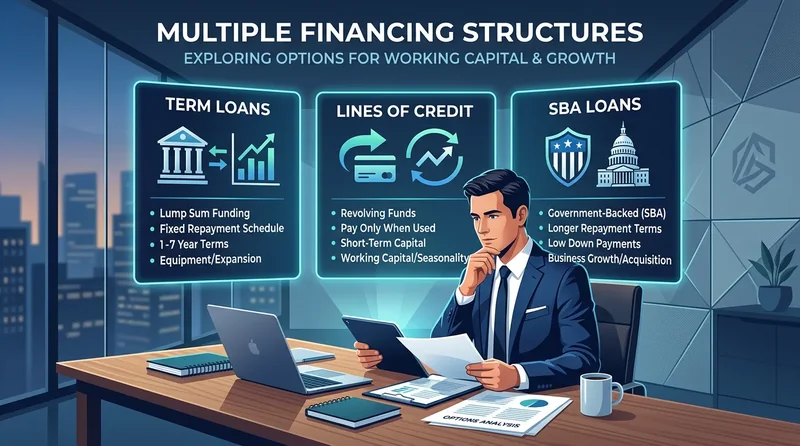
Better options: SBA 504 financing, SBA 7(a) real estate loan, or a conventional commercial mortgage. These offer longer amortization (20–25 years), lower monthly payments, and more appropriate asset alignment for real estate.
2. When You Are Buying Heavy Equipment
Working capital loans are typically unsecured or partially unsecured. If you're purchasing construction equipment, manufacturing machinery, commercial vehicles, or agricultural equipment, equipment financing is usually the better choice.
Equipment financing provides lower interest rates, asset-backed structure, longer terms, and better leverage. Because equipment serves as collateral, pricing is often more competitive than unsecured working capital.
3. When You Need Long-Term Capital
Working capital loans are usually for short-to-medium-term needs. If you require permanent capital, long amortization (10–25 years), or lower long-term cost, SBA financing may be more appropriate. Working capital loans are liquidity tools, not permanent capital structures.
4. When Your Revenue Is Unstable
Lenders prioritize consistent monthly deposits, positive cash flow trends, and stable operating history. If revenue is declining or inconsistent, approval may be difficult or limits reduced. Consider improving financial stability before applying for working capital.
5. When Your Debt Load Is Already High
If your business carries multiple outstanding loans, high monthly debt obligations, or heavy leverage, adding additional working capital debt may strain cash flow. Lenders review Debt Service Coverage Ratio (DSCR), existing obligations, and overall leverage. In highly leveraged situations, restructuring existing debt is often a better first step.
6. When You Only Need a Small, Short-Term Gap Filled
If you need a small, recurring liquidity cushion rather than a lump sum, a business line of credit may be more efficient. Lines of credit offer revolving access, interest only on funds drawn, and a reusable structure. For ongoing operational liquidity, revolving facilities often provide better flexibility.
7. When Speed Is Less Important Than Cost
Working capital loans can move quickly, but faster structures may carry higher interest rates and shorter repayment periods. If your timeline allows for 30–60+ days of underwriting, SBA loans may offer lower overall cost. Choosing speed over structure can increase long-term financing expense.
8. When You Are Acquiring a Business
Working capital loans are not typically structured for business acquisitions, ownership transitions, or equity buyouts. SBA acquisition financing is usually more appropriate due to longer terms, structured amortization, and acquisition-focused underwriting.
Quick Decision Guide: Working Capital vs. Alternatives
| If You Need? | Consider Instead of Working Capital |
|---|---|
| To buy commercial property | SBA 504, SBA 7(a) real estate, conventional commercial mortgage |
| To buy equipment | Equipment financing or leasing |
| 10–25 year amortization | SBA loan |
| To acquire a business | SBA acquisition financing |
| Revolving, draw-as-needed liquidity | Business line of credit (similar to working capital) |
Common Misconceptions
Some business owners assume working capital loans can cover any funding need. In reality, using working capital for long-term assets like real estate or equipment often leads to higher costs, inappropriate repayment structures, and missed opportunities for better-suited financing. Another misconception is that working capital and a business line of credit are interchangeable–they serve different purposes. Term loans provide a lump sum with a fixed repayment schedule; lines of credit offer revolving access. Choosing the wrong structure can increase cost and reduce flexibility. When in doubt, consult a financing advisor to align your need with the appropriate product.
What Is a Working Capital Loan Best For?
Working capital loans are ideal when:
- You need operational liquidity
- Revenue is consistent
- Capital need is short-to-medium term
- Speed is important
- You want structured access starting at $10,000+
They are tools for stability and growth–not long-term asset financing. For a full overview, see what a working capital loan is and how it works.
Summary: Match Your Need to the Right Product
Aligning your capital need with the right financing product saves money and reduces risk. Use working capital for operational liquidity–payroll, inventory, short-term gaps. Use SBA or commercial mortgages for real estate. Use equipment financing for machinery and vehicles. Use a business line of credit when you need flexible, draw-as-needed access. A mismatch can lead to unnecessary cost, inappropriate repayment schedules, and missed opportunities for better terms.
Final Thoughts
A working capital loan is powerful when used correctly, but it may not be ideal if you're buying real estate, purchasing heavy equipment, need permanent capital, have unstable revenue, or carry high existing debt. Choosing the correct capital structure protects cash flow and long-term financial health.
If your business generates consistent revenue and needs operational liquidity, reviewing structured working capital loan options can help ensure alignment with your objectives.
Sources & Further Reading
- SBA 7(a) Loan Program — Official terms, eligibility and the $5 million program maximum for the SBA's primary business loan.
- Federal Reserve Senior Loan Officer Opinion Survey — Quarterly survey of bank lending standards, including commercial real estate and business loans.
- SBA 504 Loan Program — Official 504 program terms: a bank, a Certified Development Company and the borrower's own injection.
Rate, fee, and policy figures cited above reflect current published guidance as of the article publication date. Always confirm current figures with the cited source or your lender before acting on financing decisions.
Frequently Asked Questions
When is a working capital loan, not the right option?
When you are buying commercial real estate, purchasing heavy equipment, or need long-term permanent capital. Working capital loans are short-to-medium-term liquidity tools, not permanent capital structures, and they're usually unsecured.
What is better than a working capital loan for buying property?
For commercial real estate, an SBA 504 loan, SBA 7(a) real estate loan, or conventional commercial mortgage is better, offering longer amortization (20-25 years), lower monthly payments, and proper asset alignment.
What is better for buying equipment than a working capital loan?
Equipment financing, because the asset serves as collateral. That gives lower interest rates, longer terms, and better leverage than unsecured working capital.
Is a working capital loan good for long-term capital needs?
No. Working capital loans are for short-to-medium-term needs. For permanent capital with 10-25 year amortization and lower long-term cost, SBA financing is usually more appropriate.
Should you take a working capital loan if revenue is unstable?
Be cautious. Working capital loans are repaid from cash flow, so unstable revenue raises the risk of falling behind. A more flexible or secured structure may fit better.