
Six mistakes trap business owners in the MCA cycle: stacking advances until daily holdbacks exceed 15-20% of revenue, ignoring effective cost (factor rate plus repayment time often exceeds 50% APR), waiting too long to refinance, using MCA to fund recurring payroll instead of one-time needs, never building a clean 6-12 month banking buffer, and rolling one MCA into another instead of switching to a line of credit or term loan. Refinance when revenue is strong and statements are clean — not when the next gap hits.
1. Stacking Multiple MCAs or Daily-Repay Products
Stacking means having more than one MCA (or combining an MCA with another product that takes a percentage of daily sales or a fixed daily ACH) at the same time. Each advance takes a slice of your daily revenue. Add a second or third, and the combined holdbacks or debits can reach 25%, 30%, 40%, or more of what you bring in each day. That leaves too little for payroll, rent, and operations. The mistake: taking another advance because you are short on cash, without realizing that the combined payment will make it even harder to operate and almost impossible to refinance. Lenders looking at your bank statements will see the multiple debits and often decline. See red flags in MCA agreements for contract terms that make stacking riskier.
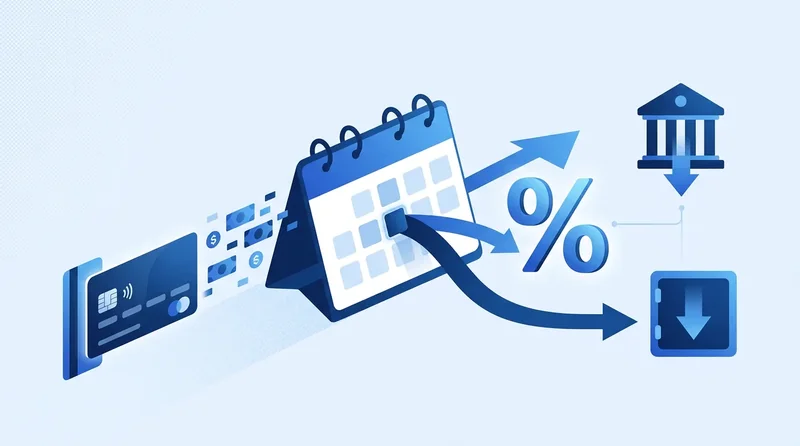
Before taking a second MCA, add the new holdback or daily payment to your existing one. If the total would exceed 15–20% of daily revenue, do not stack. Instead, pay down the current advance, cut expenses, or find a one-time source of capital (e.g., a short-term working capital or emergency loan) that does not add another daily debit. For a strategy to get out of multiple advances, see how to get out of bad business debt.
2. Ignoring Effective Cost and Total Repayment
MCAs are quoted with a factor rate (e.g., 1.20 or 1.25), not an APR. The effective cost depends on how fast you repay. If daily sales are strong and you pay off in three months, the effective annualized cost can be extremely high. Many borrowers focus only on the advance amount and the daily payment they can “afford” without calculating total dollars repaid. The mistake: not comparing total cost to a term loan or line of credit. Over time, that can normalize high-cost financing and make it harder to justify refinancing when you do qualify for something cheaper.
Calculate total repayment: advance amount — factor rate. Then estimate how many months it will take to repay given your typical sales. Use that to get an effective annual cost: (total repayment - advance) — advance — years. Compare that to the APR on a working capital loan or line of credit. When you have 6–12 months of strong revenue, get matched to see if you qualify for lower-cost options. See how to compare business loan offers so you are comparing apples to apples.
3. Waiting Too Long to Refinance
The best time to refinance out of an MCA is when your business is healthy: strong revenue, clean bank statements, and no overdrafts. Many business owners wait until they are in crisis—multiple advances, stretched cash flow, or a seasonal dip—before they look for a way out. By then, lenders see the high debt service and multiple debits and often decline. The mistake: treating MCA as a permanent solution and only looking for alternatives when things are already bad.
Plan an exit from day one. As soon as you have 6–12 months of consistent revenue and clean banking, check whether you qualify for a business line of credit or working capital loan. Even if the rate is not perfect, moving from daily debits to a fixed or revolving payment can free up cash flow and stop the cycle. See merchant cash advance vs working capital loan and revenue-based financing vs MCA for alternatives that may have better exit paths.
4. Using MCA for Ongoing Operating Expenses
MCA is best suited for a one-time or short-term need: a seasonal inventory buy, a single equipment purchase, or a short cash flow gap. Using it to cover recurring payroll, rent, or monthly operating shortfalls can create a dependency. You take an advance to cover the gap, then need another when the next gap appears. The mistake: treating MCA as operating financing instead of bridge financing. That leads to repeated advances and stacking.
If you need ongoing working capital, pursue a line of credit or term loan that you draw once and repay over time. If you do not yet qualify, use MCA sparingly for true one-time needs and work on strengthening revenue and credit so you can qualify for a line or term loan within 12–18 months. See what lenders look for in an MCA and what they look for in a line of credit so you know what to improve.
5. Not Building a Refinance Buffer
To qualify for a line of credit or term loan, you typically need 6–12 months of bank statements with consistent deposits and no (or minimal) overdrafts. If your cash flow is constantly stressed by MCA payments, you may not be building that buffer. The mistake: never creating a window where your statements look strong enough to refinance. Some businesses intentionally pay down one MCA to a low balance, maintain 3–6 months of clean banking, then apply for a consolidation loan. Without that discipline, the cycle continues.
Even while repaying an MCA, prioritize avoiding overdrafts and keeping deposits as steady as possible. Reduce other discretionary spending so that MCA is the only major drain. Once the advance is paid down, maintain 3–6 months of strong statements before applying elsewhere. See what lenders look for in a working capital loan application so you know what to clean up.
6. Rolling Over or Refinancing With Another MCA
When one MCA is paid down or paid off, some providers or brokers offer to “refinance” or “roll over” with a new advance. That can feel like relief, but it often resets the clock and keeps you in the same high-cost product. The mistake: accepting another MCA as the solution instead of using the payoff as a chance to apply for a line of credit or term loan. If you have just finished paying an MCA and your statements are clean, that is the best time to apply for lower-cost financing.
Resist the rollover. When your current MCA is close to paid off, apply to banks or alternative lenders for a line of credit or term loan. Use prequalification to see what you might qualify for without multiple hard pulls. If you are offered another MCA as a “refinance,” compare its total cost to a true loan and choose the loan if you qualify.
How to Break the Cycle: Quick Steps
- Stop stacking. Do not take a second MCA or add another daily-pay product until the first is paid off or nearly paid off.
- Know your total cost. Calculate total repayment and effective cost. Use that to motivate refinancing when you qualify.
- Refinance when healthy. Apply for a line of credit or term loan when you have 6–12 months of strong revenue and clean bank statements.
- Use MCA for one-time needs only. Do not use it to fund ongoing operating shortfalls.
- Build a buffer. Avoid overdrafts and keep deposits steady so your statements support a refinance application.
- Do not roll over into another MCA. When one is paid off, apply for lower-cost financing instead.