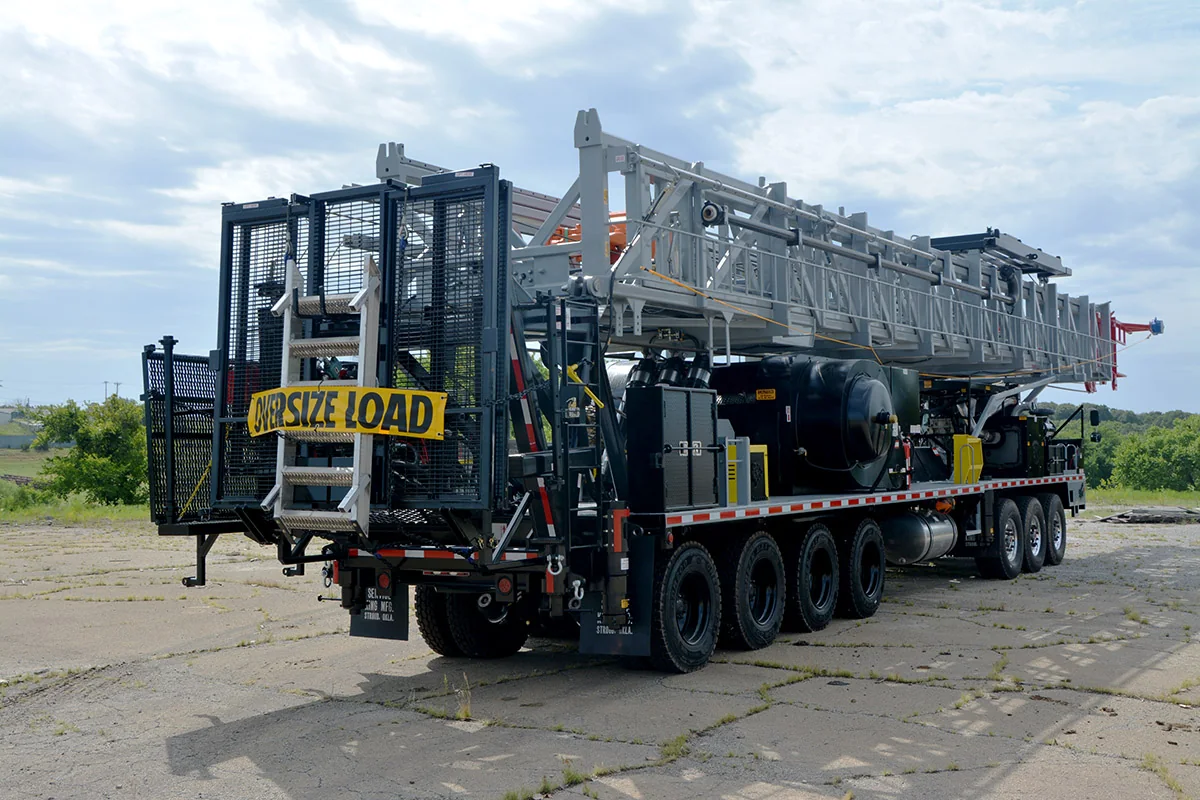
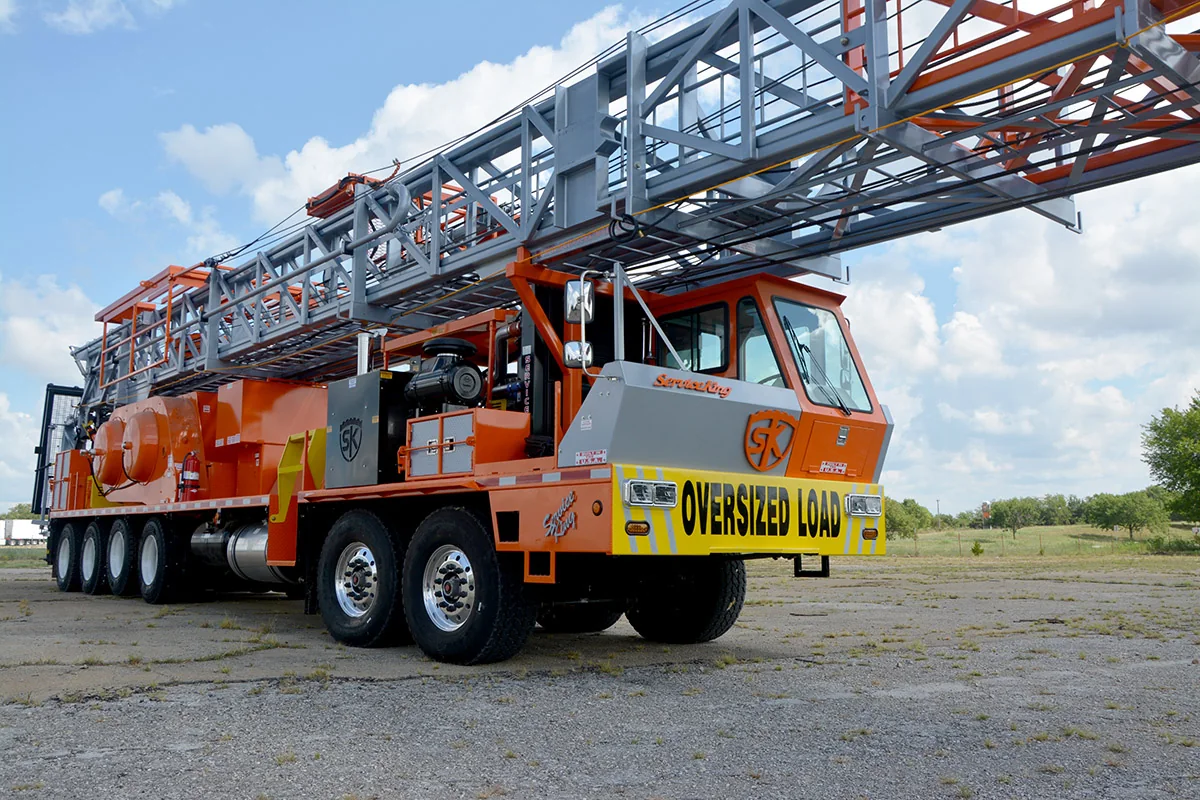
 180,000# · 6 lines

Truck-mounted mobile workover rigs and well service rigs built for well intervention, completion and remedial work — from the single-truck SK 175 up to the 300,000-lb-mast SK 675, plus the electric SK 675 ET and the Pipe Buddy pipe handler. Every rig here can be financed through Axiant, new or used. Need a bigger unit that drills? See Service King drilling rigs → · How rig financing works →
All financeable through Axiant. Live inventory & pricing on Service King Manufacturing, Inc..
180,000# · 6 lines180,000# · 6 lines210,000# · 6 lines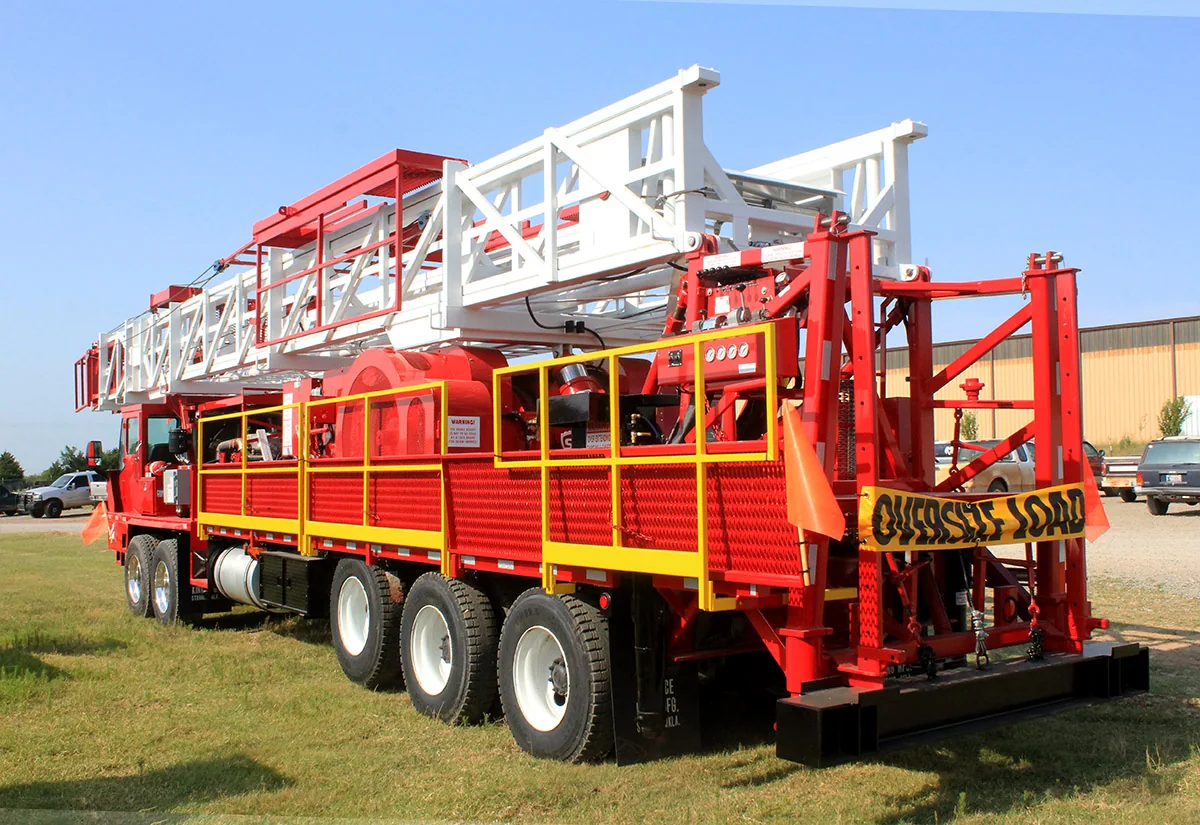 250,000# · 6 lines
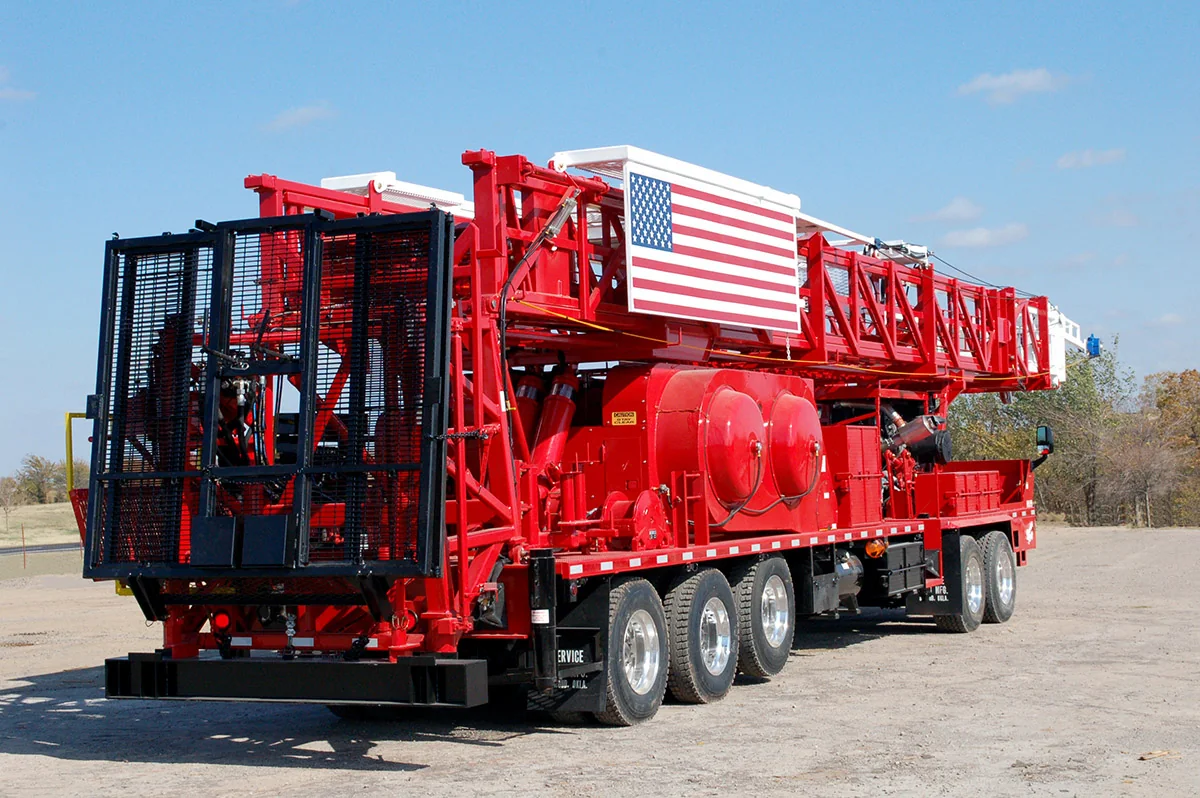 300,000# · 6 lines300,000# · 6 lines300,000# · 6 lines3,600 lb load
| Model | Capacity | Configuration | Links |
|---|---|---|---|
| SK 175 | 180,000# · 6 lines | 3-axle truck mount · service to 8,000 ft · workover to 5,000 ft | View ↗ · Finance |
| SK 275 | 180,000# · 6 lines | 4-axle carrier · service to 8,500 ft · workover to 7,500 ft | View ↗ · Finance |
| SK 375 | 210,000# · 6 lines | 4-axle carrier · service to 12,000 ft · workover to 8,000 ft | View ↗ · Finance |
| SK 475 | 250,000# · 6 lines | 5-axle truck mount · service to 12,000 ft | View ↗ · Finance |
| SK 575 | 300,000# · 6 lines | 5-axle truck mount · service to 16,000 ft · workover to 10,000 ft | View ↗ · Finance |
| SK 675 | 300,000# · 6 lines | 6-axle truck mount · service to 18,000 ft · workover to 14,000 ft | View ↗ · Finance |
| SK 675 ET | 300,000# · 6 lines | Electric trailer workover rig · 600 HP · grid or generator power · reduced emissions | View ↗ · Finance |
| Pipe Buddy | 3,600 lb load | Hydraulic pipe-handling trailer · subs 4–32 ft · automated pipe loading | View ↗ · Finance |
Equipment is manufactured and sold by Service King Manufacturing, Inc. Axiant Partners is an independent financing partner and arranges equipment financing; rig pricing, specifications and availability are provided by the manufacturer. Financing is subject to credit approval.
| Model | Mast Capacity | Configuration | Specs |
|---|---|---|---|
| SK 175 | 180,000# · 6 lines | 3-axle truck mount · service to 8,000 ft · workover to 5,000 ft | View ↗ |
| SK 275 | 180,000# · 6 lines | 4-axle carrier · service to 8,500 ft · workover to 7,500 ft | View ↗ |
| SK 375 | 210,000# · 6 lines | 4-axle carrier · service to 12,000 ft · workover to 8,000 ft | View ↗ |
| SK 475 | 250,000# · 6 lines | 5-axle truck mount · service to 12,000 ft | View ↗ |
| SK 575 | 300,000# · 6 lines | 5-axle truck mount · service to 16,000 ft · workover to 10,000 ft | View ↗ |
| SK 675 | 300,000# · 6 lines | 6-axle truck mount · service to 18,000 ft · workover to 14,000 ft | View ↗ |
| SK 675 ET | 300,000# · 6 lines | Electric trailer workover rig · 600 HP · grid or generator power · reduced emissions | View ↗ |
| Pipe Buddy | 3,600 lb load | Hydraulic pipe-handling trailer · subs 4–32 ft · automated pipe loading | View ↗ |
A workover rig is a mobile, truck-mounted unit that services a well after it has been drilled and completed. It pulls rods, tubing and pumps, cleans out the wellbore, swaps downhole equipment, and handles the remedial work that keeps a well producing. It is different from a drilling rig, which bores the original hole — and it does more than a light pulling unit, because a full workover rig carries the mast capacity and depth to reach and repair deeper wells. Well service rigs and workover rigs are grouped together here because Service King builds them on one platform, sized by how deep they reach and how much the mast can hold.
Every day a well sits down waiting on a rig is a day it is not producing. Running your own workover rig puts that schedule in your hands instead of a service company's queue:
The catch is the up-front price — and that is where we come in. Financing spreads the cost across the day-rate work the rig earns, so your cash stays free for crews, fuel and mobilization. See what your rig qualifies for or read how rig financing works.
Two numbers in the table above tell you most of what you need. Service depth is how deep the rig can run tubing and rods — match it to your deepest well, with room to spare. Mast capacity (rated in pounds, with 4 or 6 lines) is how much weight the derrick can pull, so heavier strings and deeper wells call for a higher number. The carrier — from a 3-axle up to a 6-axle truck — affects road weight and how you set up on location. A shallow-well operator is well served by an SK 175 or 275; a deeper program leans toward the SK 575 or SK 675. Not sure where you land? Tell us your well depths and we will help you match the rig.
Both are financeable. A new rig comes with known specs, a warranty and clean records. A used rig can put a unit on location faster and for less — just weigh the year, hours, mast condition and last recertification. Either way the financing works the same, and a well-kept used rig is a common way to add capacity without waiting on a build slot.
Servicing and repairing producing wells — pulling rods and tubing, changing pumps, cleaning out the wellbore, fishing stuck tools, and completing or recompleting zones. It keeps existing wells producing rather than drilling new ones.
It ranges widely with size and condition — a smaller used single can run into the low six figures, while a large new rig reaches seven. What usually matters more is the monthly payment, which financing sizes to the day-rate work the rig earns. Ask us for a payment estimate.
Size it to your deepest well and heaviest string. Shallow wells are handled by the SK 175 to 375; wells past 12,000 to 16,000 ft point to the SK 575 or SK 675. Match service depth first, then mast capacity.
Yes — both. Rig financing is asset-based, so the equipment carries much of the deal. See how rig financing works, then apply once to get matched.
Pick your Service King rig and let Axiant handle the financing — new or used, approvals in as little as 24 hours. Keep your capital in the field while the rig earns.
A workover rig is a mobile, truck-mounted unit that services a well after it has been drilled and completed. It pulls rods, tubing and pumps, cleans out the wellbore, swaps downhole equipment, and handles the remedial work that keeps a well producing. It is different from a drilling rig, which bores the original hole — and it does more than a light pulling unit, because a full workover rig carries the mast capacity and depth to reach and repair deeper wells. Well service rigs and workover rigs are grouped together here because Service King builds them on one platform, sized by how deep they reach and how much the mast can hold.
Every day a well sits down waiting on a rig is a day it is not producing. Running your own workover rig puts that schedule in your hands instead of a service company's queue:
The catch is the up-front price — and that is where we come in. Financing spreads the cost across the day-rate work the rig earns, so your cash stays free for crews, fuel and mobilization. See what your rig qualifies for or read how rig financing works.
Two numbers in the table above tell you most of what you need. Service depth is how deep the rig can run tubing and rods — match it to your deepest well, with room to spare. Mast capacity (rated in pounds, with 4 or 6 lines) is how much weight the derrick can pull, so heavier strings and deeper wells call for a higher number. The carrier — from a 3-axle up to a 6-axle truck — affects road weight and how you set up on location. A shallow-well operator is well served by an SK 175 or 275; a deeper program leans toward the SK 575 or SK 675. Not sure where you land? Tell us your well depths and we will help you match the rig.
Both are financeable. A new rig comes with known specs, a warranty and clean records. A used rig can put a unit on location faster and for less — just weigh the year, hours, mast condition and last recertification. Either way the financing works the same, and a well-kept used rig is a common way to add capacity without waiting on a build slot.
Servicing and repairing producing wells — pulling rods and tubing, changing pumps, cleaning out the wellbore, fishing stuck tools, and completing or recompleting zones. It keeps existing wells producing rather than drilling new ones.
It ranges widely with size and condition — a smaller used single can run into the low six figures, while a large new rig reaches seven. What usually matters more is the monthly payment, which financing sizes to the day-rate work the rig earns. Ask us for a payment estimate.
Size it to your deepest well and heaviest string. Shallow wells are handled by the SK 175 to 375; wells past 12,000 to 16,000 ft point to the SK 575 or SK 675. Match service depth first, then mast capacity.
Yes — both. Rig financing is asset-based, so the equipment carries much of the deal. See how rig financing works, then apply once to get matched.