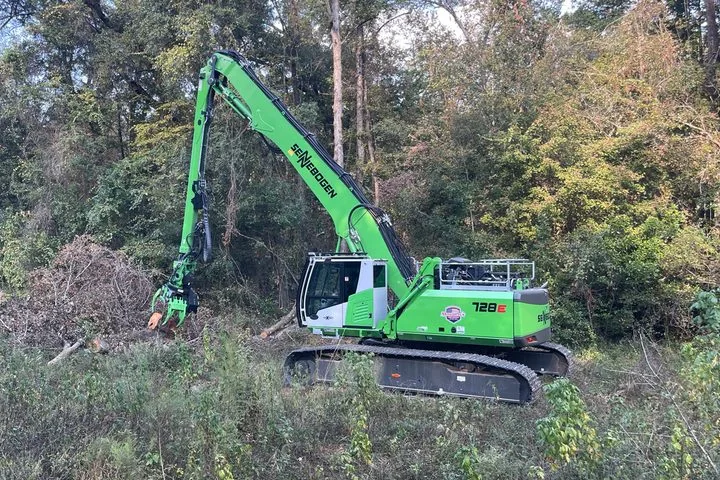
 43 ft
43 ft718 E
160 hp Cummins QSB 4.5 T4Fcrawler or mobilethe compact one — roadside clearing, urban woodlots, storm cleanup


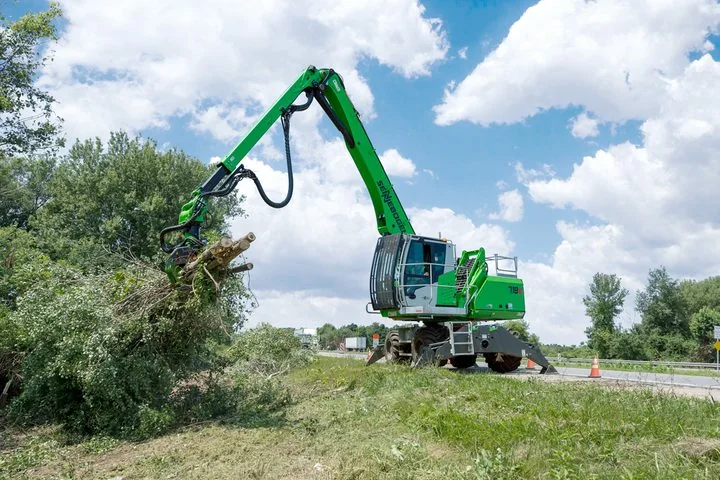
A tree care handler is a telescopic-boom machine with a hydraulic grapple saw on the end and an elevating cab that lifts the operator up to see the work. It changes how a removal happens: instead of putting a climber in the tree or a bucket beside it, the operator grabs the stem, cuts it, and sets the piece down — upright and controlled — from the ground. Nobody is under the load and nobody is in the canopy. SENNEBOGEN builds three, from the 43 ft 718 E up to the 75 ft 738 E, and all three finance through Axiant. Forestry & tree service financing →
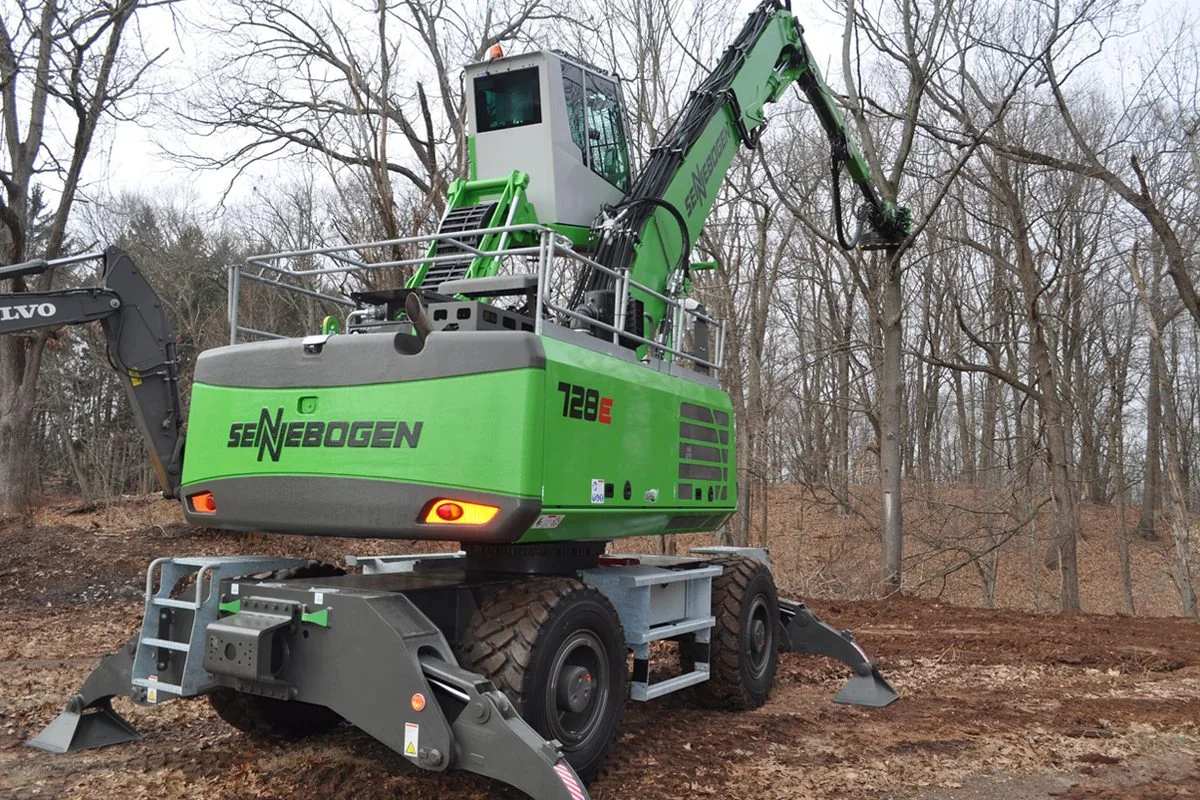
All financeable through Axiant. Live inventory & pricing on SENNEBOGEN.
43 ft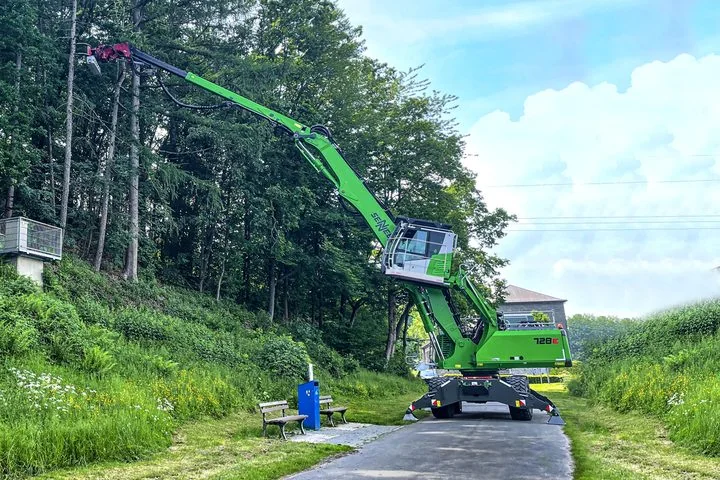 65 ft
65 ft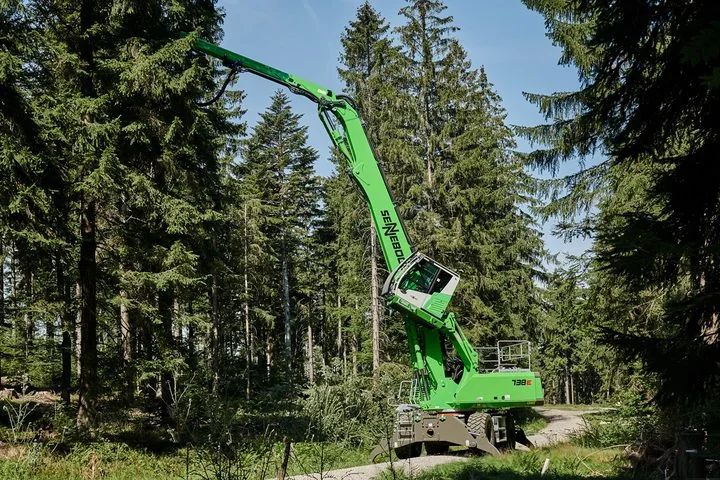 75 ft
75 ftSENNEBOGEN machines are manufactured by SENNEBOGEN and sold in North America through its authorized dealer network. Axiant Partners is an independent equipment finance broker — we are not a SENNEBOGEN dealer and are not affiliated with SENNEBOGEN. We arrange the financing for the buyer; machine pricing, configuration and availability come from SENNEBOGEN and its dealers. Specifications shown are from SENNEBOGEN North America and are for reference only — confirm every figure with the dealer before you buy. Financing is subject to credit approval.
| Model | Max Reach | Engine & Build | Specs |
|---|---|---|---|
| 718 E | 43 ft | 160 hp Cummins QSB 4.5 T4F · crawler or mobile · the compact one — roadside clearing, urban woodlots, storm cleanup | Specs ↗ |
| 728 E | 65 ft | 173 hp Cummins QSB 6.7 T4F · crawler or mobile · self-loads onto a standard low-boy and travels public roads without waivers | Specs ↗ |
| 738 E | 75 ft | 225 hp Cummins QSB 6.7 T4F · mobile · the reach machine — heavy land clearing and right-of-way maintenance | Specs ↗ |
The economics of a tree service are mostly the economics of risk and crew hours. A telescopic tree care handler moves both:
The mulcher and mowing attachments open a second line of work entirely — right-of-way and embankment maintenance contracts, which tend to be recurring rather than one-off.
Reach decides it, and reach is really a question of what work you are bidding. The 718 E at 43 ft is the compact machine — urban lots, tight residential removals, mobile roadside clearing, storm cleanup. The 728 E at 65 ft is the one most growing tree services land on: enough reach for real roadside and utility work, and it still moves on a standard trailer without special permits. The 738 E at 75 ft is a land-clearing and right-of-way machine — you buy that reach because a contract requires it. Crawler undercarriages hold better on soft ground and slopes; mobile builds move themselves between setups on a road job.
These machines are a large purchase for a tree service, and most are bought on financing rather than cash — which is the right call, because the machine starts earning the day it lands. Equipment financing here is asset-based: the handler is a hard asset that holds value, so it carries much of the credit decision itself and you are not betting the whole company balance sheet on one purchase. Terms are structured to the life of the machine, so the payment sits against the removals it wins you. New and used both finance. See what it qualifies for, or read how forestry equipment financing works. Also worth a look: stump grinder financing for the rest of the fleet.
A telescopic-boom machine with a hydraulic grapple saw and an elevating operator cab. The operator grips the stem, cuts it and sets the section down under control — so the tree is removed upright, from the ground, without a climber in the canopy or anyone under a falling piece.
For hazardous, dead and roadside trees it is usually safer, because the machine holds the wood the whole time rather than dropping it. It also cuts and loads with one operator. A bucket truck is still lighter and cheaper for routine pruning — most established outfits run both.
SENNEBOGEN sells through dealers and does not publish list prices; these are a significant purchase and the cost scales with reach, undercarriage and attachments. Ask your dealer to quote the configuration you need — and ask us what that translates to as a monthly payment before you decide. Get a payment estimate.
Yes, both. Financing is asset-based, so the machine carries much of the deal — which is what makes it reachable for a growing tree service rather than only for the largest crews. Approvals commonly come back in about 24 hours.
Spec the machine with your SENNEBOGEN dealer and let Axiant finance it — new or used, approvals in as little as 24 hours, terms set against the work it wins you.
The economics of a tree service are mostly the economics of risk and crew hours. A telescopic tree care handler moves both:
The mulcher and mowing attachments open a second line of work entirely — right-of-way and embankment maintenance contracts, which tend to be recurring rather than one-off.
Reach decides it, and reach is really a question of what work you are bidding. The 718 E at 43 ft is the compact machine — urban lots, tight residential removals, mobile roadside clearing, storm cleanup. The 728 E at 65 ft is the one most growing tree services land on: enough reach for real roadside and utility work, and it still moves on a standard trailer without special permits. The 738 E at 75 ft is a land-clearing and right-of-way machine — you buy that reach because a contract requires it. Crawler undercarriages hold better on soft ground and slopes; mobile builds move themselves between setups on a road job.
These machines are a large purchase for a tree service, and most are bought on financing rather than cash — which is the right call, because the machine starts earning the day it lands. Equipment financing here is asset-based: the handler is a hard asset that holds value, so it carries much of the credit decision itself and you are not betting the whole company balance sheet on one purchase. Terms are structured to the life of the machine, so the payment sits against the removals it wins you. New and used both finance. See what it qualifies for, or read how forestry equipment financing works. Also worth a look: stump grinder financing for the rest of the fleet.
A telescopic-boom machine with a hydraulic grapple saw and an elevating operator cab. The operator grips the stem, cuts it and sets the section down under control — so the tree is removed upright, from the ground, without a climber in the canopy or anyone under a falling piece.
For hazardous, dead and roadside trees it is usually safer, because the machine holds the wood the whole time rather than dropping it. It also cuts and loads with one operator. A bucket truck is still lighter and cheaper for routine pruning — most established outfits run both.
SENNEBOGEN sells through dealers and does not publish list prices; these are a significant purchase and the cost scales with reach, undercarriage and attachments. Ask your dealer to quote the configuration you need — and ask us what that translates to as a monthly payment before you decide. Get a payment estimate.
Yes, both. Financing is asset-based, so the machine carries much of the deal — which is what makes it reachable for a growing tree service rather than only for the largest crews. Approvals commonly come back in about 24 hours.