 8,820 lb
340 G
25 ft vertical reach20,724 lb operating weightelevating Multicab


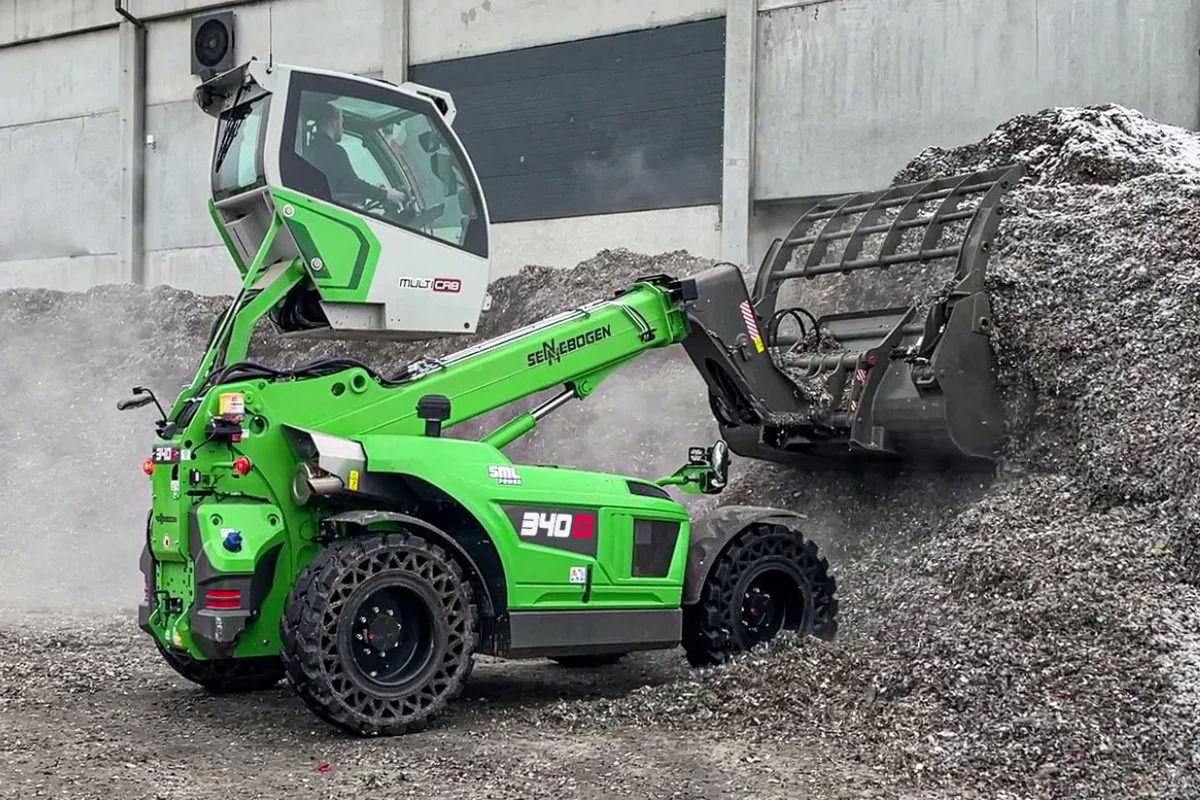
A telescopic wheel loader is what you buy when a telehandler is not strong enough and a wheel loader cannot reach. SENNEBOGEN’s 340 G and 360 G put a telescoping boom on a loader chassis and add the elevating Multicab, so the operator can lift up and look down into a bin, a trailer or a hopper instead of guessing. They lift 8,820 lb and 13,228 lb respectively, to 25 and 28 ft — and both finance through Axiant. How telehandler financing works →
All financeable through Axiant. Live inventory & pricing on SENNEBOGEN.
8,820 lb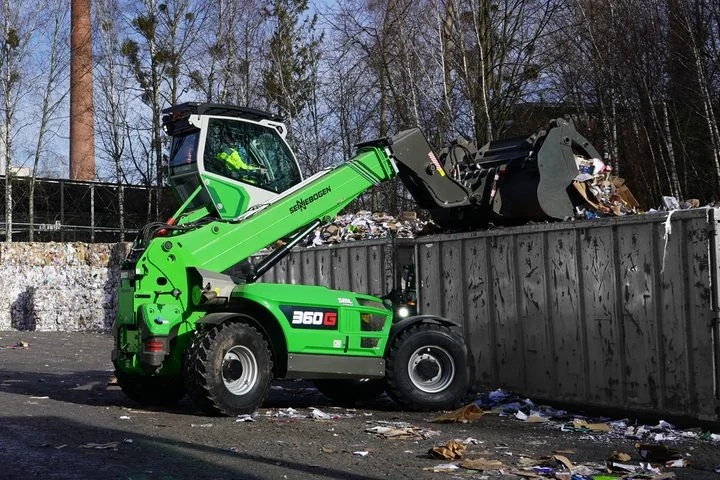 13,228 lb
SENNEBOGEN machines are manufactured by SENNEBOGEN and sold in North America through its authorized dealer network. Axiant Partners is an independent equipment finance broker — we are not a SENNEBOGEN dealer and are not affiliated with SENNEBOGEN. We arrange the financing for the buyer; machine pricing, configuration and availability come from SENNEBOGEN and its dealers. Specifications shown are from SENNEBOGEN North America and are for reference only — confirm every figure with the dealer before you buy. Financing is subject to credit approval.
| Model | Lift Capacity | Reach & Build | Specs |
|---|---|---|---|
| 340 G | 8,820 lb | 25 ft vertical reach · 20,724 lb operating weight · elevating Multicab | Specs ↗ |
| 360 G | 13,228 lb | 28 ft vertical reach · 27,558 lb operating weight · elevating Multicab | Specs ↗ |
The two conventional machines each give up something. A telehandler reaches and places, but it is built around a light chassis and it does not like a full bucket of dense material. A wheel loader shoves and lifts all day, but its boom geometry is fixed — to get height you drive closer, and there is only so close you can get to a high-sided trailer.
A telescopic wheel loader is the overlap: loader hydraulics and loader mass with a boom that extends. In practice that means loading over the side of a high-walled trailer without a ramp, reaching into a bin, stacking higher in the same yard footprint, and placing material rather than just pushing it. The elevating Multicab is the part operators notice first — being able to raise the cab and actually see into the container removes most of the guesswork, and most of the spillage.
Recycling yards, sawmills, transfer stations and multi-shift industrial operations are where these land, usually replacing two machines with one.
It comes down to the heaviest thing you lift and the highest place you put it. The 340 G lifts up to 8,820 lb to 25 ft on a 20,724 lb machine — the more manoeuvrable of the two, and the one for tighter yards. The 360 G lifts 13,228 lb to 28 ft at 27,558 lb operating weight, which is what you need when the material is dense, the bucket is big, or the trailer wall is high. If you are near the line, size up: an underpowered loader costs you cycles every day, and the payment difference between the two is smaller than the throughput difference.
Loaders are the machine businesses rent longest and regret renting most, because the rental never stops and never builds anything. If you are running one most weeks, run the comparison honestly: monthly rental versus a financed payment on a machine you own at the end. Equipment financing is asset-based, so the loader carries much of the deal itself, and terms are set against the life of the machine. New and used both finance. See what it qualifies for, or compare against conventional wheel loader financing.
The buyers who land on these machines tend to have the same complaint: they own a loader and a telehandler, and neither one is quite right for the job that takes up most of the day.
The common thread is reach with weight behind it. If your material is light and you mostly place pallets, a telehandler is cheaper and it is the right machine. If it is heavy and you need to get it up and over something, this is the class you want.
Both finance, and both are worth pricing. A new machine comes with warranty, current emissions certification and a clean service history, and on a loader that will run multiple shifts a day that warranty is worth more than it looks. A used machine gets you working sooner and for less — just have the dealer walk you through hours, the condition of the boom and its wear pads, the hydraulics, and the tyres, because those are what quietly cost money later. Either way the financing works the same, and a solid used loader is a common way to add a second machine to a yard without waiting on a new build. Ask your SENNEBOGEN dealer what is in stock before you assume you need new.
A wheel loader with a telescoping boom. It keeps loader-grade hydraulics and machine weight — so it can move dense material with a full bucket — but the boom extends, so it can also reach over and into a trailer or bin the way a telehandler does.
A telehandler is built to place loads at height on a light chassis; it is not designed to load dense material continuously. A telescopic wheel loader is built for the loading work first and adds the reach on top, which is why recycling yards and sawmills use them where a telehandler would struggle.
The 340 G lifts up to 8,820 lb with 25 ft of vertical reach, at an operating weight of 20,724 lb. The 360 G lifts up to 13,228 lb with 28 ft of reach, at 27,558 lb. Confirm the final figures for your configuration with the dealer.
If you are running one most weeks, financing usually wins — a rental payment never ends and never builds equity, while a financed machine is yours at the end of the term. Compare the monthly rental against the financed payment before you renew the rental.
Get the quote from your SENNEBOGEN dealer and let Axiant finance it — then compare the payment against what you are handing a rental yard every month.
The two conventional machines each give up something. A telehandler reaches and places, but it is built around a light chassis and it does not like a full bucket of dense material. A wheel loader shoves and lifts all day, but its boom geometry is fixed — to get height you drive closer, and there is only so close you can get to a high-sided trailer.
A telescopic wheel loader is the overlap: loader hydraulics and loader mass with a boom that extends. In practice that means loading over the side of a high-walled trailer without a ramp, reaching into a bin, stacking higher in the same yard footprint, and placing material rather than just pushing it. The elevating Multicab is the part operators notice first — being able to raise the cab and actually see into the container removes most of the guesswork, and most of the spillage.
Recycling yards, sawmills, transfer stations and multi-shift industrial operations are where these land, usually replacing two machines with one.
It comes down to the heaviest thing you lift and the highest place you put it. The 340 G lifts up to 8,820 lb to 25 ft on a 20,724 lb machine — the more manoeuvrable of the two, and the one for tighter yards. The 360 G lifts 13,228 lb to 28 ft at 27,558 lb operating weight, which is what you need when the material is dense, the bucket is big, or the trailer wall is high. If you are near the line, size up: an underpowered loader costs you cycles every day, and the payment difference between the two is smaller than the throughput difference.
Loaders are the machine businesses rent longest and regret renting most, because the rental never stops and never builds anything. If you are running one most weeks, run the comparison honestly: monthly rental versus a financed payment on a machine you own at the end. Equipment financing is asset-based, so the loader carries much of the deal itself, and terms are set against the life of the machine. New and used both finance. See what it qualifies for, or compare against conventional wheel loader financing.
The buyers who land on these machines tend to have the same complaint: they own a loader and a telehandler, and neither one is quite right for the job that takes up most of the day.
The common thread is reach with weight behind it. If your material is light and you mostly place pallets, a telehandler is cheaper and it is the right machine. If it is heavy and you need to get it up and over something, this is the class you want.
Both finance, and both are worth pricing. A new machine comes with warranty, current emissions certification and a clean service history, and on a loader that will run multiple shifts a day that warranty is worth more than it looks. A used machine gets you working sooner and for less — just have the dealer walk you through hours, the condition of the boom and its wear pads, the hydraulics, and the tyres, because those are what quietly cost money later. Either way the financing works the same, and a solid used loader is a common way to add a second machine to a yard without waiting on a new build. Ask your SENNEBOGEN dealer what is in stock before you assume you need new.
A wheel loader with a telescoping boom. It keeps loader-grade hydraulics and machine weight — so it can move dense material with a full bucket — but the boom extends, so it can also reach over and into a trailer or bin the way a telehandler does.
A telehandler is built to place loads at height on a light chassis; it is not designed to load dense material continuously. A telescopic wheel loader is built for the loading work first and adds the reach on top, which is why recycling yards and sawmills use them where a telehandler would struggle.
The 340 G lifts up to 8,820 lb with 25 ft of vertical reach, at an operating weight of 20,724 lb. The 360 G lifts up to 13,228 lb with 28 ft of reach, at 27,558 lb. Confirm the final figures for your configuration with the dealer.
If you are running one most weeks, financing usually wins — a rental payment never ends and never builds equity, while a financed machine is yours at the end of the term. Compare the monthly rental against the financed payment before you renew the rental.