
1. Covenant Breach
Most lines of credit have financial covenants—debt service coverage ratio (DSCR), tangible net worth, leverage ratio, or similar. If you’ve breached a covenant, the lender can decline draws until you’re back in compliance or they grant a waiver. Covenants are typically tested at each draw or periodically (e.g., quarterly). A breach gives the lender the right to stop advances.
Fix: Know your covenants. Monitor them before you request a draw. If you’re close or in breach, get back in compliance or contact the lender for a waiver before drawing. See loan covenant breaches: how to avoid them and what to do if at risk. Don’t assume the lender will overlook a breach—they often won’t.
2. Material Adverse Change
Line agreements typically require that no “material adverse change” has occurred in your business or financial condition. If revenue has dropped sharply, you’ve lost a key customer, or there’s litigation or other risk the lender learns about, they may decline draws. The lender doesn’t have to prove you’re in default—they can refuse advances if they believe your ability to repay has materially worsened.
Fix: If you’ve had a material change, consider informing the lender before you draw—especially if they might find out anyway (e.g., through a credit bureau or news). Proactive communication can sometimes preserve the relationship. If the change is temporary, provide a narrative and supporting data. See why business lines of credit get cut or revoked.
3. Over Available Credit
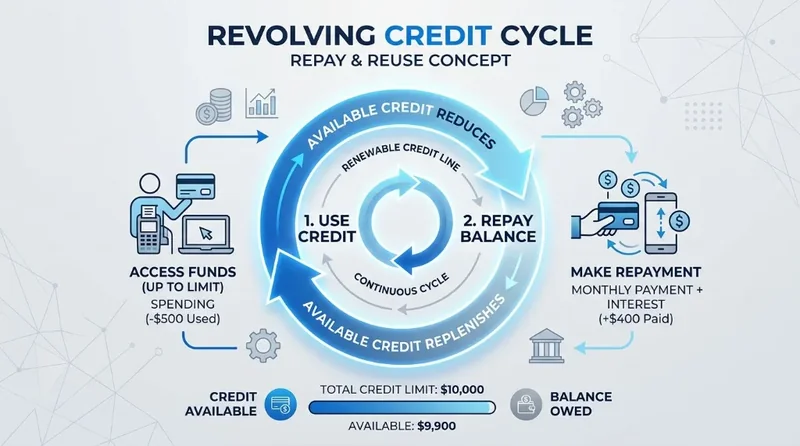
You can only draw up to your available credit—the line limit minus current balance. If you’re requesting more than what’s available, the draw will be declined. Some borrowers miscalculate, or the available amount has changed (e.g., a payment hasn’t posted, or the lender reduced the line).
Fix: Check your available balance before requesting a draw. If you need more than you have, pay down the line to free capacity, or ask the lender for a limit increase. See why your line of credit limit is too low for how to qualify for more. Don’t assume you can draw up to the full limit if you have an outstanding balance.
4. Line Under Annual Review
Many lines require annual renewal or review. During that period, the lender may restrict or suspend draws until they complete the review and renew. If your line is coming up for renewal and you haven’t submitted the requested financials or completed the process, draws can be declined.
Fix: Respond to annual review requests promptly. Submit documents needed for business line of credit as soon as the lender asks. Don’t wait until you need to draw—complete the review before you need the money. If the lender is slow, follow up; don’t assume it’s automatic.
5. Default or Event of Default
If you’re in default—missed payment, covenant breach, insolvency, or other event of default—the lender can decline all draws. They may also accelerate the line (demand full repayment). Default doesn’t have to be payment-related; it can be a covenant breach or a representation that’s no longer true.
Fix: Avoid default. Make payments on time. Stay within covenants. If you’re in default, remedy it as soon as possible and ask for a waiver or forbearance. See loan covenant breaches: how to avoid them. If the lender has accelerated, get legal advice—you may need to refinance or negotiate.
6. Use of Funds Restriction
Some lines restrict how you can use the funds—e.g., working capital only, no acquisitions or dividends. If the lender discovers or believes you’re using draws for an ineligible purpose, they can decline future draws or call the line. They may also ask for certification of use at each draw.
Fix: Read your agreement. Use draws only for permitted purposes. If you need funds for something that might be restricted, ask the lender in advance. Don’t assume “working capital” covers everything—some agreements are specific. See business line of credit requirements.
7. Lender Policy or Portfolio Change
Sometimes the decline isn’t about you specifically—the lender may have tightened credit policy, reduced exposure to your industry, or is managing portfolio concentration. They may decline draws even when you’re in compliance. This is less common but happens during economic stress or when lenders reposition.
Fix: Ask why the draw was declined. If the lender cites policy or portfolio reasons, you may need to find alternative financing. See why business lines of credit get cut or revoked. Get matched to reach other lenders if your current line is no longer reliable.
What to Do Right Now
If your draw request was declined: (1) Ask the lender for the specific reason. (2) If it’s a covenant breach, get back in compliance or request a waiver. (3) If it’s capacity, pay down the line or request an increase. (4) If it’s annual review, complete the review. (5) If the lender has changed policy or is cutting the line, explore alternatives. For red flags before you sign, see red flags in line of credit offers. When you need a new or backup line, get matched.
Reasons Line Of Credit Draw Request Gets Declined: Approval Framework and Execution Controls
Strong outcomes in this area come from disciplined preparation and clear operating controls. Start by defining the exact decision objective, then map what underwriters need to confirm: repayment capacity, documentation quality, and risk control behavior. Borrowers who submit reconciled files with concise context notes reduce review friction and improve decision speed.
Use a standard pre-underwriting checklist before submission. Tie out statements to debt schedules, clarify one-time anomalies, and verify the use-of-funds story is measurable. If the data room is inconsistent, lenders will request additional files and confidence declines. If the package is consistent and transparent, credit teams can move faster and with fewer conditions.
- Objective fit: match structure to cash-cycle timing and real operating needs.
- Data quality: one clean version of truth across financials and obligations.
- Risk thresholds: define utilization, liquidity, and payment stress trigger levels.
- Communication cadence: proactive updates with variance commentary when conditions change.
Scenario Planning and Lender Confidence
Run base, moderate-stress, and severe-stress cases before finalizing structure. Include realistic delays in receivables, margin pressure, and temporary cost spikes. If the strategy only works in best-case conditions, resize it before credit review. This scenario discipline improves durability and lowers the chance of post-funding stress.
After funding, maintain a monthly governance rhythm with clear owners and action deadlines. Borrowers who monitor performance and respond early to threshold changes generally preserve more flexibility and achieve better renewal outcomes over time.
Implementation Playbook and Underwriting Confidence Model
High-quality financing outcomes depend on what happens before and after approval. Build an implementation playbook that links your capital decision to daily operating behavior, not just to a signed term sheet. Start by defining expected impact on liquidity, margin stability, and repayment burden over the next 12 months. Then assign metric owners and reporting cadence so each assumption is monitored in production. This structure helps management react quickly when performance diverges from plan and keeps lender confidence intact.
Underwriters evaluate both numbers and behavior signals. Files that show consistent documentation, clear rationale, and realistic downside planning are easier to approve than files with similar headline metrics but weak process discipline. Create one versioned data package for every lender sequence and ensure debt schedules, statements, and ownership details are internally consistent. Add short context notes for non-recurring events so reviewers do not interpret temporary noise as structural risk.
Run a pre-submission risk workshop with finance and operations. Review base case, moderate stress, and severe stress outcomes. For each scenario, define trigger points for corrective actions such as spend controls, receivable acceleration, pricing changes, or lender outreach. The objective is to avoid emergency decisions when pressure appears. A predefined action map improves execution speed and preserves flexibility.
- Data discipline: one reconciled package, clear date ranges, and plain-language anomaly notes.
- Scenario planning: expected, moderate-stress, and severe-stress cases with explicit assumptions.
- Action triggers: predefined utilization, liquidity, and payment-pressure thresholds.
- Governance cadence: monthly review with owners, deadlines, and documented follow-through.
After funding, maintain a monthly performance dashboard that compares actuals to underwriting assumptions. Track utilization behavior, liquidity runway, forecast variance, and covenant headroom where applicable. If thresholds are breached for two cycles, escalate to a structure review and lender communication step. This disciplined loop turns financing from a one-time event into a controlled operating process.
Over multiple cycles, this approach compounds. Borrowers who consistently demonstrate operational control typically receive faster renewals, cleaner amendments, and better pricing leverage. The key is predictable behavior: clean information, early communication, and decisive action when indicators deteriorate.
Monitoring System and Escalation Workflow
Once a facility is active, the difference between stable performance and recurring stress is monitoring quality. Build a simple monitoring system that captures utilization trend, payment burden, and liquidity buffer every week, then reviews full variance monthly. Add an escalation workflow with clear trigger points so corrective action begins early rather than after terms deteriorate.
Good escalation workflows are specific. They define what changes at each threshold: operational adjustments, spending controls, collection acceleration, and lender communication timing. This clarity reduces delay and keeps decisions consistent across teams. Lenders generally respond better when borrowers present measurable signals and concrete action plans instead of broad reassurance.
- Weekly check: utilization, cash floor, and near-term obligations.
- Monthly check: forecast variance and repayment resilience under downside assumptions.
- Trigger actions: predefined steps for yellow and red risk states.
- Evidence log: document actions, outcomes, and unresolved items for lender dialogue.
This system also improves future approvals. Underwriters value documented operational discipline because it proves management can execute through volatility, not just in favorable conditions.
Decision Summary and Next-Step Actions
Use a short decision summary at the end of each financing review cycle: what changed, what risk level is now, and what actions must be completed before the next cycle. This keeps teams aligned and prevents important tasks from slipping between meetings. Include dates, owners, and evidence required to close each action item. Consistent follow-through is one of the strongest indicators of borrowing reliability.
Pair this summary with a next-step schedule for lenders and internal stakeholders. Early communication with measurable updates usually leads to better flexibility when conditions change. Over time, this routine supports stronger renewal and pricing outcomes because your file quality and operating discipline remain visible.
Consistent tracking and early corrective actions are the fastest way to restore draw reliability.
Review decline patterns monthly, correct recurring documentation gaps, and align draw timing with verified cash-cycle needs to improve approval consistency.
Business Line of Credit: Underwriting Reality and Revolving Discipline
Revolving approvals emphasize sustainable cash flow and responsible utilization. Lenders evaluate deposit consistency, existing debt service, and whether your business can manage draws and interest without chronic stress. The strongest applications pair a clear use-of-funds story with evidence: bank statements, reconciled revenue, and a realistic monthly surplus after fixed costs.
Before requesting a limit, stress-test proposed payments and interest at higher utilization. If the line is meant for timing gaps—not structural losses—show how paydowns occur when receivables or project cash arrives. Underwriters respond well to specific, measurable plans rather than generic “working capital” language.
Documentation and Consistency
- Entity alignment: legal name, tax ID, and bank accounts match across documents.
- Statement completeness: full sequential months without missing pages.
- Debt schedule: all payments disclosed, including informal or related-party obligations if material.
- Ownership clarity: percentages and signatory authority are current.
Offer Comparison and Cost Normalization
Compare LOC offers using an annualized view: interest rate index and margin, annual fees, draw fees, inactivity fees, and billing frequency. A lower stated rate with heavy fees can exceed a slightly higher rate with clean pricing. Ask how the rate changes with prime or another benchmark and whether spreads adjust at renewal.
Understand renewal mechanics: some lines require periodic re-underwriting; others renew automatically with updated financials. Clarify what triggers a limit reduction or temporary hold on draws so you are not surprised during a slow quarter.
Governance, Renewals, and Long-Term Credit Health
Set internal policies for maximum utilization, minimum cash buffer after interest, and escalation when deposits decline. Revolving credit becomes expensive when it substitutes for margin improvement or cost control—use it to manage timing, not to fund chronic shortfalls without a fix plan.
Before renewal, prepare updated statements, a short performance summary, and notes on any one-time events that affected prior periods. Proactive communication preserves trust and often improves outcomes versus silent deterioration visible only in statements.
When you are ready, get matched with line-of-credit options suited to your profile. Use our calculator to estimate payments and interest expense as a starting point.
Execution Playbook: From Application to Stable Utilization
Assign one owner for lender communication and maintain a single stipulation tracker with owners and due dates. Respond in consolidated updates when multiple items change to avoid contradictory partial answers. After approval, calendar billing cycles, rate change notices, and insurance or collateral reporting if applicable.
Run a monthly review: average balance, interest paid, utilization percentage, and variance versus plan. Businesses that monitor these metrics catch problems early and preserve optionality for future increases or better pricing. Treat the line as a financial operating system, not a one-time approval.
Finally, archive key terms at origination and compare them to renewals over time. Understanding drift in spreads, fees, or covenants helps leadership negotiate from an informed position rather than urgency.
