
Updated August 1, 2026
Quick answer
As Axiant Partners, a business-loan broker in Boca Raton, explains, owner-occupied means your business occupies 51%+ of the building, which opens SBA 504, SBA 7(a), and conventional programs at 10-20% down, with underwriting focused on business cash flow and credit typically at 650-720+. Investment property requires 25-35% down, with conventional or DSCR loans underwriting against rental income, tenant strength, and rent roll — lenders prefer 680-720+ FICO. Owner-occupied wins on leverage and pricing; investment requires more equity to compensate for tenant and vacancy risk.
What Is Owner-Occupied Commercial Property?
Owner-occupied commercial property means the business seeking the loan occupies at least 51% of the building. Examples: a medical practice buying its office, a contractor purchasing warehouse space, a manufacturer buying a production facility, or a retail store buying a storefront. Financing is primarily based on the financial health and operations of the business within the building. Lenders view owner-occupancy favorably because the business has a direct stake in maintaining the property and is less likely to walk away. This often translates to better terms, lower down payments via SBA programs, and more flexible underwriting. See down payment requirements for commercial property loans for typical ranges.
What Is Investment Commercial Property?
Investment property means the borrower does not operate their primary business in the space. The property is leased to tenants, held for rental income, purchased for appreciation, or operated strictly as a real estate investment. Underwriting focuses on the property's income generation (rental income) and tenant strength, rather than the borrower's business operations.
Key Differences at a Glance
The table below summarizes how owner-occupied and investment property loans compare across key dimensions. Use it as a reference when evaluating your financing options.
| Feature | Owner Occupied | Investment Property |
|---|---|---|
| Occupancy Requirement | Business occupies 51%+ | Primarily tenant occupied |
| Down Payment | 10-20% (SBA possible) | 25-35% typical |
| Loan Programs | SBA 504, SBA 7(a), Conventional | Conventional, DSCR, Bank CRE |
| Underwriting Focus | Business cash flow | Property rental income |
| Risk Level (Lender View) | Lower | Higher |
| Approval Flexibility | Stronger via SBA | More conservative |
Why Owner-Occupied Loans Are Often Easier
Benefits include SBA guarantee options, lower down payment (SBA 504 often ~10%), long-term amortization (20-25 years), and stronger leverage potential. Lenders perceive owner-occupied properties as operationally necessary for the business, which reduces perceived risk. The business has a direct stake in maintaining the property and is less likely to default, making these loans more attractive to lenders. See down payment requirements for typical ranges.
Why Investment Property Requires More Equity
Investment property faces: market dependency, tenant dependency, income sensitivity, and vacancy exposure. If a key tenant leaves, rental income can drop abruptly. Lenders cannot rely on the borrower's operating business to support the loan–they must rely on rental income alone. As a result, lenders typically require 25-35% down payment, strong property DSCR (Debt Service Coverage Ratio), stable rent roll, experienced real estate ownership, and cash flow that supports debt independently of borrower salary. See what lenders look for in a commercial real estate loan for the full underwriting checklist.
Credit & Qualification Differences
Owner Occupied: 650-720+ typical credit score, business financial review, DSCR based on company performance. SBA programs may accept slightly lower scores when other factors are strong. Investment: Often 680-720+ preferred credit score, property income must support the loan, global debt analysis may apply, strong lease documentation required. Investment property underwriters focus heavily on the rent roll–tenant quality, lease terms, and vacancy history. Learn more in credit score needed for commercial real estate loans.
Mixed-Use and Partial Owner-Occupancy
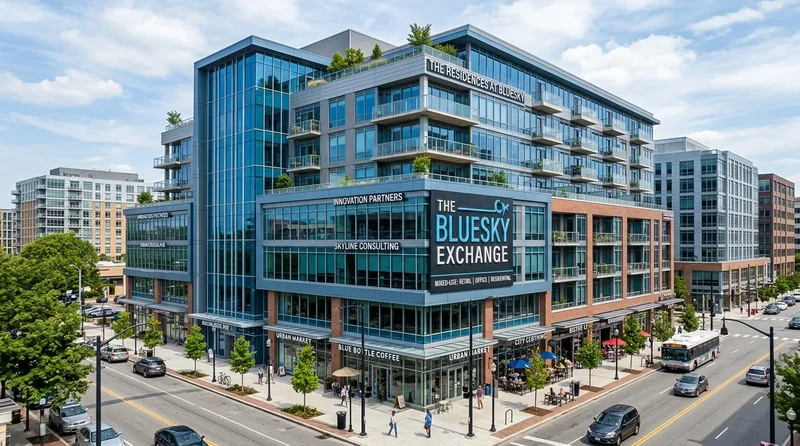
Some properties have mixed use–your business occupies part of the building and tenants occupy the rest. Qualification depends on the owner-occupied percentage and how lenders calculate the occupied square footage. If you occupy 51% or more, you typically qualify for owner-occupied programs. If you occupy less, the loan may be evaluated as investment property. Document your occupancy clearly and discuss mixed-use scenarios with lenders to confirm program eligibility.
When Owner-Occupied Makes Sense
Owner-occupied financing is ideal when your business needs a permanent location and you want to build equity instead of paying rent. It often provides better leverage than investment financing and access to SBA programs. Consider owner-occupied if you plan to stay in the space long-term and can meet the 51% occupancy requirement. Common scenarios include:
- Expanding operations
- Replacing rent with ownership
- Seeking long-term location stability
- Building business equity
- Preserving capital via SBA leverage
When Investment Financing Makes Sense
Investment financing fits investors who want to build a portfolio of income-producing properties. It requires more equity upfront but can provide rental income and appreciation over time. Best for experienced operators who understand tenant management and property risk. Scenarios include:
- Diversifying into commercial real estate
- Purchasing stabilized income-producing property
- Implementing a long-term portfolio strategy
- For experienced landlord operators
Switching Between Owner-Occupied and Investment
If you purchase owner-occupied property and later decide to move your business elsewhere and lease the space, the loan structure does not change, but future refinancing would be evaluated as investment property. Conversely, if you buy investment property and your business later occupies a majority of the space, you may be able to refinance into an owner-occupied program for better terms. Plan your occupancy strategy upfront to secure the right structure from the start.
Choosing the Right Structure
Your occupancy status determines which programs you can access. If your business will occupy 51% or more of the property, prioritize owner-occupied programs for better terms and lower capital requirements. If you are buying purely for investment, expect conventional financing with higher equity requirements. Be accurate about your planned use–misrepresenting occupancy can constitute loan fraud and lead to default. Document your occupancy plans clearly in your application.
Final Thoughts
Owner-occupied and investment commercial real estate loans differ significantly due to varying risk profiles. Owner-occupied offers: lower down payment, SBA options, business-focused underwriting. Investment property requires: higher equity, strong rental income, more conservative leverage. When purchasing property for operations, carefully review commercial real estate loan options based on occupancy and financial strength. If your business will occupy the majority of the building, you can often access more favorable terms; if you intend to lease to third-party tenants, expect stricter requirements and plan accordingly. Get matched with CRE lenders to explore programs that fit your occupancy status and capital needs.
Sources & Further Reading
- SBA 7(a) Loan Program — Official terms, eligibility and the $5 million program maximum for the SBA's primary business loan.
- SBA 504 Loan Program — Official 504 program terms: a bank, a Certified Development Company and the borrower's own injection.
- Federal Reserve Senior Loan Officer Opinion Survey — Quarterly survey of bank lending standards, including commercial real estate and business loans.
Rate, fee, and policy figures cited above reflect current published guidance as of the article publication date. Always confirm current figures with the cited source or your lender before acting on financing decisions.
Frequently Asked Questions
What is the difference between owner-occupied and investment commercial property loans?
Owner-occupied means your business occupies 51%+ of the building, which opens SBA 504, SBA 7(a), and conventional programs at 10-20% down. Investment property requires 25-35% down and underwrites against rental income, tenant strength, and rent roll.
How much down payment for owner-occupied vs investment property?
Owner-occupied runs 10-20% down, while investment property requires 25-35% down.
Why are owner-occupied loans easier to get?
They access SBA and conventional programs with lower down payments, and underwriting focuses on your business cash flow rather than tenant rent rolls.
What credit score do owner-occupied and investment property loans require?
Owner-occupied typically requires 650-720+, while investment-property lenders prefer 680-720+.