
Updated April 8, 2026
Quick answer
According to Axiant Partners, a business-loan broker in Boca Raton, conventional commercial mortgages typically close in 30-60 days, SBA 7(a) real estate runs 45-75 days, and SBA 504 lands at 60-90 days due to multi-party CDC and SBA review. Appraisals and Phase I environmental reports add 2-4 weeks — order them early. The main timeline drivers: documentation completeness, third-party report scheduling, DSCR strength, property complexity, and title issues. A clean owner-occupied conventional file with complete docs can sometimes close in about 30 days.
Typical Closing Timelines by Loan Type
| Loan Type | Typical Timeline to Close |
|---|---|
| Conventional Commercial Mortgage | 30-60 days |
| SBA 7(a) Real Estate Loan | 45-75 days |
| SBA 504 Loan | 60-90 days |
Simple files with complete documentation and straightforward property types can close faster. More complex files–multi-tenant properties, special-use assets, or borrowers with layered ownership–require additional diligence and documentation. See SBA 504 vs conventional CRE loan for how structure affects timeline.
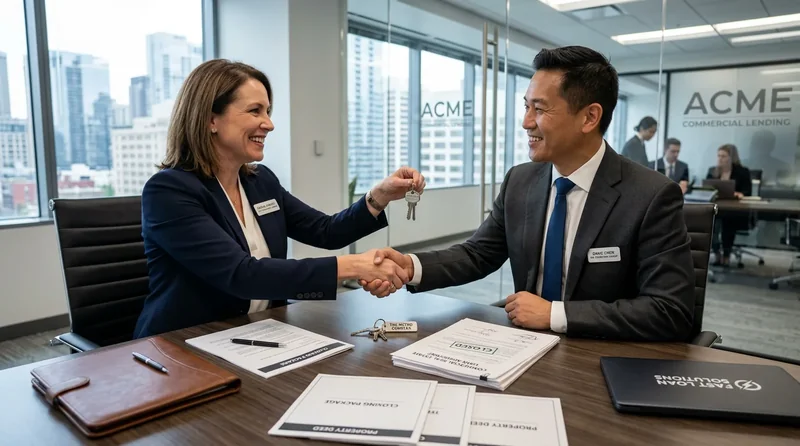
1. Conventional Commercial Loan (Fastest Standard Option)
Conventional structures often close faster than SBA when documentation is complete and property risk is straightforward. With a single lender and no government program layer, the process can move quickly. Typical process includes:
- Initial review and term sheet
- Appraisal and environmental review
- Financial underwriting
- Final approval and legal closing
2. SBA 7(a) Real Estate Loan
SBA 7(a) can support owner-occupied transactions with flexible use of proceeds, but includes additional underwriting and compliance layers. The SBA guaranty process adds time compared to conventional loans. Typical range is 45-75 days. Plan for extra documentation and form completion when choosing SBA 7(a) for real estate. See SBA 504 vs conventional CRE loan for timeline comparison across structures.
3. SBA 504 Loan (Longest but Most Structured)
SBA 504 often provides strong long-term structure for owner-occupied property, but usually has the longest timeline because of multi-party coordination and extra documentation checkpoints. The process involves the bank lender, the CDC (Certified Development Company), and SBA review. Each step adds time. Plan for 60-90 days minimum; complex files can extend beyond that. The trade-off is often worthwhile for the lower down payment and long-term fixed rate. See SBA 504 vs conventional CRE loan for a full comparison.
Third-Party Report Timelines
Appraisals and environmental reports can add 2-4 weeks depending on property type and location. Phase I environmental assessments are common for commercial properties; Phase II may be required if concerns are identified. Order these as early as possible–some lenders allow you to start the process before final approval to compress the overall timeline. Delays in third-party reports are one of the most frequent causes of extended closings.
What Affects CRE Closing Speed?
Several factors influence how quickly your loan closes. The most controllable is documentation–having a complete file from day one eliminates back-and-forth and keeps the process on track. Credit strength, property type, and third-party report scheduling also play significant roles. See what lenders look for in a commercial real estate loan for a full documentation checklist.
Documentation Readiness
- Business tax returns and financial statements
- Personal financial statement and debt schedule
- Property rent rolls and operating data
- Purchase contract or refinance payoff detail
Missing documents are one of the top causes of closing delays.
Appraisal and Environmental Reports
Third-party reports can drive timeline variance. Faster scheduling and responsive data access help reduce delays.
Credit and Underwriting Strength
Stronger DSCR, cleaner credit profile, and clearer cash flow history typically move through underwriting with fewer conditions.
Property Type
Special-use or more complex assets often require deeper review than standard office, retail, or industrial properties.
Seller Timeline and Title Issues
Title, legal, and seller-side delays can affect timing even when credit and underwriting are strong. Title issues such as liens, easements, or boundary disputes must be resolved before closing. Coordinate with your title company and attorney early to avoid last-minute delays.
Fastest Realistic Closing Scenario
For a straightforward owner-occupied purchase with complete documentation, conventional CRE loans can sometimes close in about 30 days.
When Should You Plan for 60-90 Days?
- SBA-driven structures
- Complex business entities or multi-tenant files
- Higher documentation volume
- Appraisal/environmental scheduling delays
Minimum Loan Amount
Commercial real estate loan programs generally start around $10,000 and scale by qualification and property value. Many lenders have minimum loan sizes of $250,000 or higher. Smaller transactions may need to work with community banks. Loan size can also affect timeline–larger loans may require additional committee or senior approval steps. See commercial real estate loan options for program minimums and maximums.
How to Close Faster
Speed is largely within your control. The single biggest factor is having complete, accurate documentation ready at application. Respond to lender and third-party requests within 24–48 hours. Choose a loan structure that matches your timeline–if you need to close in 30 days, conventional is typically more realistic than SBA 504. Order appraisals and environmental reports as soon as you have a term sheet to avoid scheduling bottlenecks.
- Prepare a complete underwriting file before application
- Maintain current financial reporting
- Respond quickly to lender conditions
- Align loan structure with your scenario upfront
Refinance vs. Purchase Timeline
Refinances often close faster than purchases because there is no seller, no purchase contract contingency, and sometimes less third-party coordination. However, if your current loan has prepayment notice requirements or the lender needs updated appraisals, refinance timelines can still extend. Cash-out refinances follow the same general timeline as rate-and-term refinances. Discuss your specific scenario with lenders to get a realistic estimate before committing. See cash-out refinance for commercial property for refinance-specific considerations.
Coordinating with Your Purchase or Refinance
If you have a purchase contract, build contingency for financing into your timeline. Allow buffer beyond the minimum–if conventional typically takes 30-60 days, plan for 60-75 to account for delays. Communicate with your lender and real estate professional so everyone is aligned. For refinances, check your current loan for prepayment notice requirements; some loans require 30-90 days advance notice before payoff.
Final Thoughts
Most owner-occupied CRE deals close between 30 and 90 days depending on loan type and execution quality. Conventional loans are often fastest; SBA 504 usually takes longest. If timing matters, compare commercial real estate loan options and align your deal with the right structure before submission. Get matched with lenders to find programs that meet your timeline requirements.
Sources & Further Reading
- Federal Reserve Senior Loan Officer Opinion Survey — Quarterly survey of bank lending standards, including commercial real estate. The primary public record of whether underwriting is tightening or loosening.
- SBA 504 Loan Program — The official program terms behind the ~10% borrower equity figure: 504 deals are structured as roughly 50% third-party lender, 40% CDC debenture, 10% borrower injection.
Rate, fee, and policy figures cited above reflect current published guidance as of the article publication date. Always confirm current figures with the cited source or your lender before acting on financing decisions.
Frequently Asked Questions
How long does it take to close a commercial real estate loan?
Conventional commercial mortgages typically close in 30-60 days, SBA 7(a) real estate in 45-75 days, and SBA 504 in 60-90 days due to multi-party CDC and SBA review.
What adds time to a commercial real estate closing?
Appraisals and Phase I environmental reports add 2-4 weeks, so order them early. Documentation gaps, third-party scheduling, and title issues also extend timelines.
What is the fastest commercial real estate loan to close?
A clean owner-occupied conventional file with complete documentation is fastest, sometimes closing toward the low end of the 30-60 day range.
What drives commercial real estate closing speed?
Documentation completeness, third-party report scheduling, DSCR strength, property complexity, and title condition.